Water Sitting At Walls
Where a pitched roof meets a taller wall, water backs up and sits. That strip gets silicone. The wall flashing above that strip gets resealed so water stops getting behind it.

As a Chesterton metal roof coating contractor, we check how each roof section drains, then match silicone or acrylic to it.
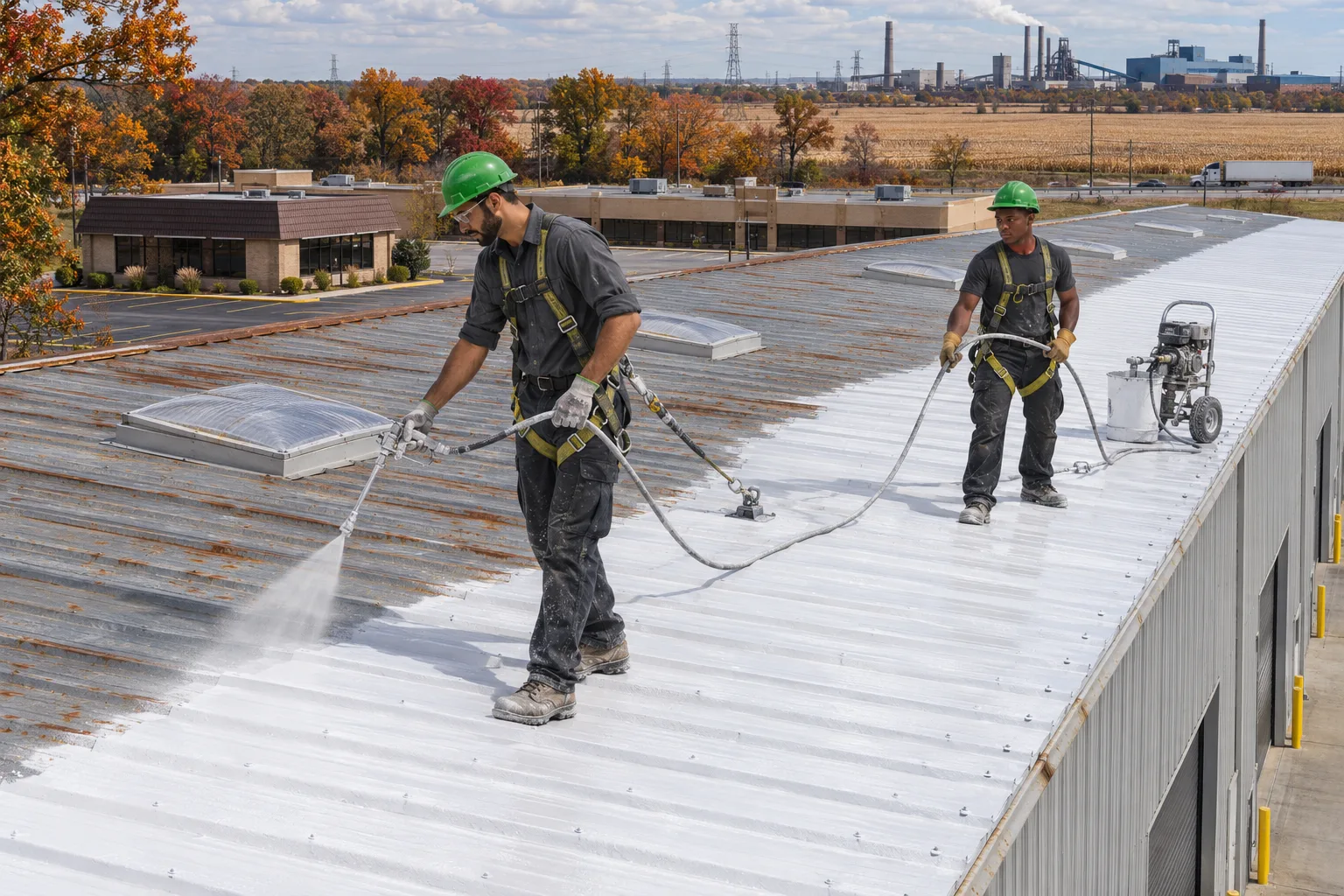
Chesterton metal roof coating jobs often cover a building with a pitched metal roof and a flatter section that holds water.
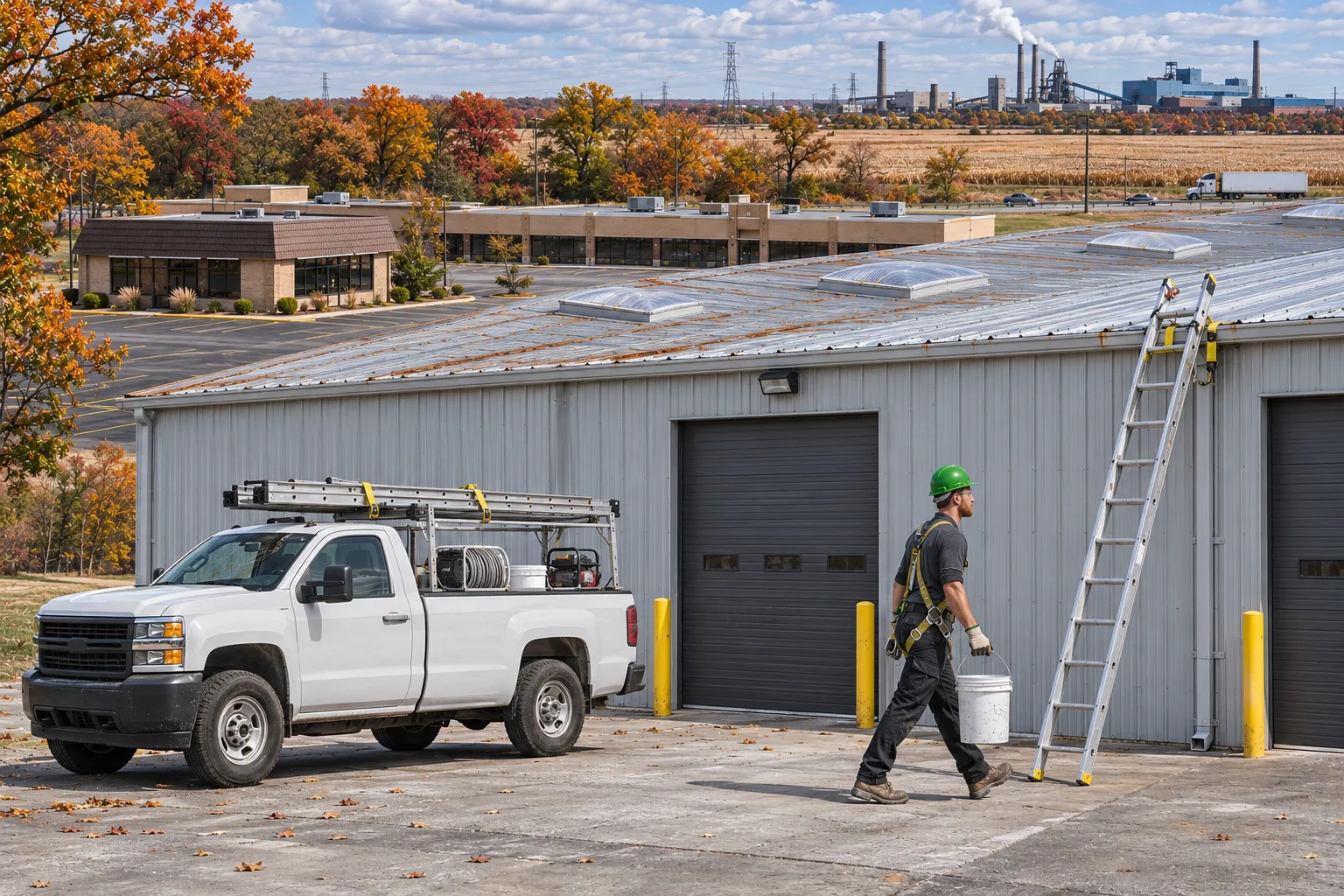
Pitched panels shed water in minutes. Flat sections, low spots near walls, and areas around drains hold it for hours or days.
Acrylic softens under standing water, so it goes on pitched sections only. Silicone handles ponding. The joint between them gets detailed by hand.
These drainage problems decide which coating goes where on a Chesterton roof.
Where a pitched roof meets a taller wall, water backs up and sits. That strip gets silicone. The wall flashing above that strip gets resealed so water stops getting behind it.
Flat sections drain through strainers that clog. Cleared drains shorten ponding, though the area still gets silicone. Strainers get refastened over each drain so debris stays out of the leader.
Gutters that overflow in heavy rain soak the eave. Seams get sealed and outlets cleared. Downspouts get checked for clogs that send water back up into the gutter.
The seam where pitched metal meets a flat roof leaks often. It gets fabric and both coatings overlapped correctly. That joint is the spot where most mixed roofs start leaking first.
Panels that end in water rust first. They get cleaned, primed, and sealed. Bottom panel ends get extra primer and sealant before any coating.
Rooftop units usually sit on the flat part. Their curbs get sealed before the silicone goes on. Equipment service paths on the flat section get walk pads after coating.
Matching the coating to each section keeps every part of the roof protected. Here is what that gains.
Silicone handles the ponding areas and acrylic the pitched panels, so neither coating sits where it struggles.
The joint between pitched and flat roofs gets fabric and overlapping coats instead of a gap.
Both systems come in white, reflecting sun off the whole building.
Cleared drains and sealed strainers on the flat sections let water leave faster after every storm.
These five systems cover the roof sections we see on Chesterton buildings.
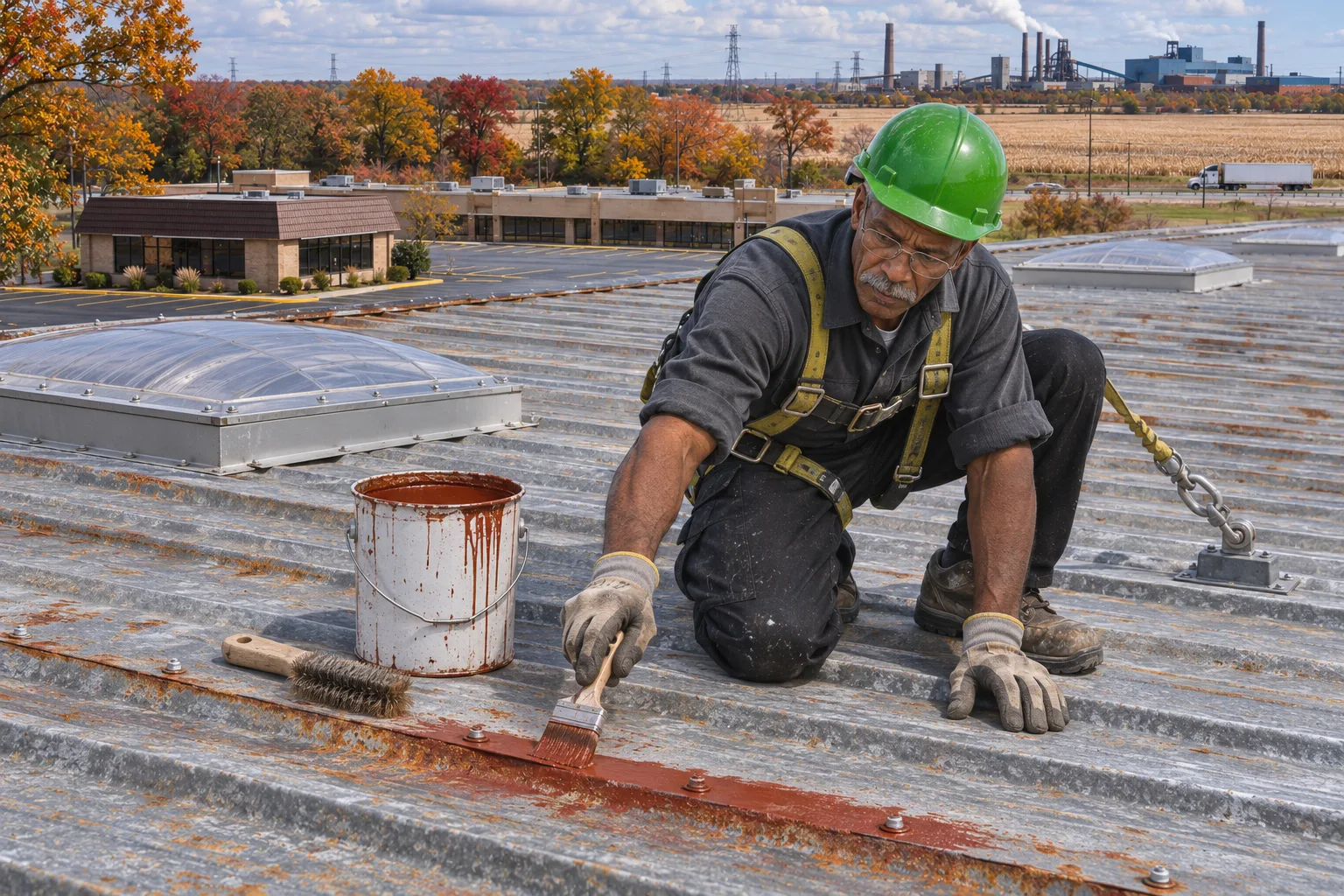
Pitched steel gets rust treatment, new screws, sealed laps, and full coating. Pitched sections that clear water quickly can take this steel process.
Commercial Metal Roof Coating details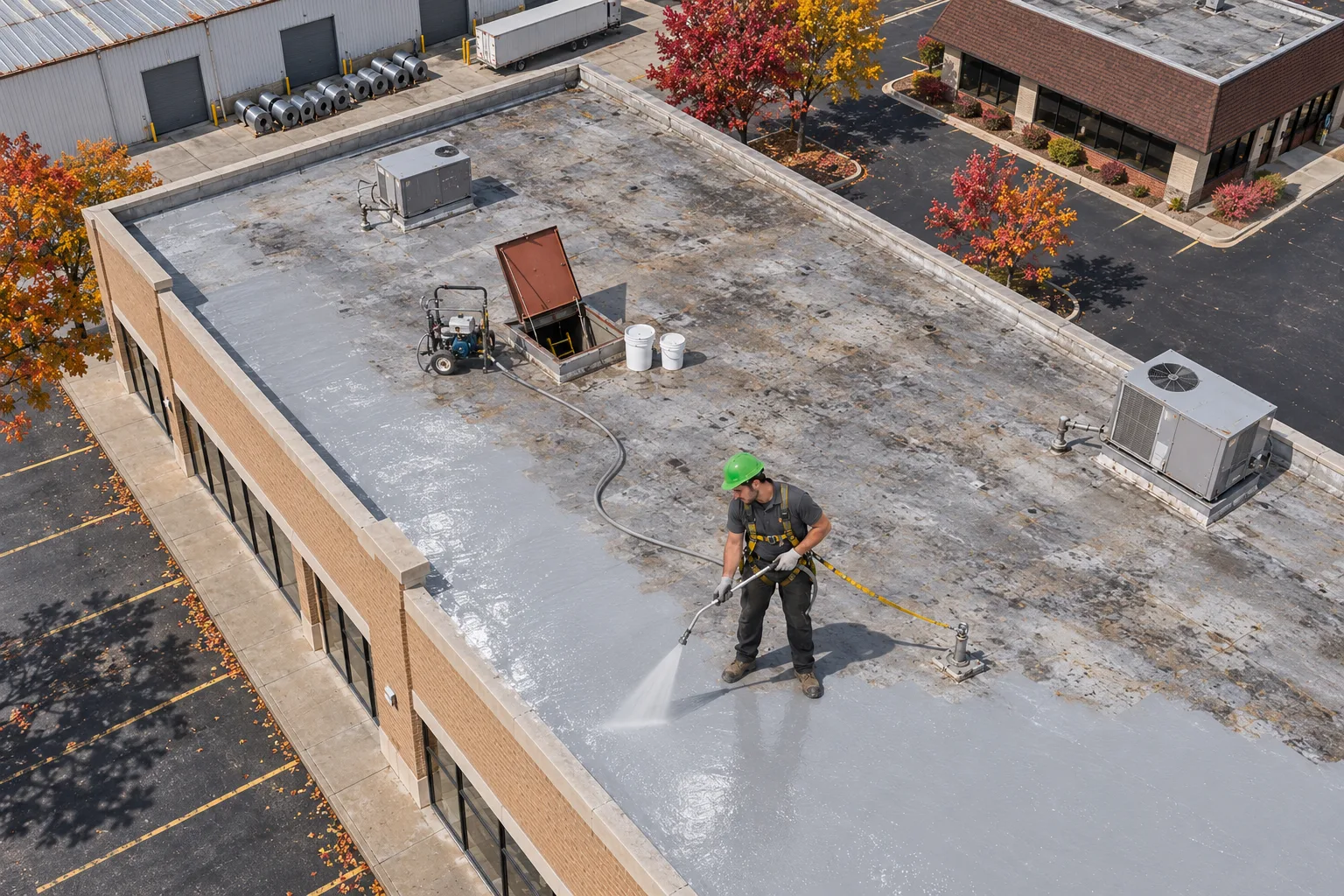
Ponding flat sections and wall strips take silicone. Silicone goes thickest in the lowest spots, where water stays longest.
Silicone Roof Coating details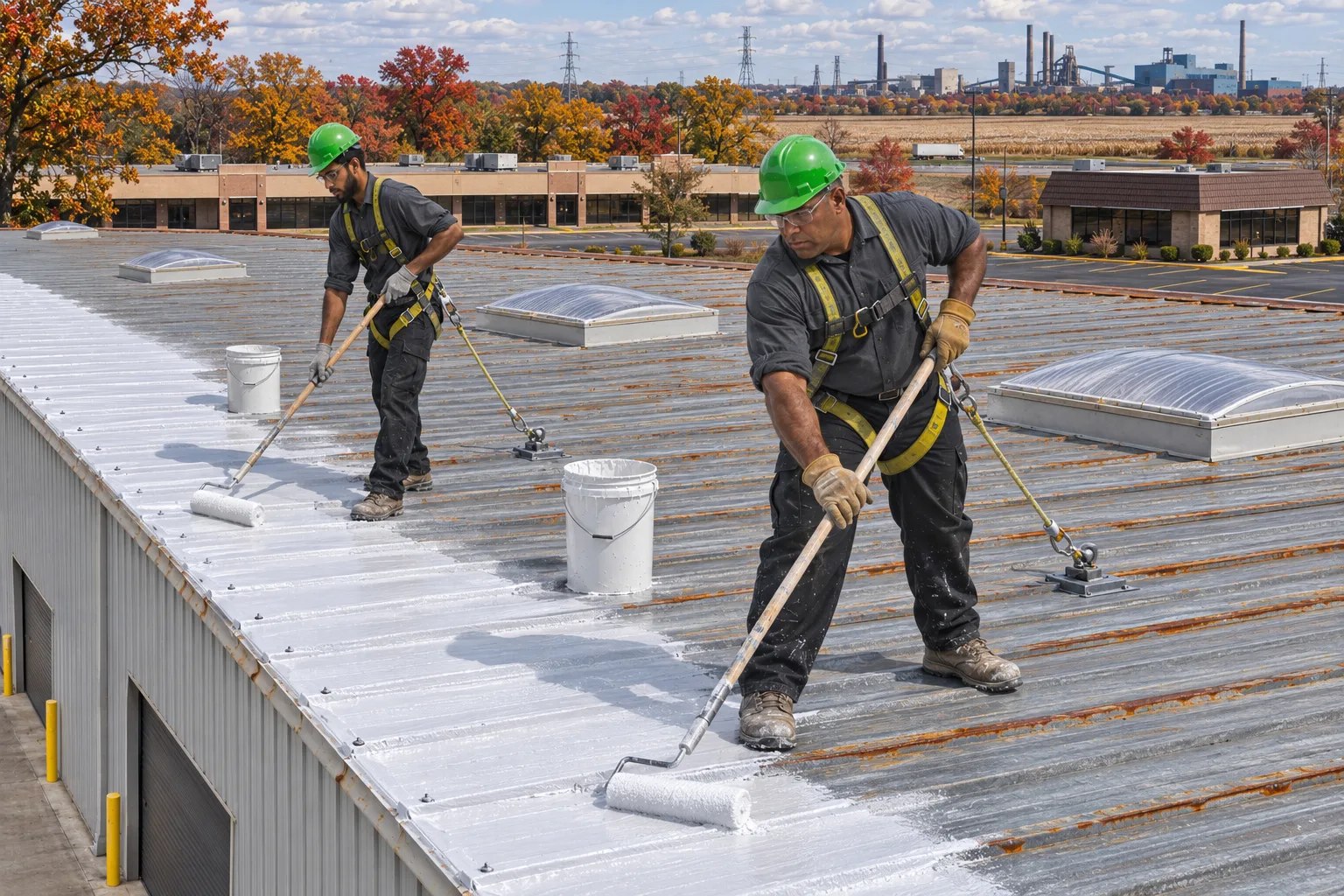
Sloped panels that shed water take acrylic in warm weather. Acrylic recoats easily later, which keeps future upkeep on the pitched part simple.
Acrylic Roof Coating details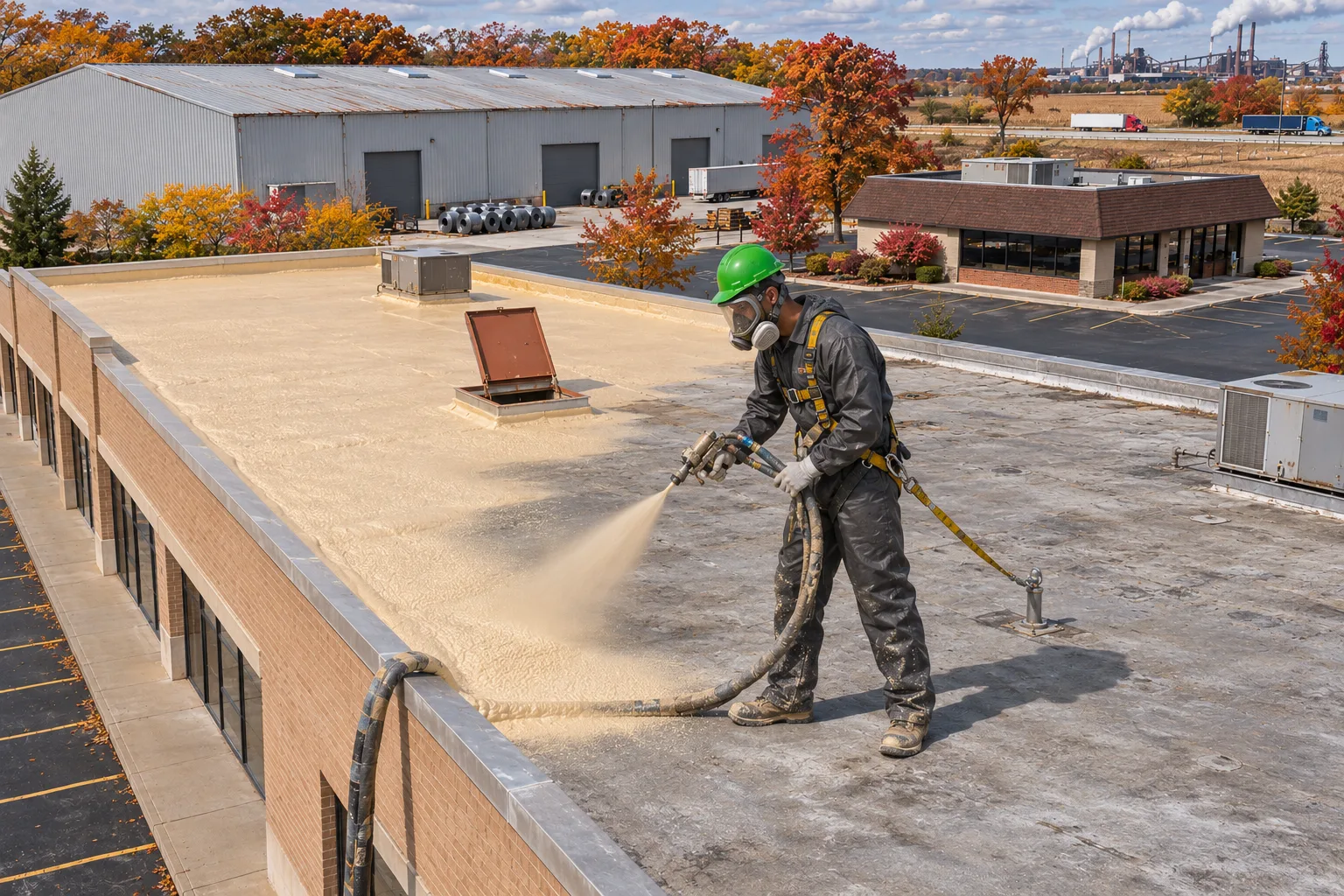
Foam can rebuild slope on flat sections that pond badly. A foam rebuild takes more time but ends ponding instead of coating over it.
Spray Foam Roofing details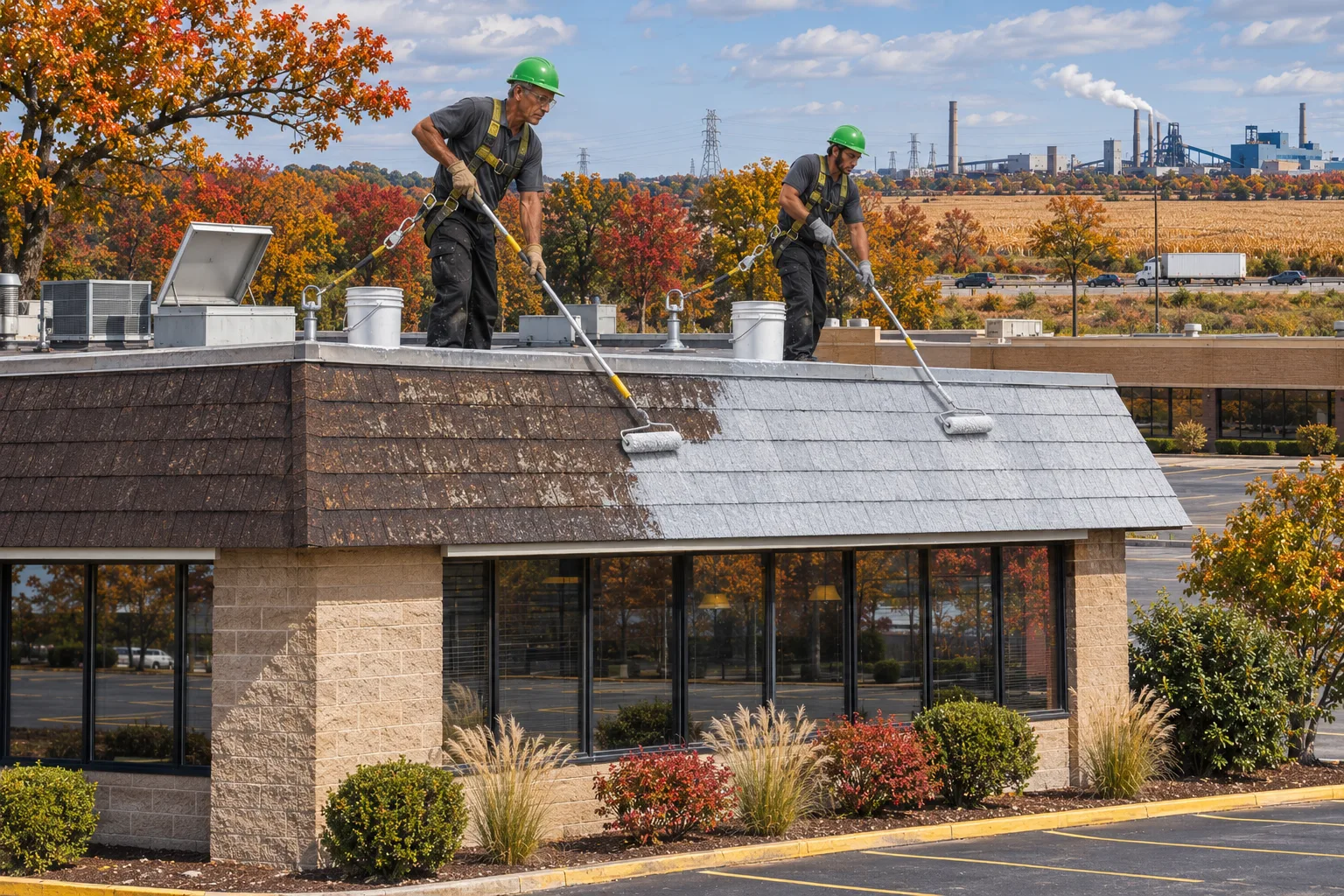
Shingled office faces take a coating made for asphalt. Shingled faces facing the street get their color chosen with the owner.
Shingle Roof Coating detailsThose wet sections decide where silicone goes. An inspection after rain maps them before the estimate.
Mixed roofs add a mapping step. The order below keeps both coatings gripping the roof.
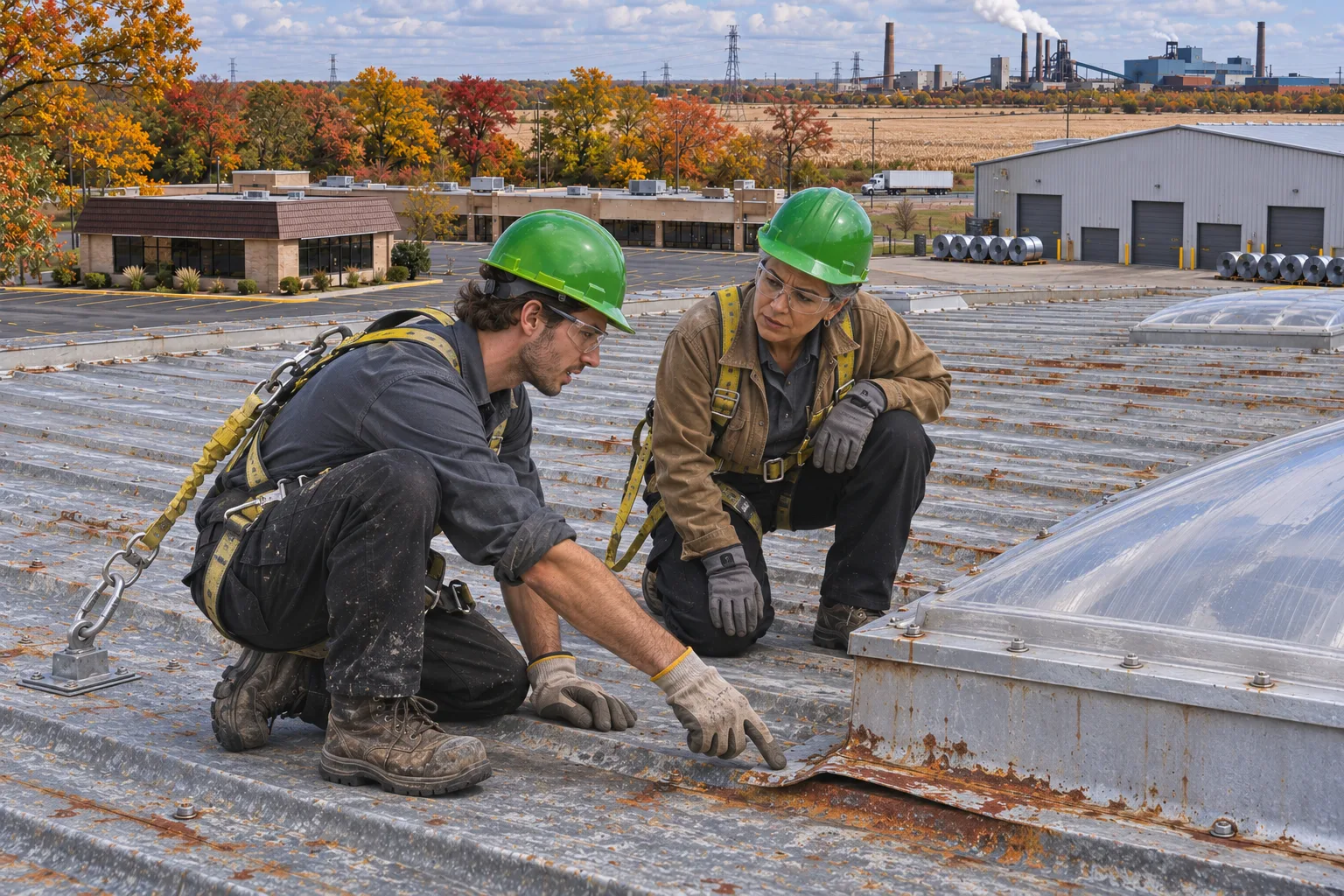
We walk the roof after rain if we can, marking every area that holds water and every section that sheds it. The map shows each section and its system.
Each section gets assigned silicone or acrylic, and the joints between them get marked for detail work. Joints get marked in the field with paint.
Screws, laps, curbs, and rust get fixed and primed across all sections. Rust gets primed on both pitched and flat sections.
Silicone and acrylic go on to their rated thickness, overlapped correctly at the joints. The overlap at each joint is checked before the crew leaves.
We coat commercial roofs in Chesterton and in these nearby towns.
Outside our towns? Call us or send us a message.
Lake wind at eaves and trim.
Edges fastened before coating.
Michigan City metal roof coatingAbout $2.50 to $4.00 per square foot to coat and $5 to $8 to replace. Two systems on one roof add some detail work at the joints.
Silicone costs more per gallon but builds thickness faster. The estimate shows each section and its system.
Some labor, since the joint between the two systems gets fabric and an overlap done by hand. On most mixed roofs it is a small share of the total and prevents the most common leak on that layout.
Yes. Chesterton is part of our regular area, and retail roofs are some of the most common jobs there.
They can. Work stays on the roof, and sections over entrances get scheduled for quieter hours.
Usually the flat section with silicone, since it holds water and leaks most. Acrylic on the pitched part follows in the warmest, driest stretch of the season.
Silicone could cover it all, but acrylic on the pitched part is easier to recoat later. Drainage sets the choice section by section.
Mostly the mix of pitched and flat sections on one building, which calls for two systems.
Spray foam can add slope to a flat section that ponds badly, with silicone on top. It costs more than silicone alone, so it makes sense where the ponding is deep or widespread.
Call or send the building address. We map the drainage and match each section to its coating.