Acrylic Coating On Metal Roofs
Clean, primed steel takes acrylic well. Two or more coats build a bright layer that sheds water off pitched panels. A test patch shows how well the coating holds before the full roof gets it.
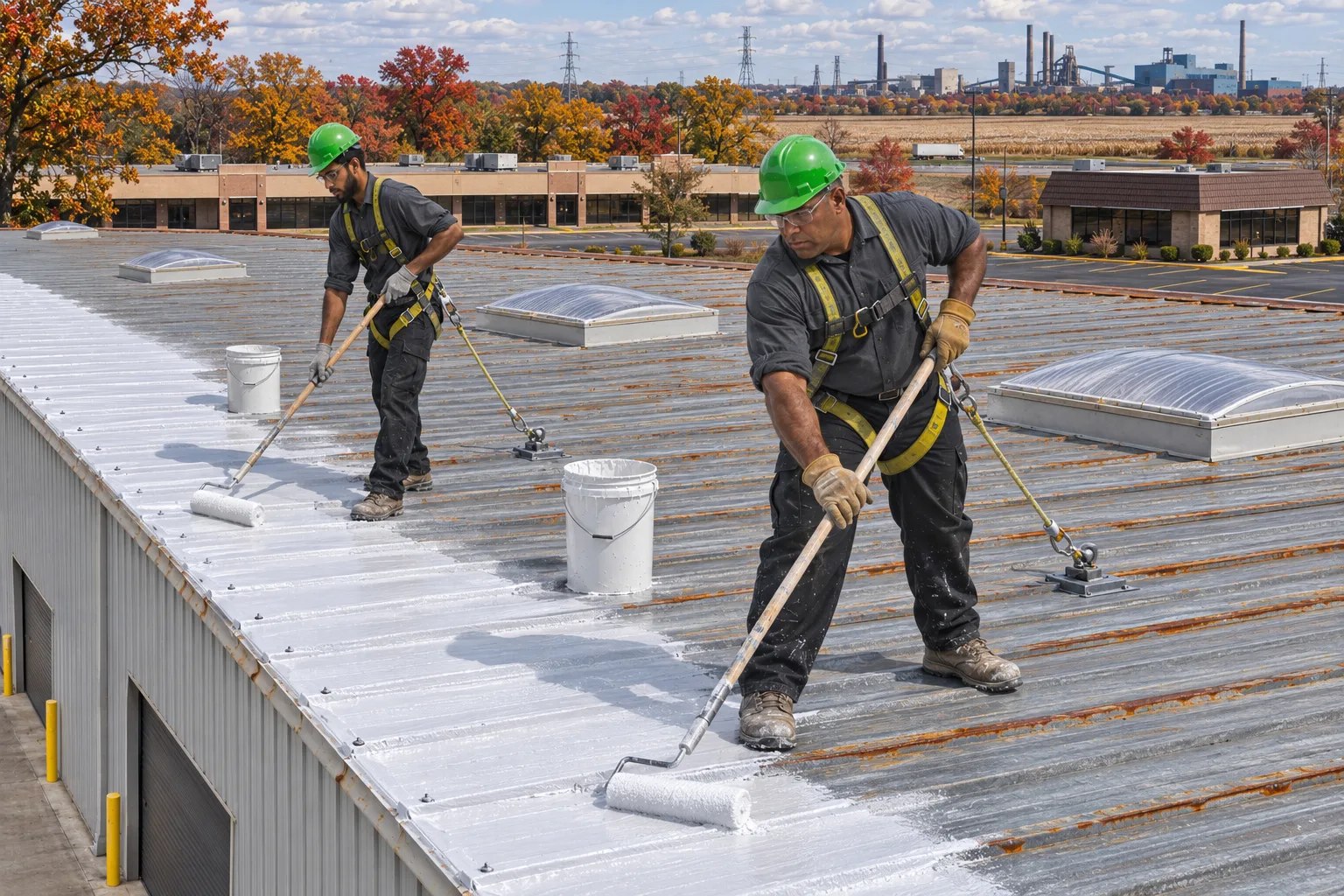
As a Portage acrylic roof coating contractor, we coat pitched metal roofs that drain quickly, in the warm, dry weeks acrylic needs to cure.
Portage acrylic roof coating needs a roof that sheds water. These rows show where it fits and where it falls short.
| What You See On The Roof | Acrylic Fits | Fix First | Use Silicone |
|---|---|---|---|
| Pitched metal that drains in minutes | Usually Fits | Rarely | Rarely |
| Chalky old paint on firm panels | Usually Fits | Sometimes | Rarely |
| Rust at laps and end laps | Sometimes | Usually Fits | Rarely |
| Flat spots that hold water overnight | Rarely | Sometimes | Usually Fits |
| Roof coated with silicone in the past | Rarely | Rarely | Usually Fits |
Acrylic sticks to clean, primed metal and to older acrylic. It does not bond to cured silicone.
Acrylic is a good finish for steel roofs that drain well. These conditions get handled before the first coat.
Clean, primed steel takes acrylic well. Two or more coats build a bright layer that sheds water off pitched panels. A test patch shows how well the coating holds before the full roof gets it.
Factory paint breaks down into a powder that wipes off on your hand. Washing removes it so the acrylic bonds to firm paint. Gentle washing at lower pressure keeps sound factory paint in place under the coat.
Small orange spots along rib tops spread under any coating left untreated. Each spot is brushed and primed first. Spots that flake under a scraper get ground back to bright steel instead.
Screws over purlins back out as panels move. They are tightened or replaced, then sealed under the acrylic. Washers that crumble get swapped out along with the screw.
Acrylic needs warm air and dry hours to cure. Work is planned for the warm stretch of the year. Cool evenings and damp mornings cut the usable hours on spring and fall days.
Any area where water lingers gets silicone instead, since acrylic softens under standing water. Gutter outlets get cleared too, so the water leaves the roof instead of backing up.
Acrylic often shares a building with other systems. These four cover the sections acrylic should not.
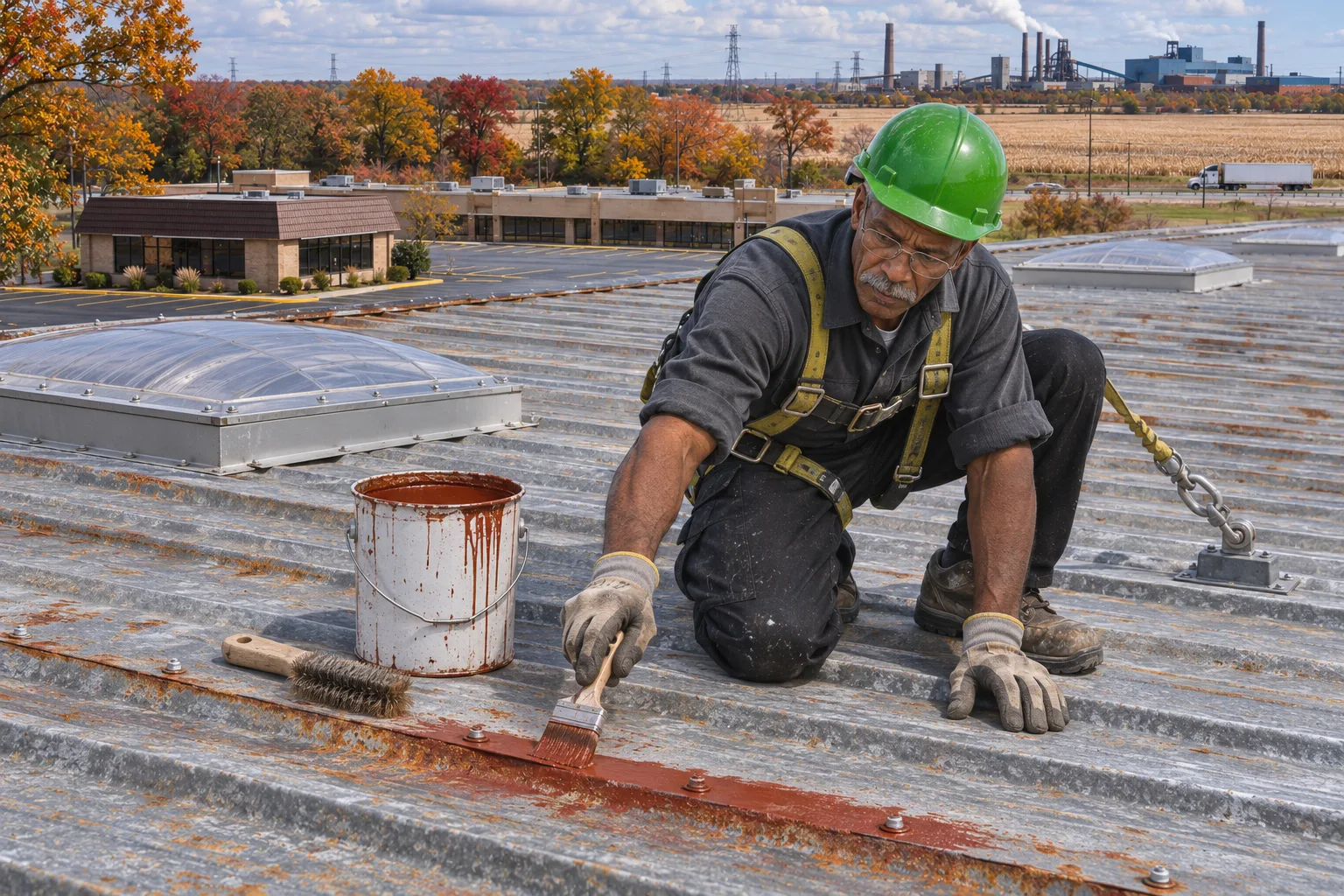
The full metal coating process handles heavy rust and failed screws before any finish. Acrylic can be the top coat on that job. Grinding, primer, and screw replacement happen there whether or not acrylic follows.
Portage commercial metal roof coating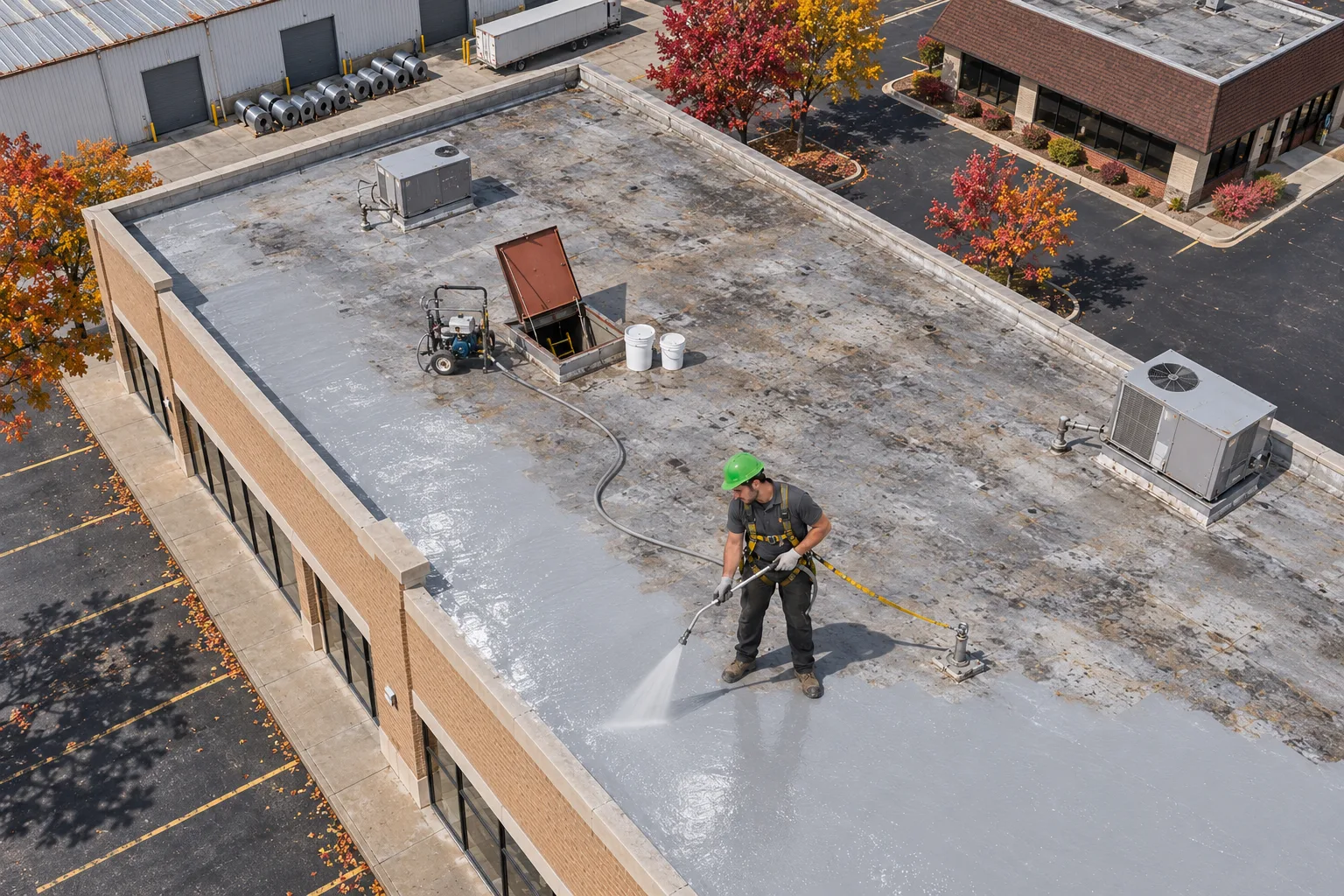
Flat sections on the same building that pond after rain take silicone. Acrylic stays on the sloped panels around them. The silicone and acrylic meet at a joint that gets fabric and careful overlap.
Portage silicone roof coating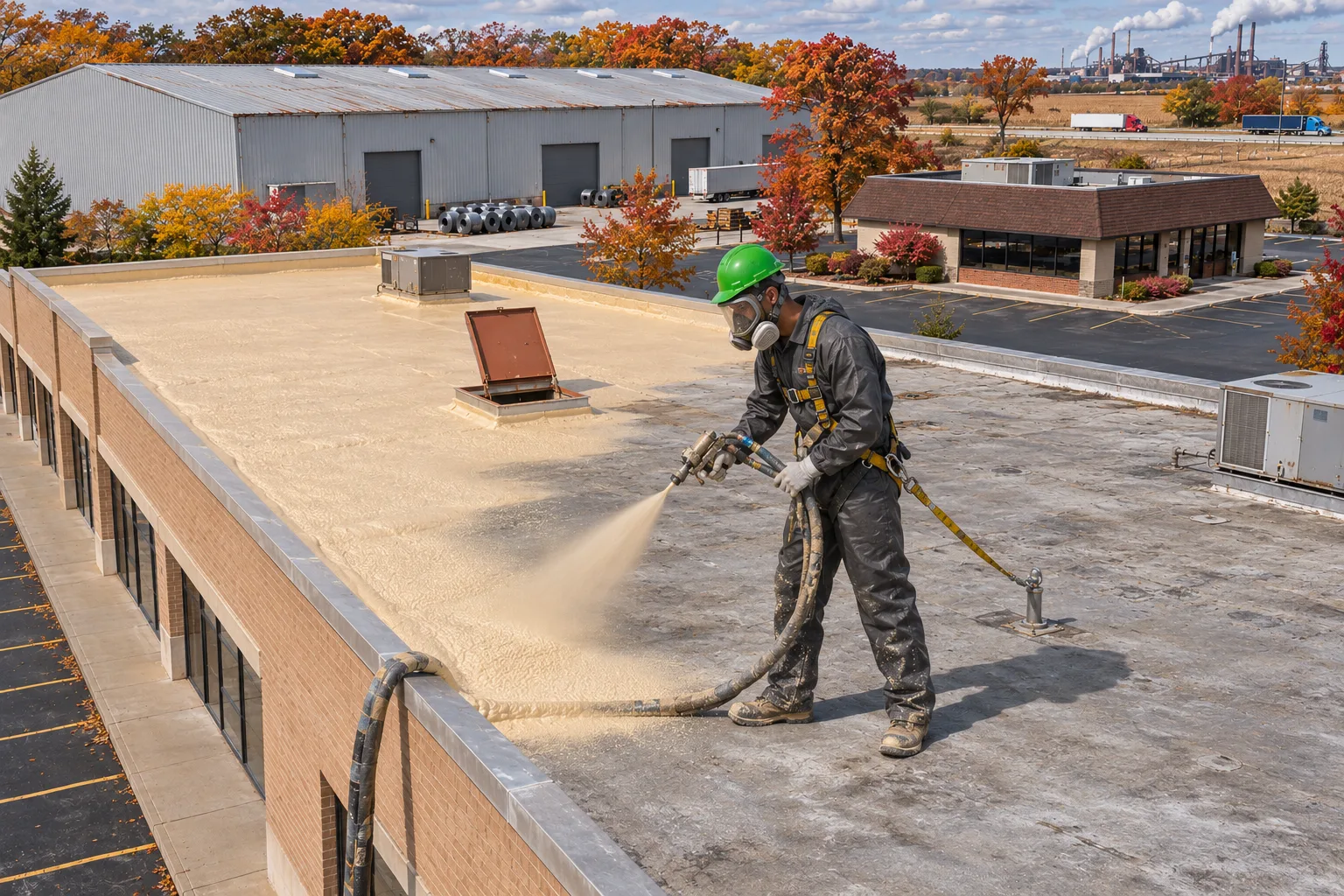
When insulation is the bigger problem, foam goes on first, and the topcoat over it is chosen to match the slope. Foam also levels out low spots that would otherwise ruin an acrylic finish.
Portage spray foam roofing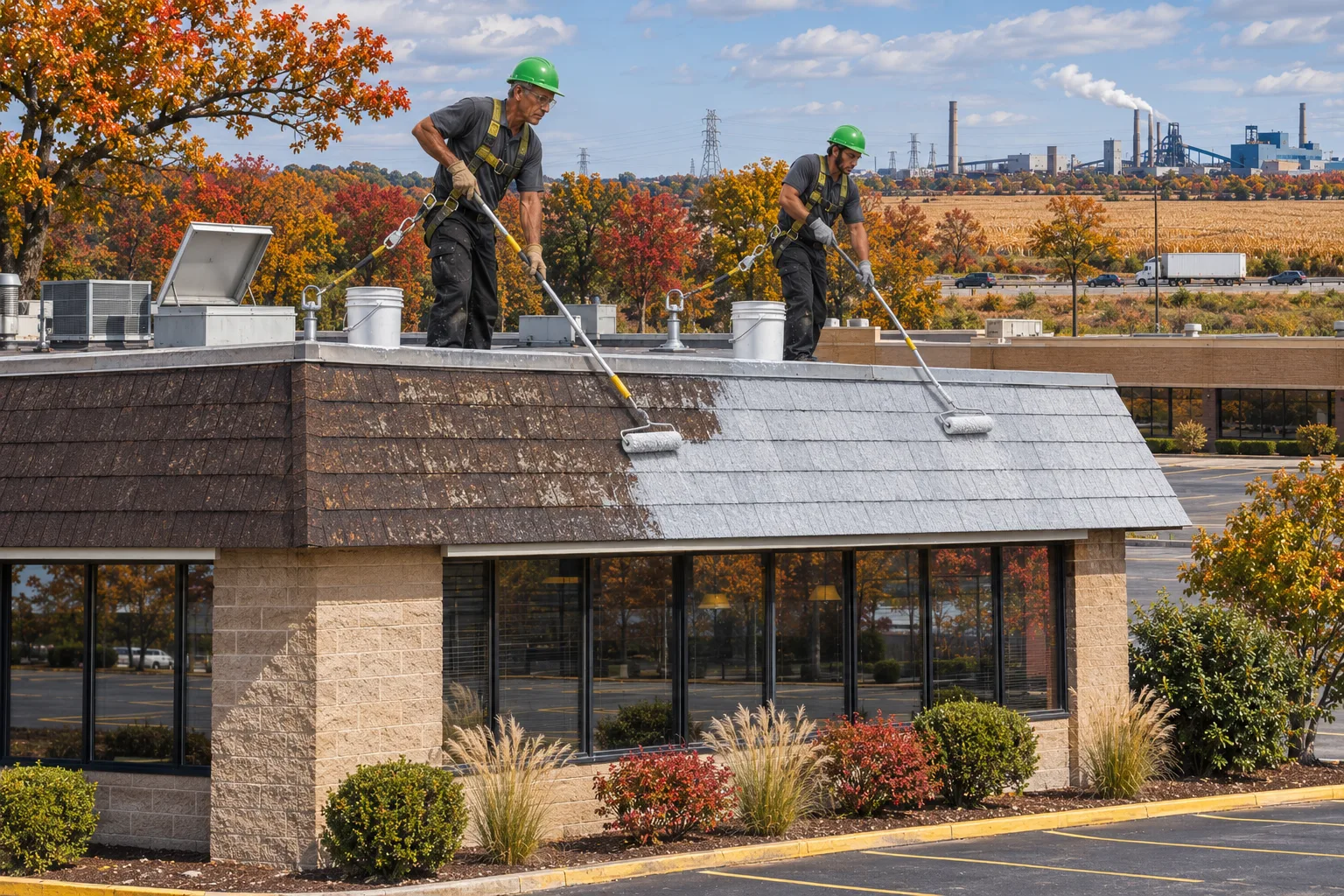
Asphalt shingle faces need a coating made for asphalt, applied after missing tabs and nails are fixed. Shingle coating follows its own product rules for temperature and drying time.
Portage shingle roof coatingOn a roof that drains, acrylic gives a durable, bright surface. Here is what it brings.
White acrylic reflects summer sun off the steel, keeping panels cooler and cutting daily expansion at screws.
Acrylic bonds to older acrylic, so a future recoat is a wash and a fresh coat with no stripping.
Cleanup takes only water and the smell stays low, which matters over occupied offices and shops.
Every screw head sits under the acrylic layers, so the washers stop drying out in the sun.
Chalky paint on firm, pitched panels is a good sign for acrylic. An inspection checks rust and screws before the work season.
Acrylic goes on in layers, with drying time between them. The order below keeps each layer stuck fast to the one beneath it.
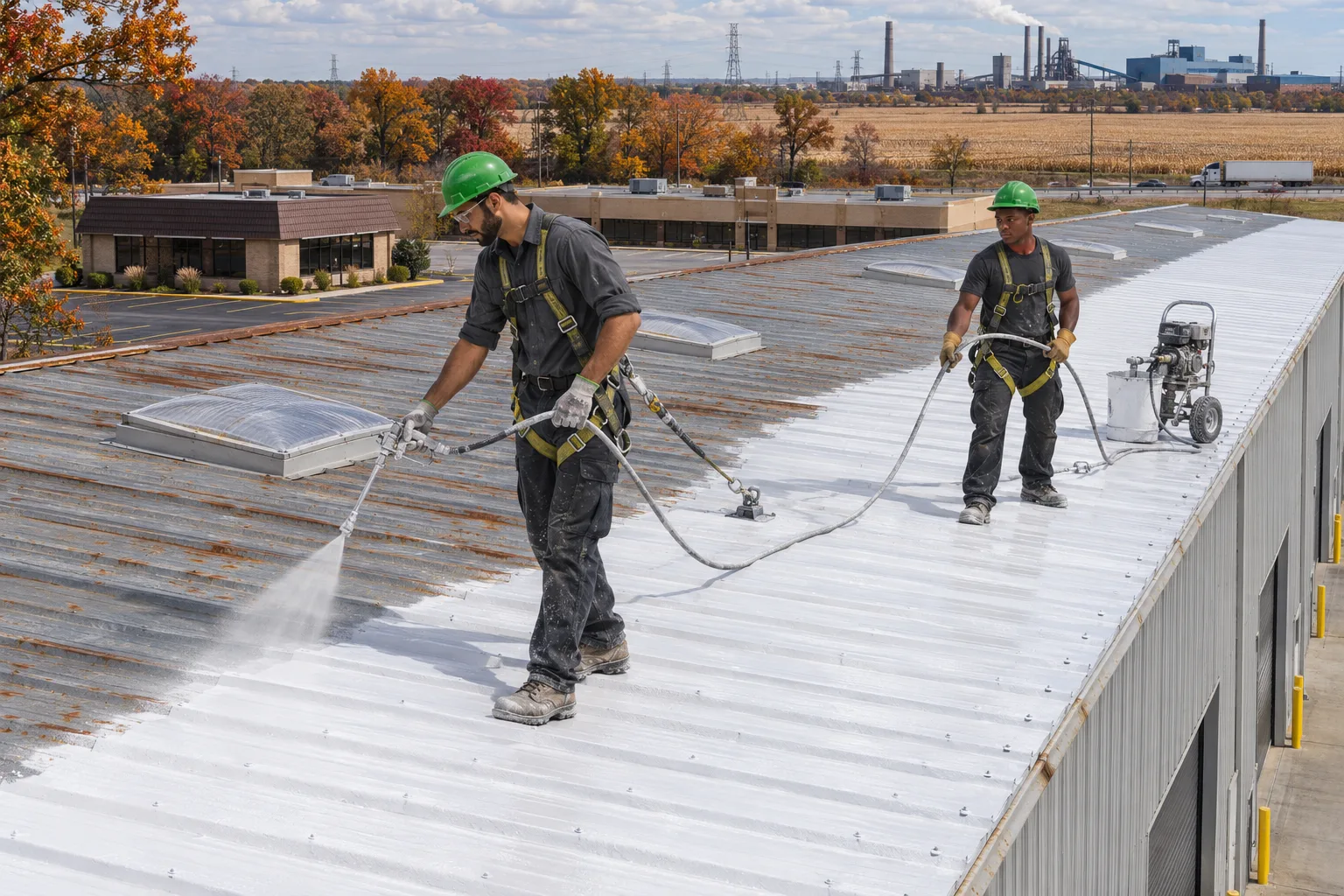
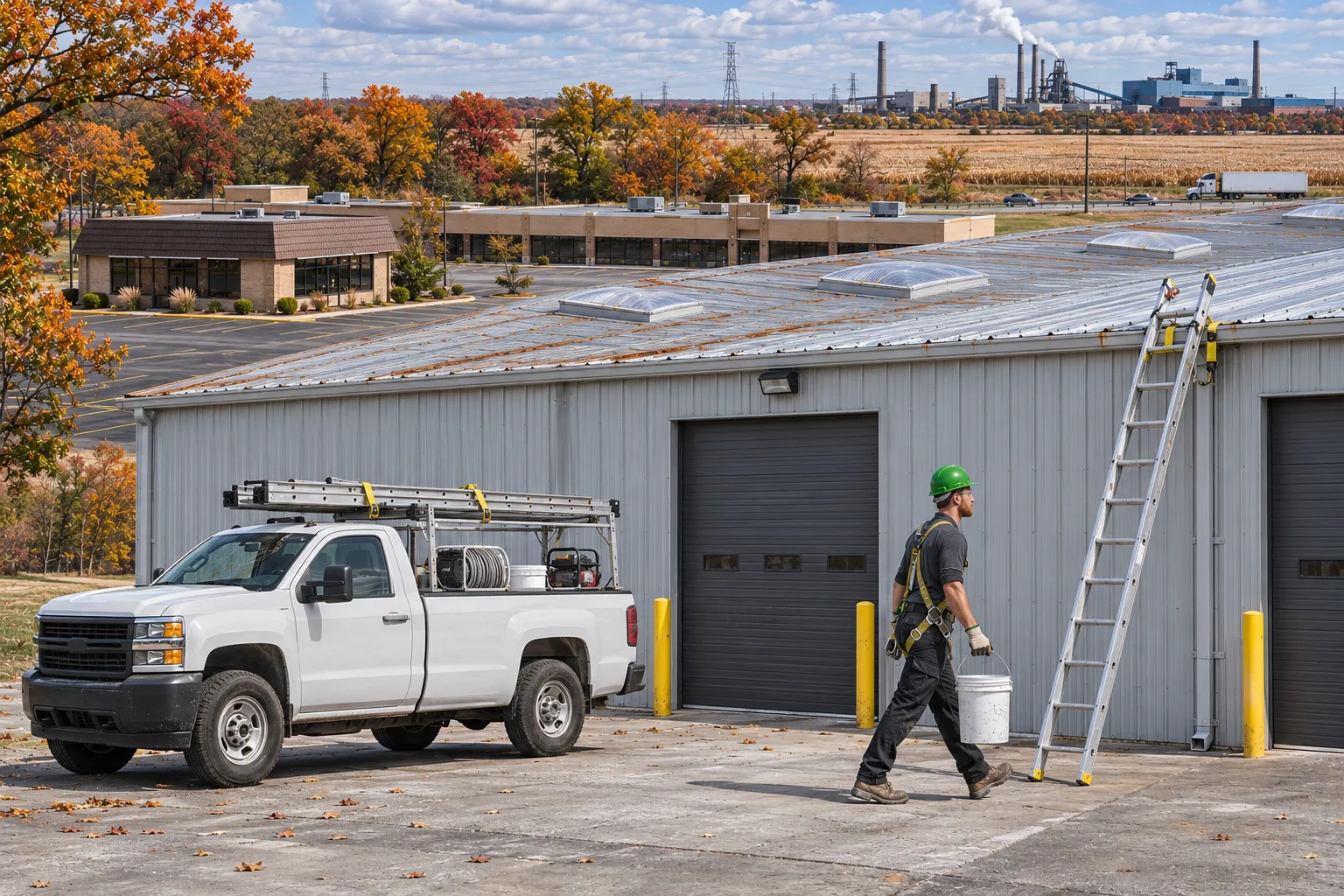
We check pitch and drainage, look for rust and loose screws, and confirm no old silicone sits on the roof. Pitch is measured so acrylic only goes where water runs off.
Washing strips chalky paint and grime so the primer and coating reach firm paint and steel. The roof dries fully before any primer goes down.
Rust spots get primer, and screws, laps, and curbs get sealant or fabric before the first acrylic coat. Laps along the slope get fabric where they have opened.
Two or more coats go on during warm, dry days, each allowed to dry before the next. The forecast decides each coating day.
Acrylic sits inside the coating range of roughly $2.50 to $4.00 per square foot, with replacement near $5 to $8. Number of coats, rust prep, primer, and access move it.
Often per gallon, yes, though it takes more coats to build thickness. The right choice depends on drainage more than on price.
The number of coats and the rust prep. A roof with chalky but firm paint needs washing and two coats. A roof with rust at many laps needs grinding, primer, and sealant first, which adds labor before any acrylic goes on.
Products are rated for about 10 years or more, depending on thickness and drainage. Recoating with acrylic before the first layer wears thin renews it.
Late spring through early fall, on dry days with mild nights. Cold or wet weather keeps it from curing properly.
Two or more, depending on the product and the thickness it calls for. Acrylic goes on thinner per coat than silicone, so building the rated mils takes more passes, each dried before the next one.
It softens under standing water, needs warm, dry weather to cure, and takes more coats to reach thickness. On pitched metal, those limits rarely come into play.
Rusted spots always get primer. Clean, sound paint sometimes goes without, and a small test patch settles it.
Yes, which is one of its strengths. The old layer gets washed and any loose areas scraped, then a fresh coat bonds to it. That makes acrylic recoats among the simplest roof maintenance jobs there are.
Send the address or call. We check drainage and rust and tell you if acrylic is the right finish.