Stripped Screw Holes
Screws that spin without biting let water down the shank. Larger screws with new washers seal the hole. Each stripped hole gets marked so the screw count stays accurate for the estimate.
As a Griffith metal roof coating contractor, we find out whether the drips come from leaks or condensation before pricing a coating.
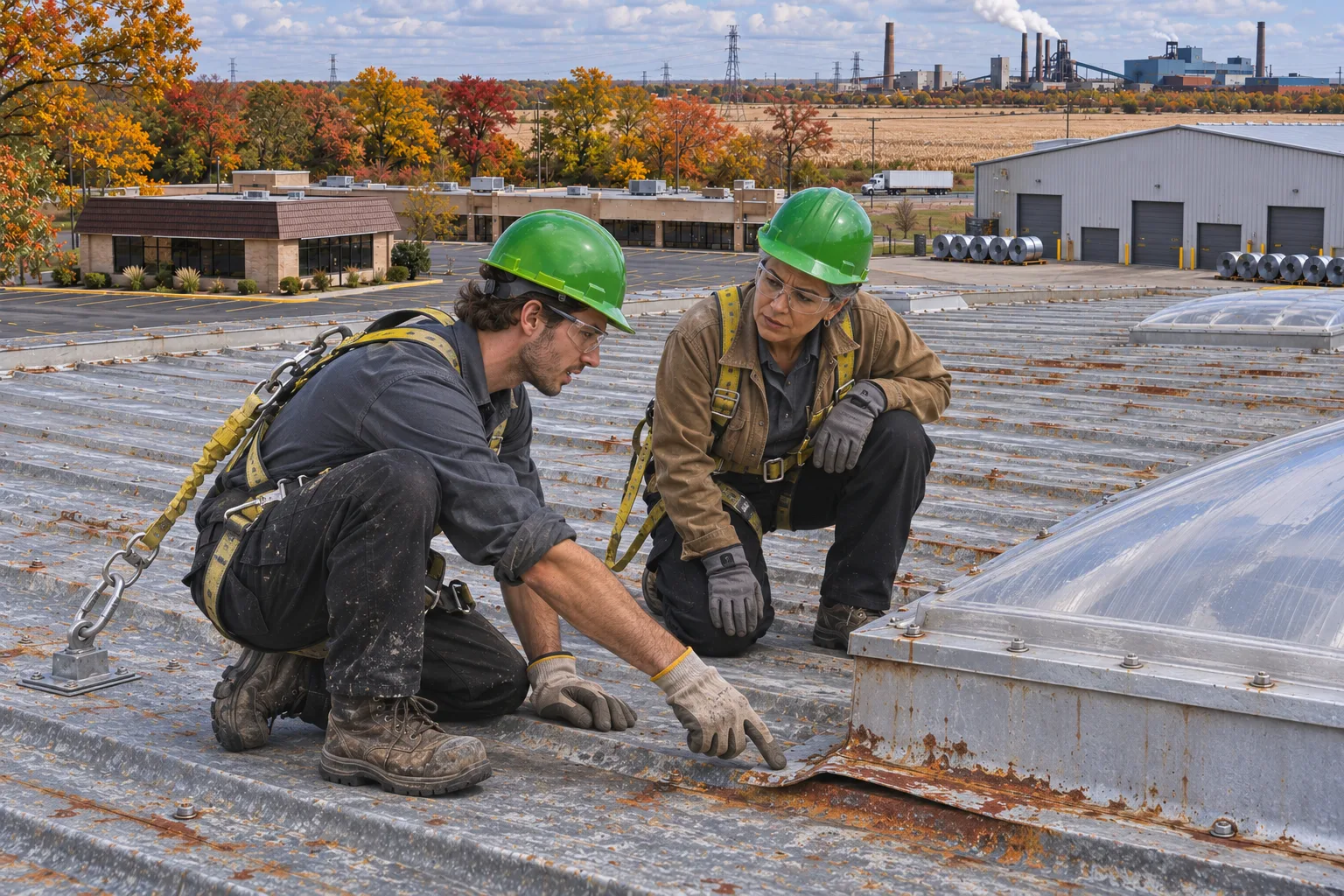
Griffith metal roof coating calls often start with drips inside unheated storage. Some are leaks; many are condensation forming under the panels.
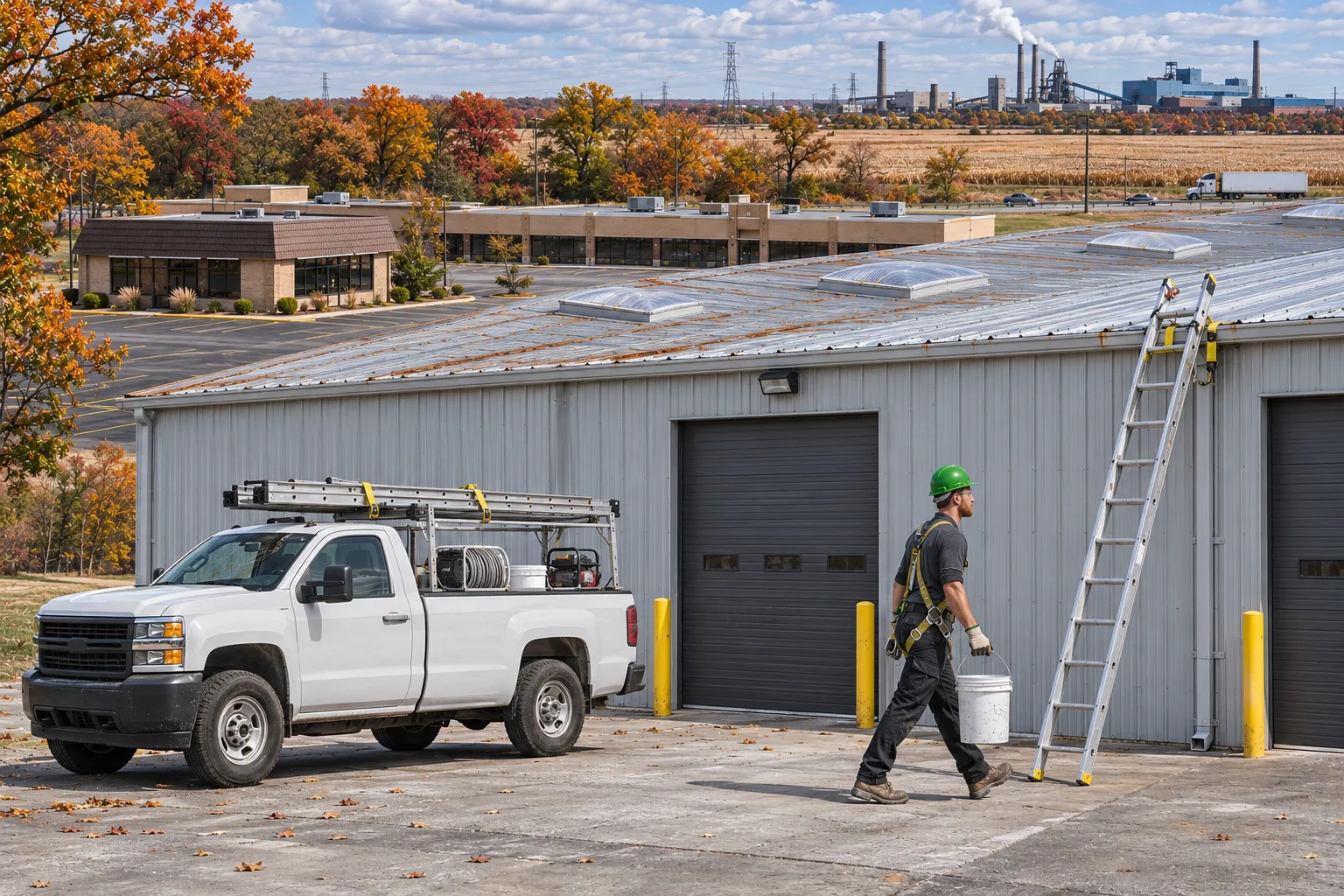
Warm, damp air hits the cold underside of the steel on chilly mornings and turns to water that drips like a leak.
We check the drip pattern, the weather it shows up in, and the insulation under the panels. A coating fixes leaks; condensation needs ventilation or insulation work.
Once condensation is ruled out, these are the leak sources we fix before coating.
Screws that spin without biting let water down the shank. Larger screws with new washers seal the hole. Each stripped hole gets marked so the screw count stays accurate for the estimate.
End laps across the slope gap as sealant dries. Water then runs into the building along the purlin. End laps get stitch screws and fabric so they stay closed through freeze-thaw cycles.
Ripped vapor facing lets damp air reach the steel, adding to condensation. It gets patched or replaced. Patching the facing cuts the damp air reaching the steel on cold mornings.
Old vents and fans leak at their flashing. Each gets resealed or capped if it no longer runs. Capped vents get flashed and coated so they stop leaking at the base.
Constant dripping rusts the panels from inside. Those panels get checked for thinning before coating. Panels thinned by rust from inside get replaced before the outside is coated.
Brittle skylights leak at their laps. They get resealed or replaced during the repairs. Replacement panels match the existing profile so laps close tight.
Coating stops the true leaks so the condensation fix can be judged on its own. Here is what it brings.
Every screw head and lap sits under coating, so the drips left afterward point clearly to condensation.
A white coating keeps the steel cooler in summer, which cuts the daily movement that loosens screws.
Stock and equipment under the roof stay out of the drips once the leaks are closed.
Once leaks are closed, any drip that remains has one cause left to fix, which keeps the next spend focused.
These are the coating systems we use on Griffith warehouses, shops, and storage buildings.
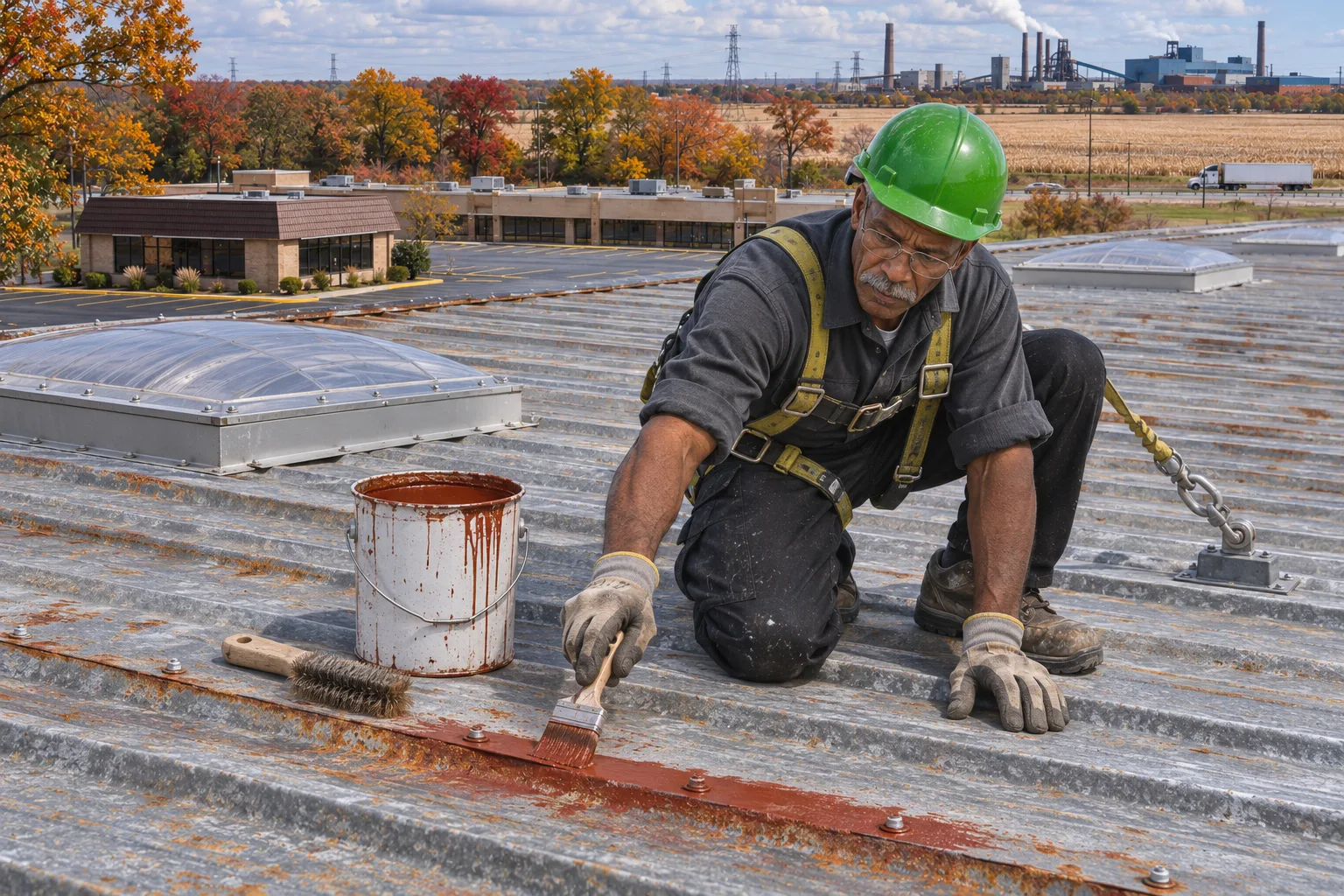
Exposed-fastener steel gets rust treatment, larger screws, sealed laps, and full coating. The steel gets its full prep, including any panels thinned from inside.
Commercial Metal Roof Coating details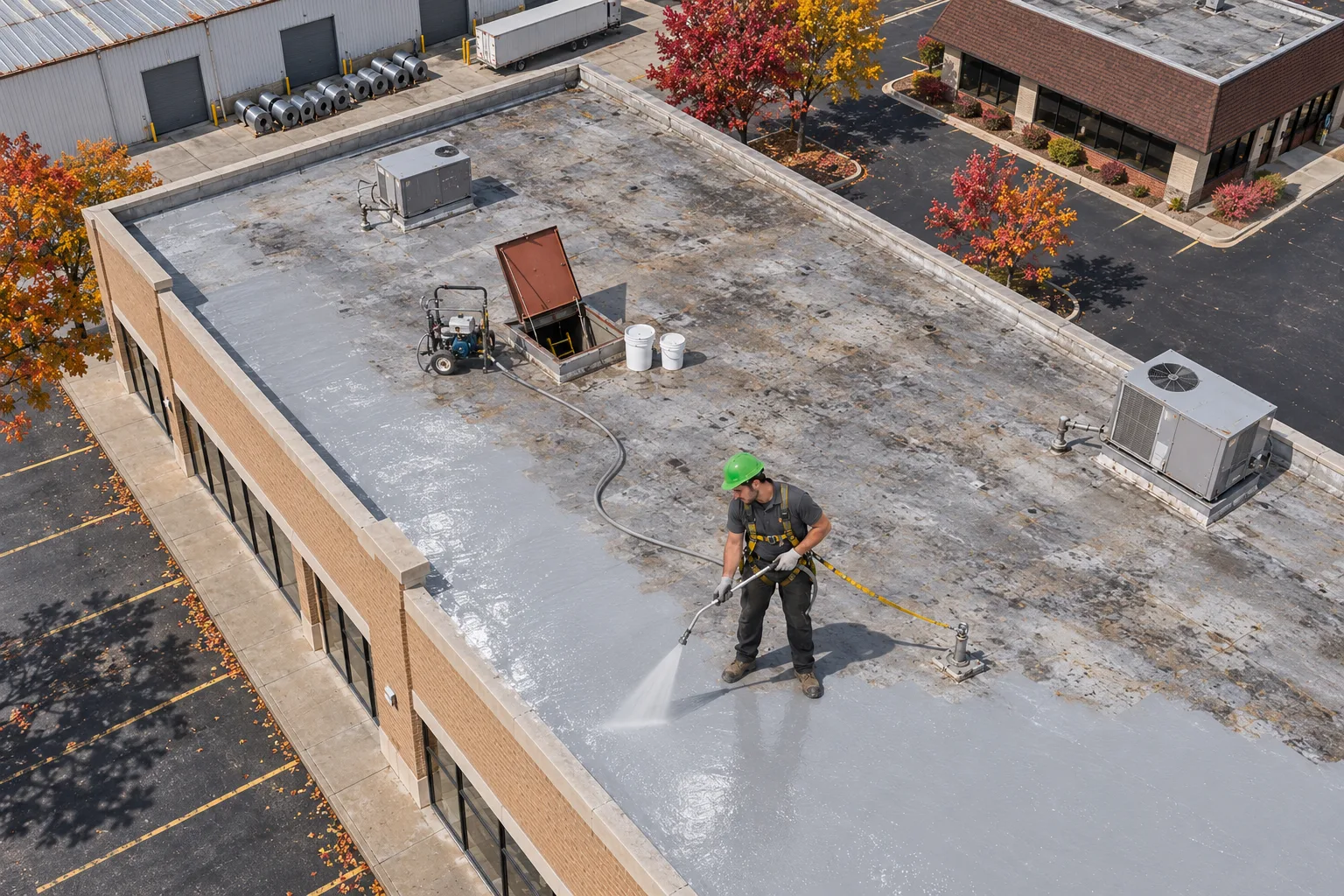
Low flat sections over offices that hold water take silicone. Flat office roofs get their drains cleared before the silicone goes on.
Silicone Roof Coating details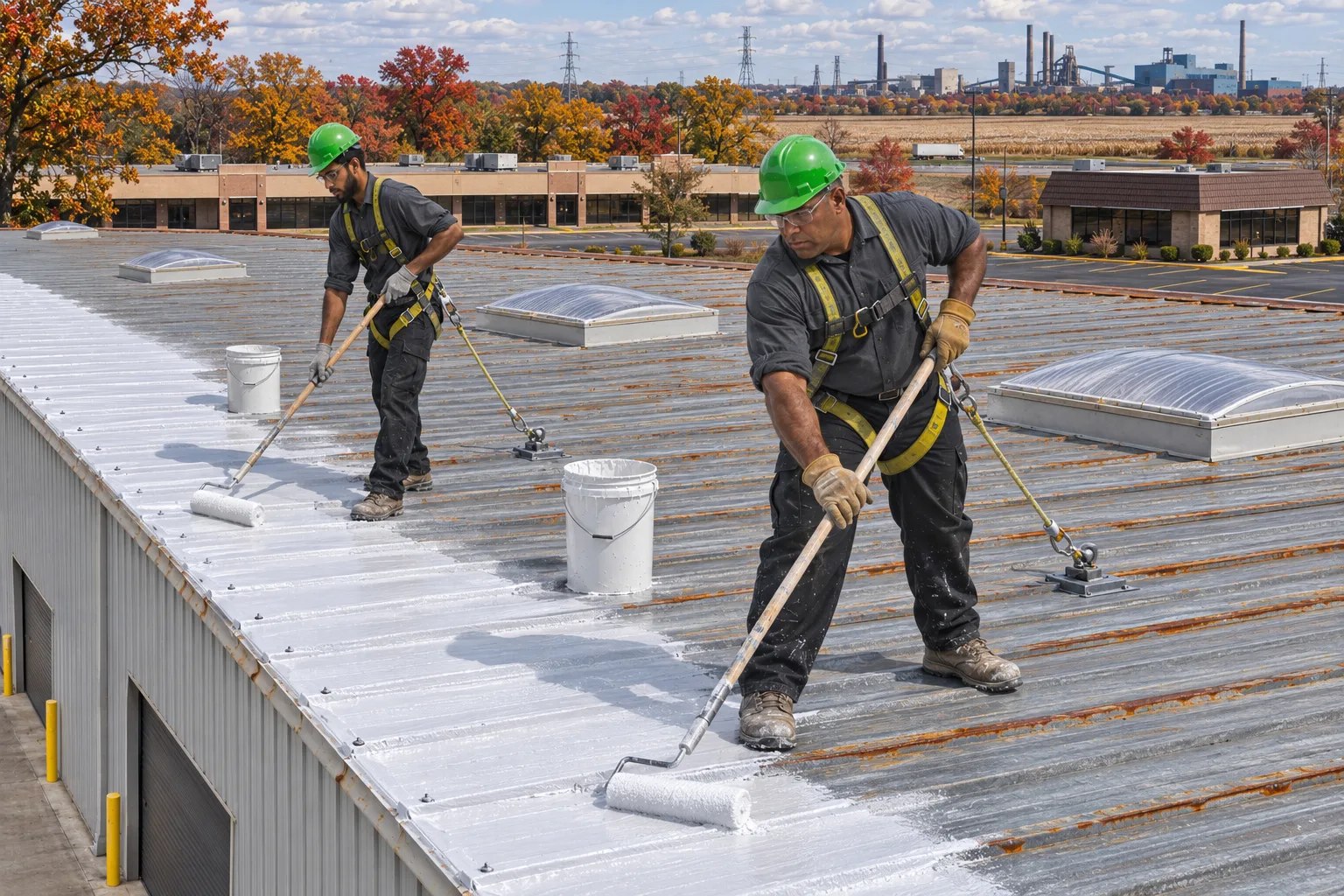
Pitched storage roofs that shed water fast can take acrylic. Acrylic is applied in warm, dry weeks when the panels stay dry all day.
Acrylic Roof Coating details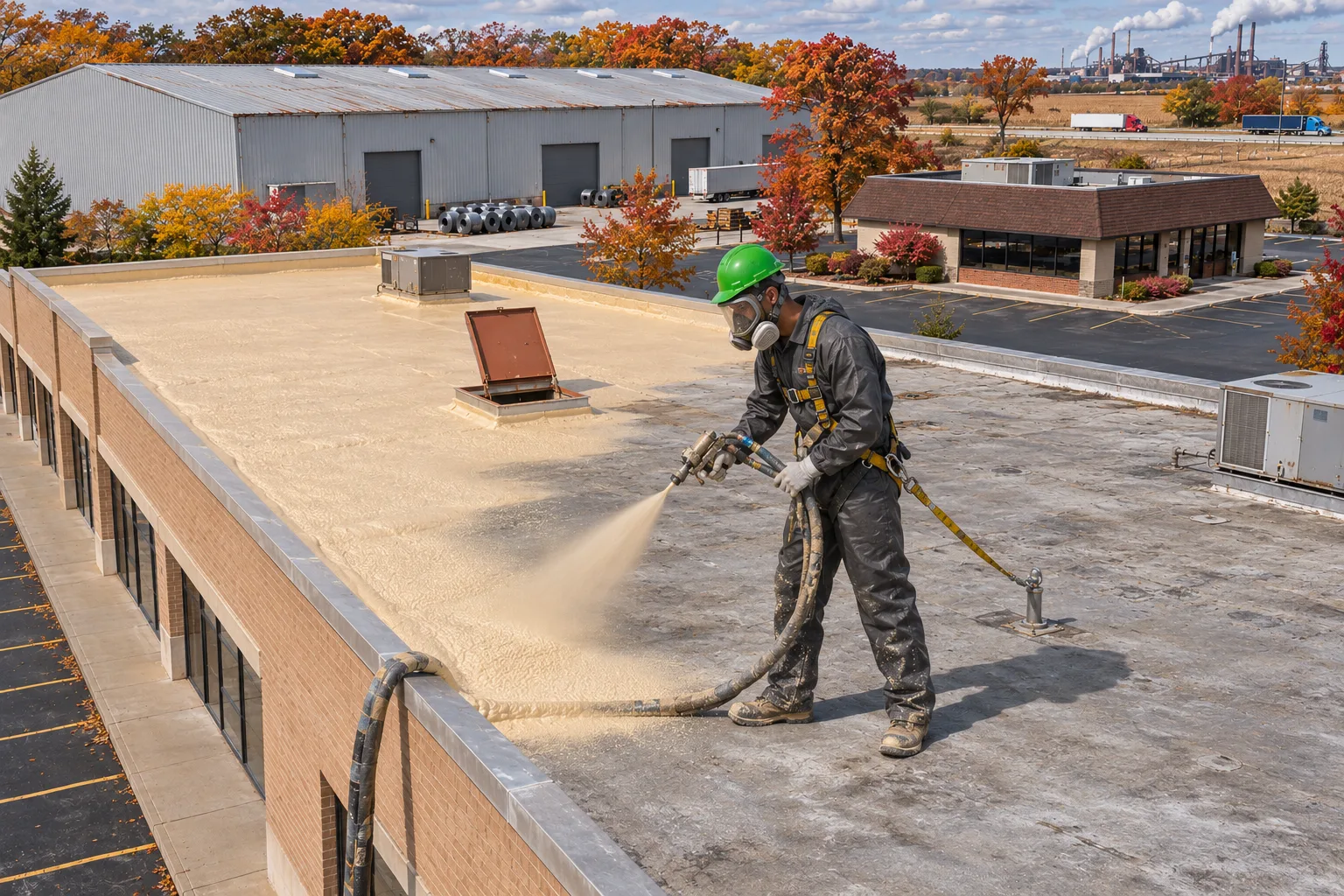
Foam adds insulation, which also helps with underside condensation. Spray foam insulates the steel from above, which cuts the cold-surface drips.
Spray Foam Roofing details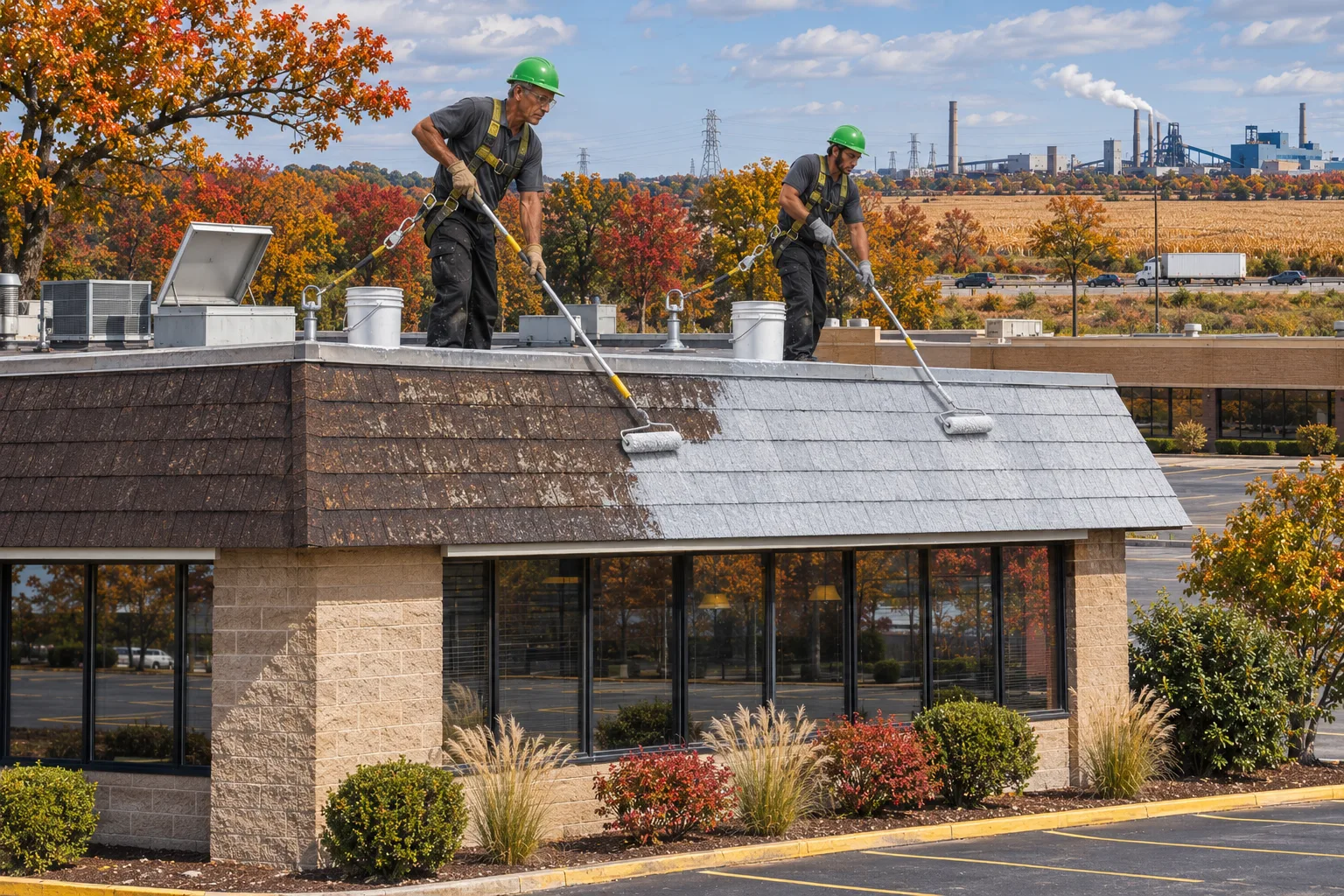
Shingled office fronts take an asphalt-rated coating. Shingled fronts get flashing repairs before their coating goes on.
Shingle Roof Coating detailsThat pattern often points to condensation. We can find out what is causing it before you spend on a coating.
The first step here does extra work: separating leaks from condensation.
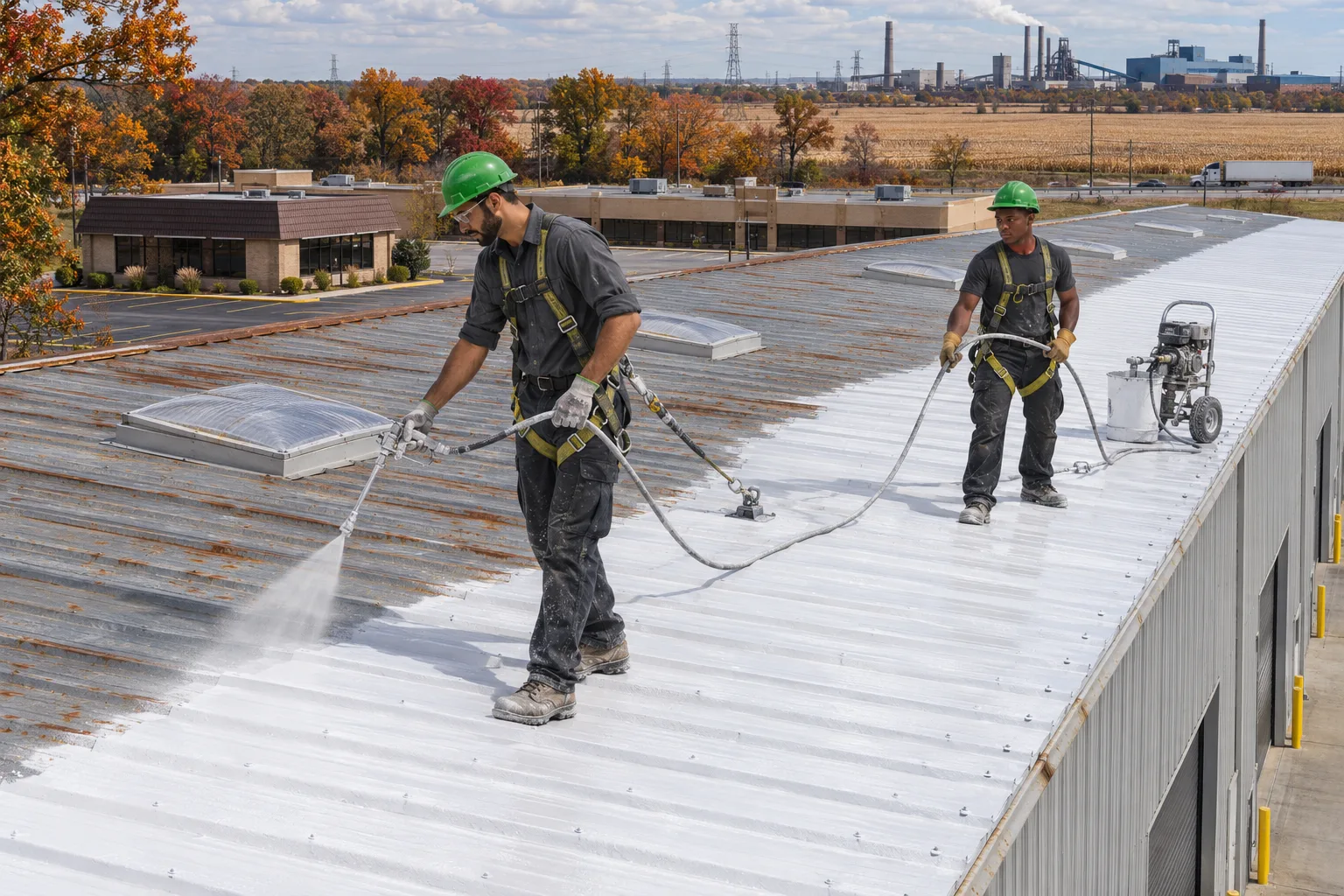
We check drip patterns, insulation, and vents inside, then walk the roof for screws, laps, and flashing. Interior checks happen first, before going up on the roof.
Leaks get marked for repair. Condensation gets a separate note on ventilation or insulation. Each drip spot gets marked on the roof sketch.
Screws, laps, vents, and skylights get repaired so the coating covers a tight surface. Vents that no longer run get capped and sealed.
Primer and coating go on to rated thickness across the full roof. Thickness gets checked as the coating goes on.
We coat commercial roofs in Griffith and the towns listed here.
Outside our towns? Call us or send us a message.
Lake wind at eaves and trim.
Edges fastened before coating.
Michigan City metal roof coatingCoating runs about $2.50 to $4.00 per square foot and replacement about $5 to $8. Screw counts, lap repairs, and rust set the final figure.
Ventilation or insulation work is priced separately from the coating, since it is a different job.
The basic moisture probe during the roof walk is included in the inspection. A larger survey on a big roof with many wet spots is priced as part of the job if it is needed.
Condensation drips on cold, dry mornings across a wide area. Leaks follow rain and snowmelt and drip at the same spots.
Yes. The coating work happens on top of the roof, and interior checks take only a short walk-through.
Then we say so, and the coating can wait. The findings explain where the moisture forms and what ventilation or insulation change would help, so you can price that work separately.
Often, yes. Storage roofs are usually simple steel, and coating closes their leaks for well under replacement cost.
We are, from Portage, covering Griffith warehouses, shops, and storage buildings.
A white coating keeps the steel a little cooler by day, but condensation forms on cold mornings, so the effect is small. Insulation facing and airflow under the roof make the real difference.
Send the address or call. We sort the drips first, then price the coating.