Photos Before And After
Every repair gets photographed before it is coated over, so you can see the open laps, rusted spots, and failed screws that were fixed under the new layer.
Our metal roof coating services in Portage cover steel, low-slope, foam, and shingle roofs, and the inspection decides which system goes on.
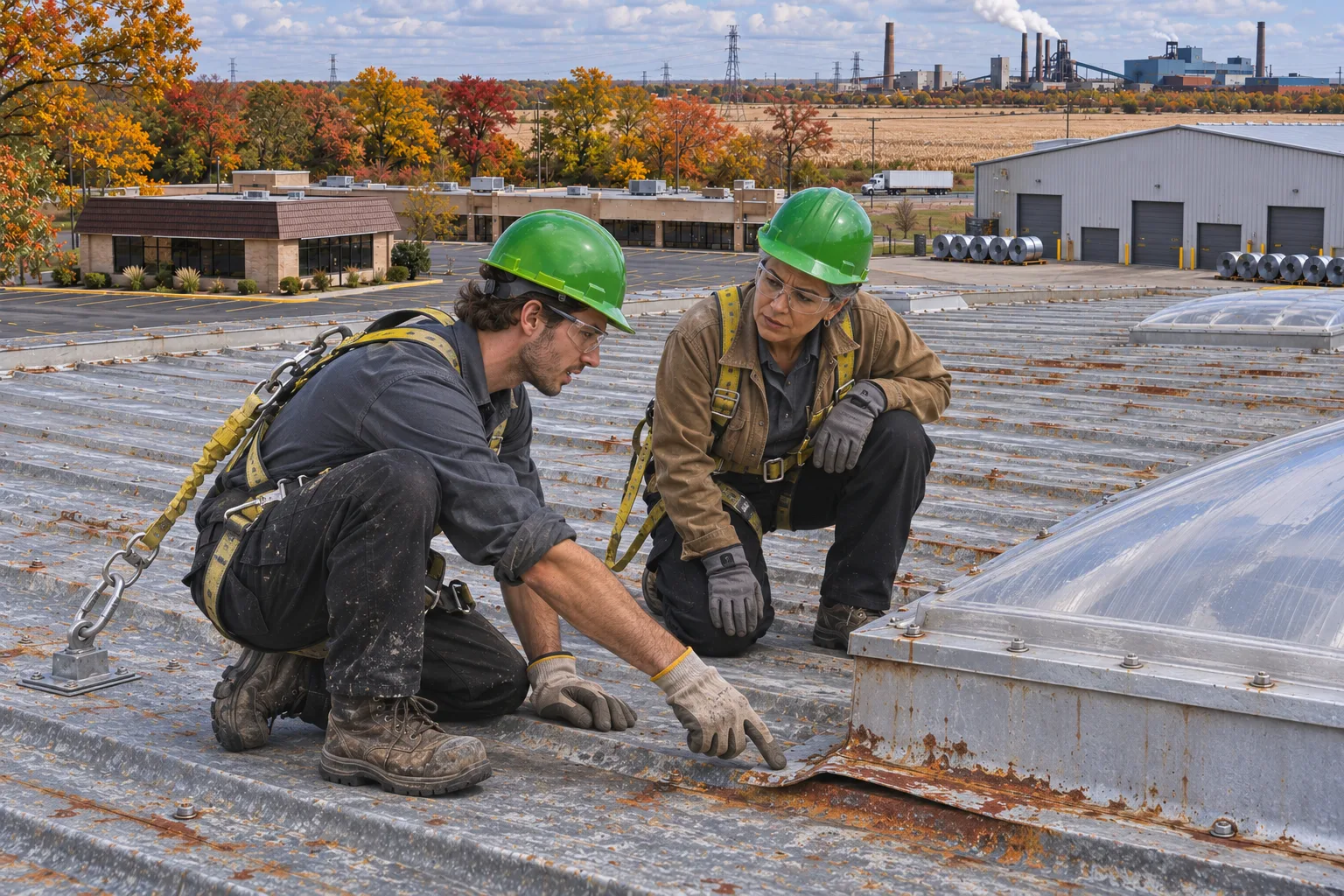
Each of our metal roof coating services in Portage starts with the same roof walk and ends with a coating chosen for slope, drainage, and panel condition.
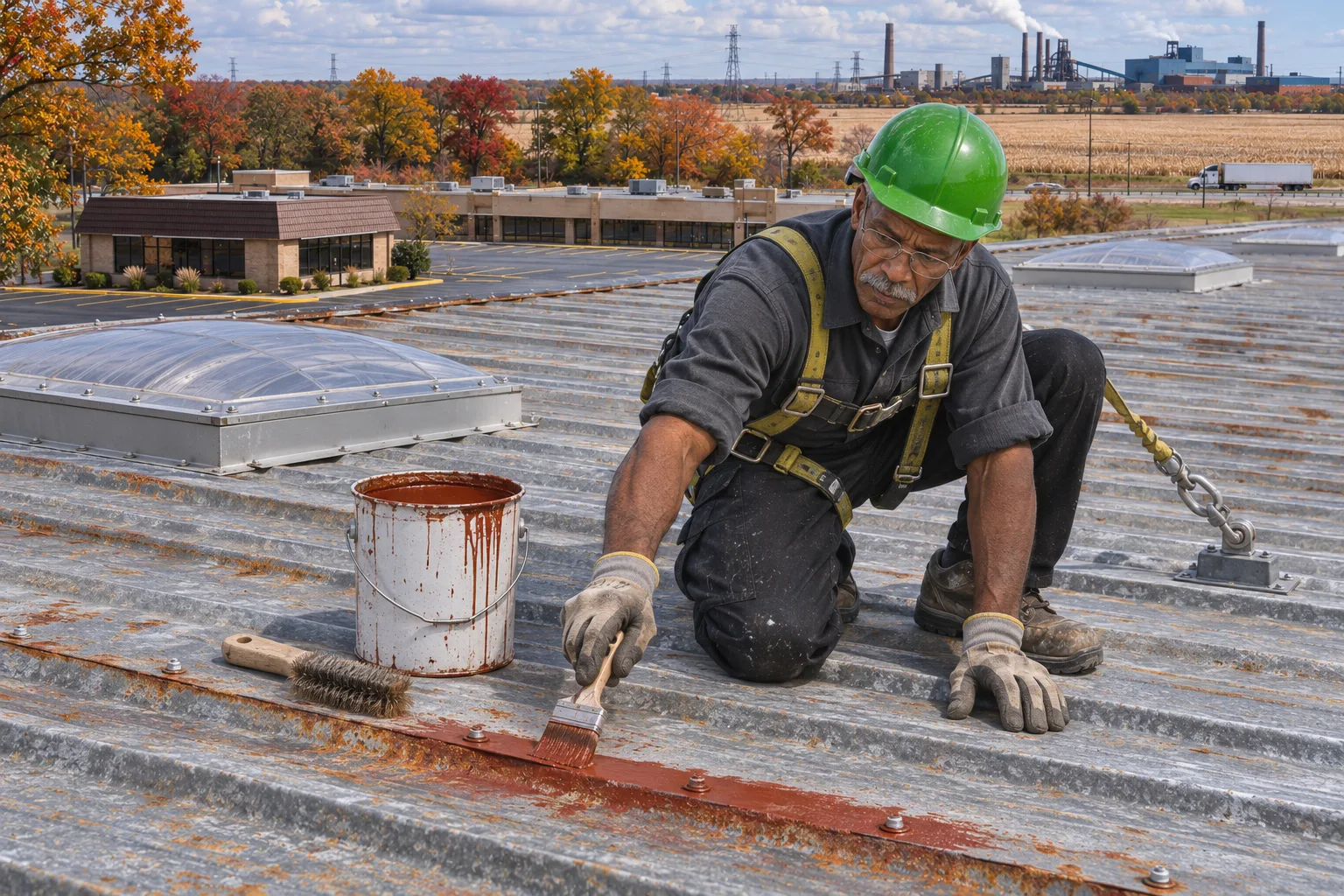
Steel roofs with firm panels get rust treatment, new or resealed screws, reinforced laps, and a full coating. It is the service most Portage warehouses and plants need.
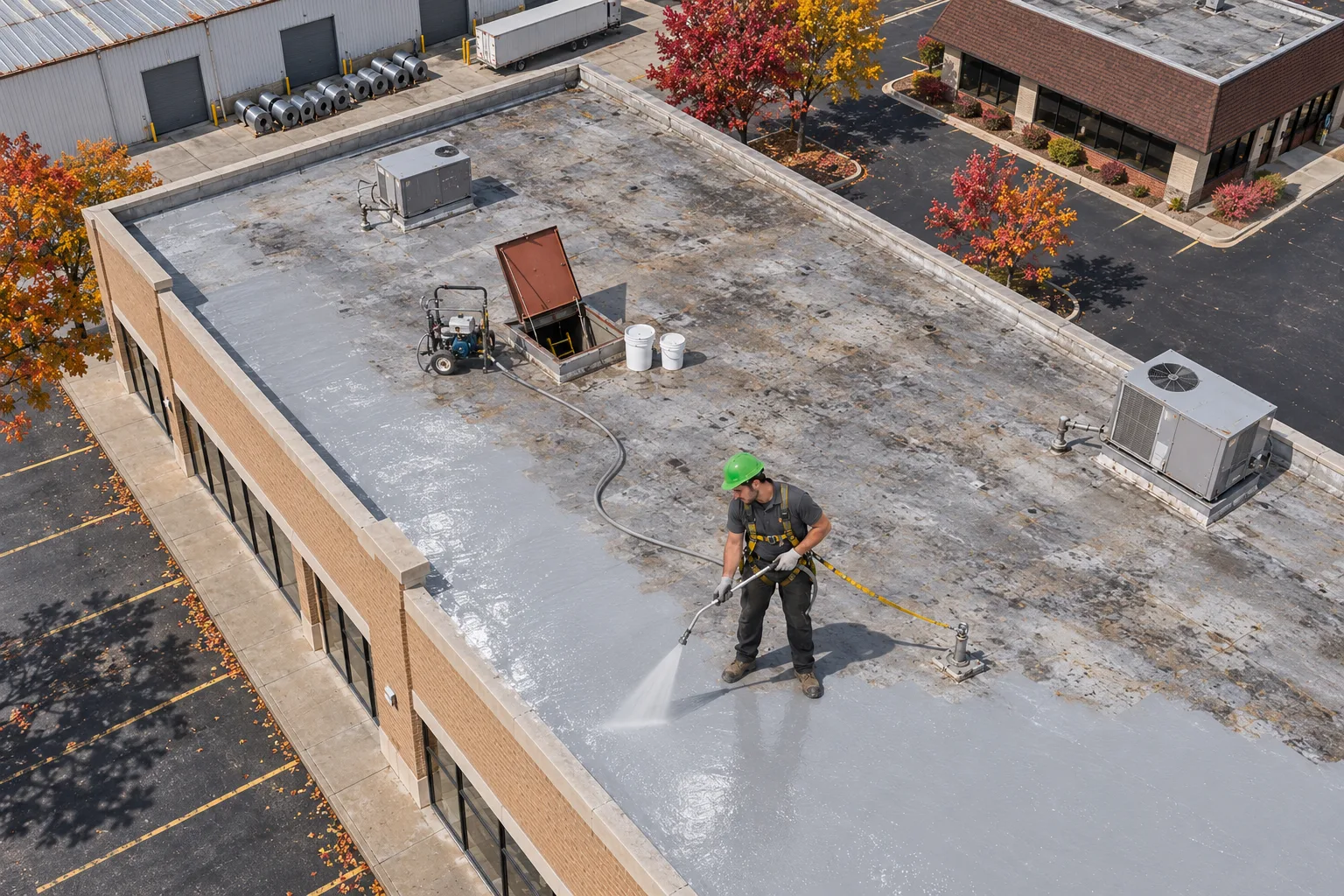
Thick silicone passes over primed metal or old single-ply, chosen where water sits in low spots after storms and around interior drains.
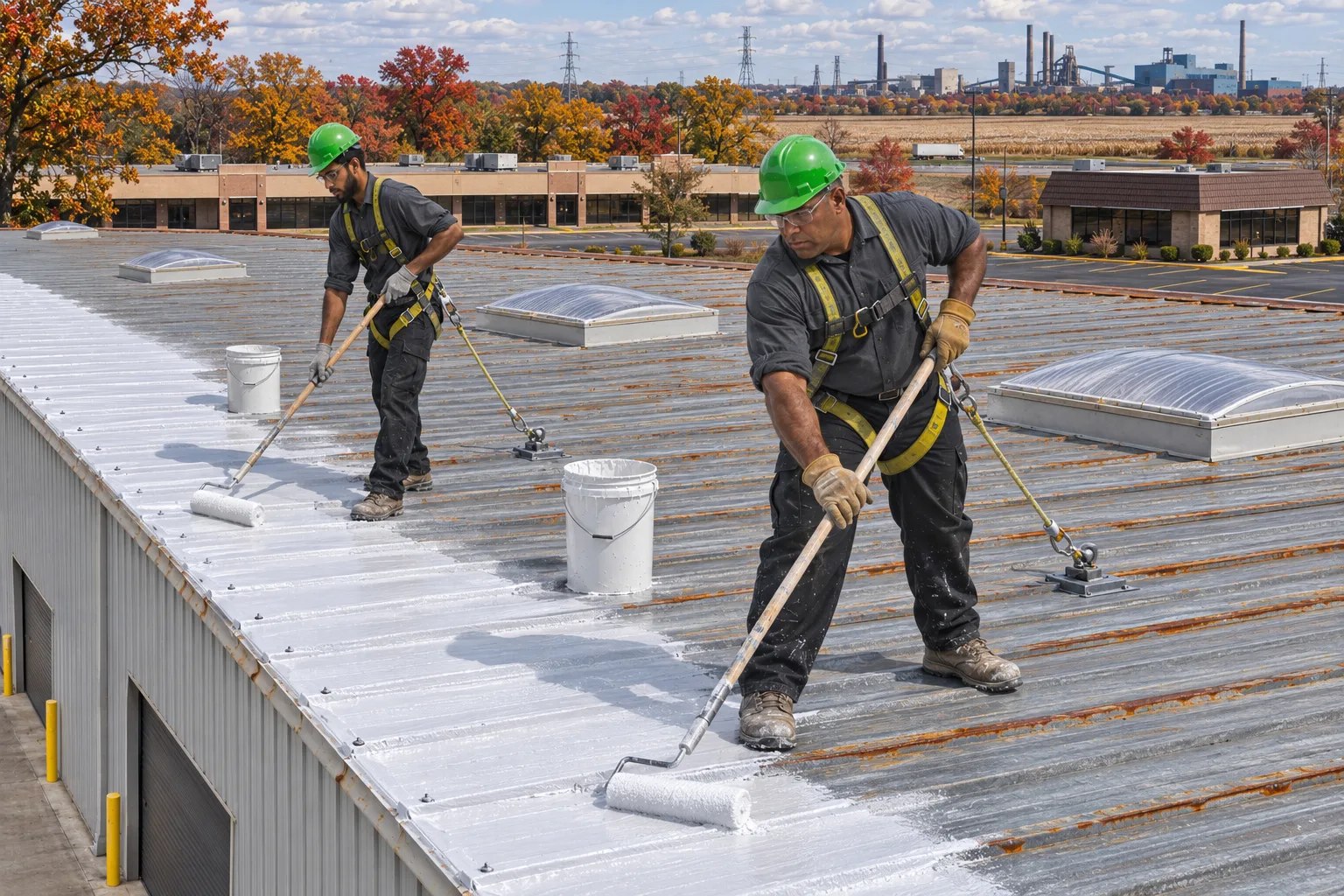
Bright, easy-to-recoat acrylic for metal roofs with enough pitch to drain, scheduled for warm weeks so every coat cures fully.
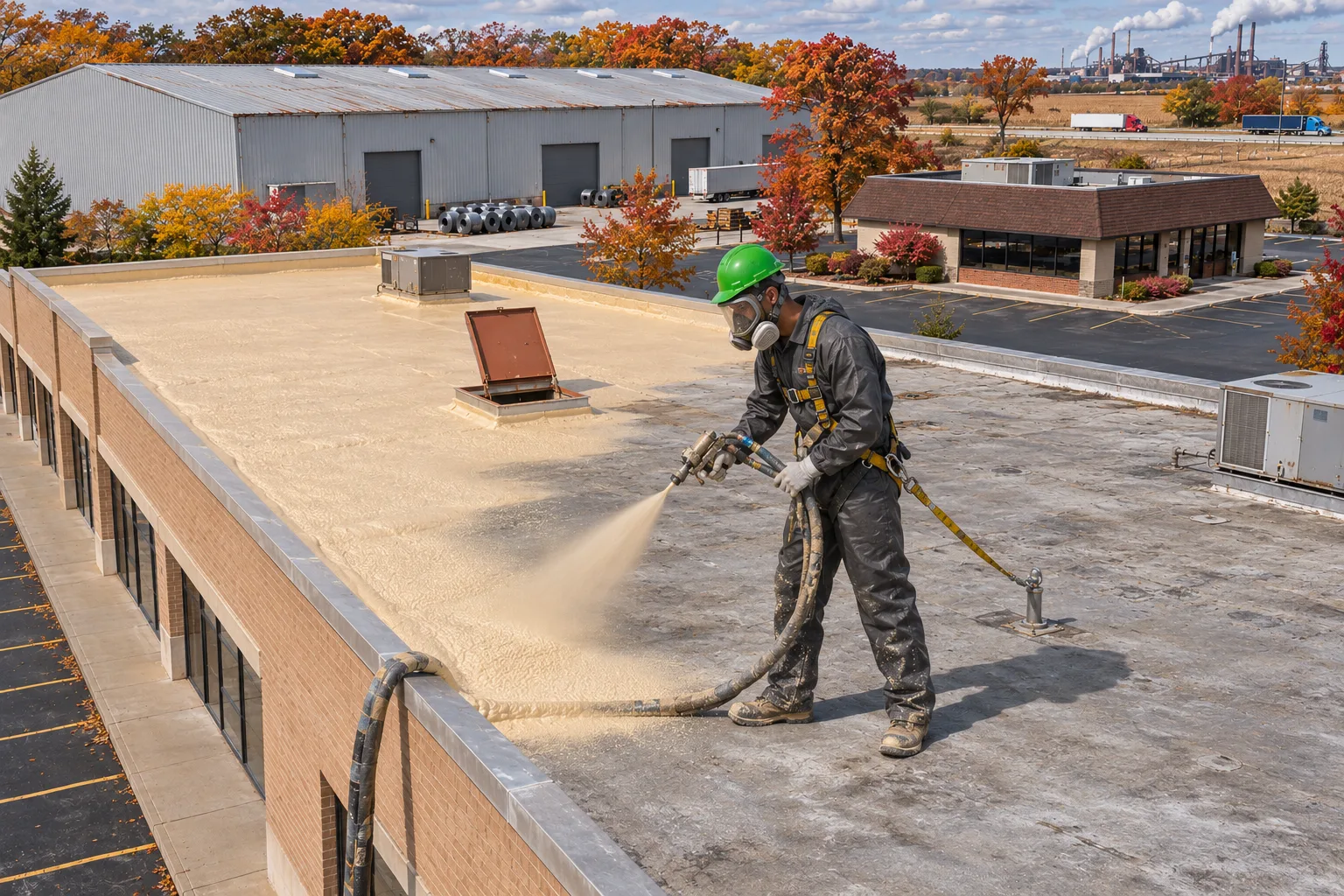
A new insulated layer sprayed right over the old roof, built up where water ponds, then sealed with a protective topcoat.
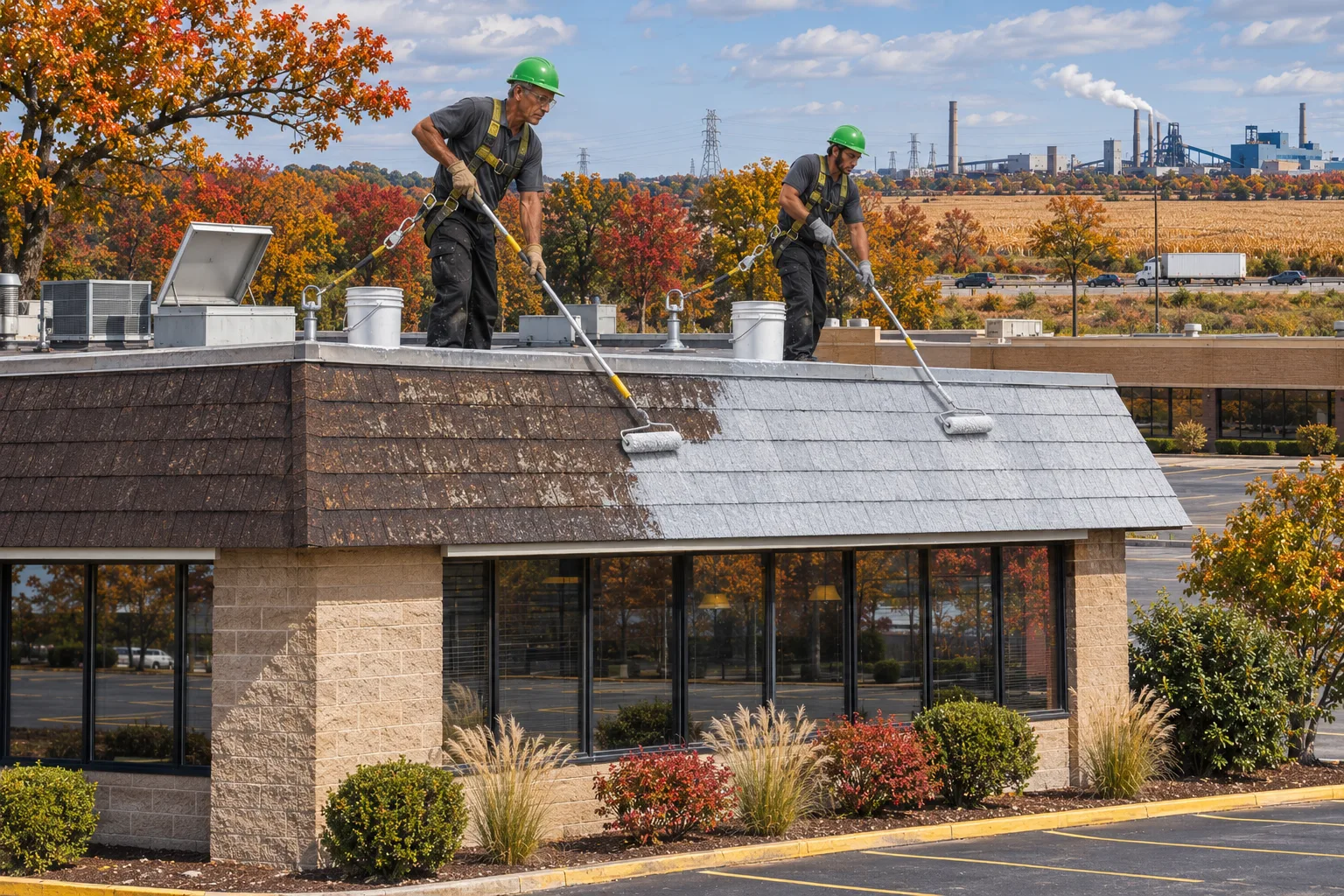
A coating made for asphalt that locks loose granules and closes small cracks on intact shingle roofs over offices, churches, and clinics.
Match the roof you have to the system that usually suits it. The roof walk confirms the choice before any coating or primer is ordered.
| Roof Condition | Metal | Silicone | Acrylic | Foam | Shingle |
|---|---|---|---|---|---|
| Pitched steel panels with leaking screws | Usually Fits | Sometimes | Usually Fits | Sometimes | Rarely |
| Low spots that hold water for two days | Rarely | Usually Fits | Rarely | Sometimes | Rarely |
| Building loses heat through the roof | Sometimes | Rarely | Rarely | Usually Fits | Rarely |
| Worn asphalt shingles still lying flat | Rarely | Rarely | Rarely | Rarely | Usually Fits |
| Old single-ply membrane, dry insulation | Rarely | Usually Fits | Sometimes | Sometimes | Rarely |
Silicone recoats only with silicone, so a past silicone layer narrows the choice. Old acrylic, paint, and bare primed steel leave every option open.
Tell us what you see from the ground and inside. The inspection settles the system, and the estimate shows coating beside replacement.
The systems differ in the last step. The first three steps stay the same on every roof we coat, whatever the slope, size, or surface underneath.
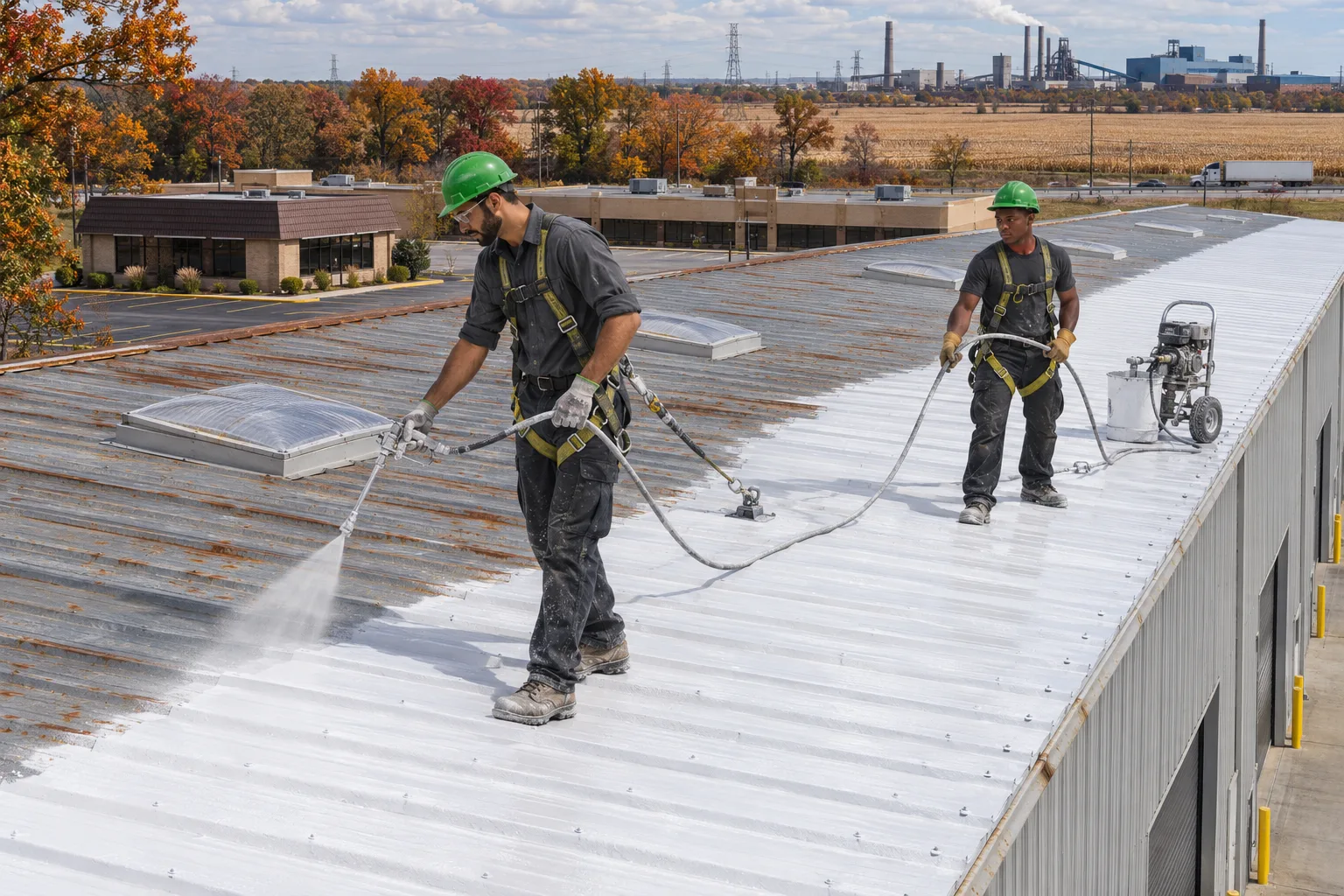
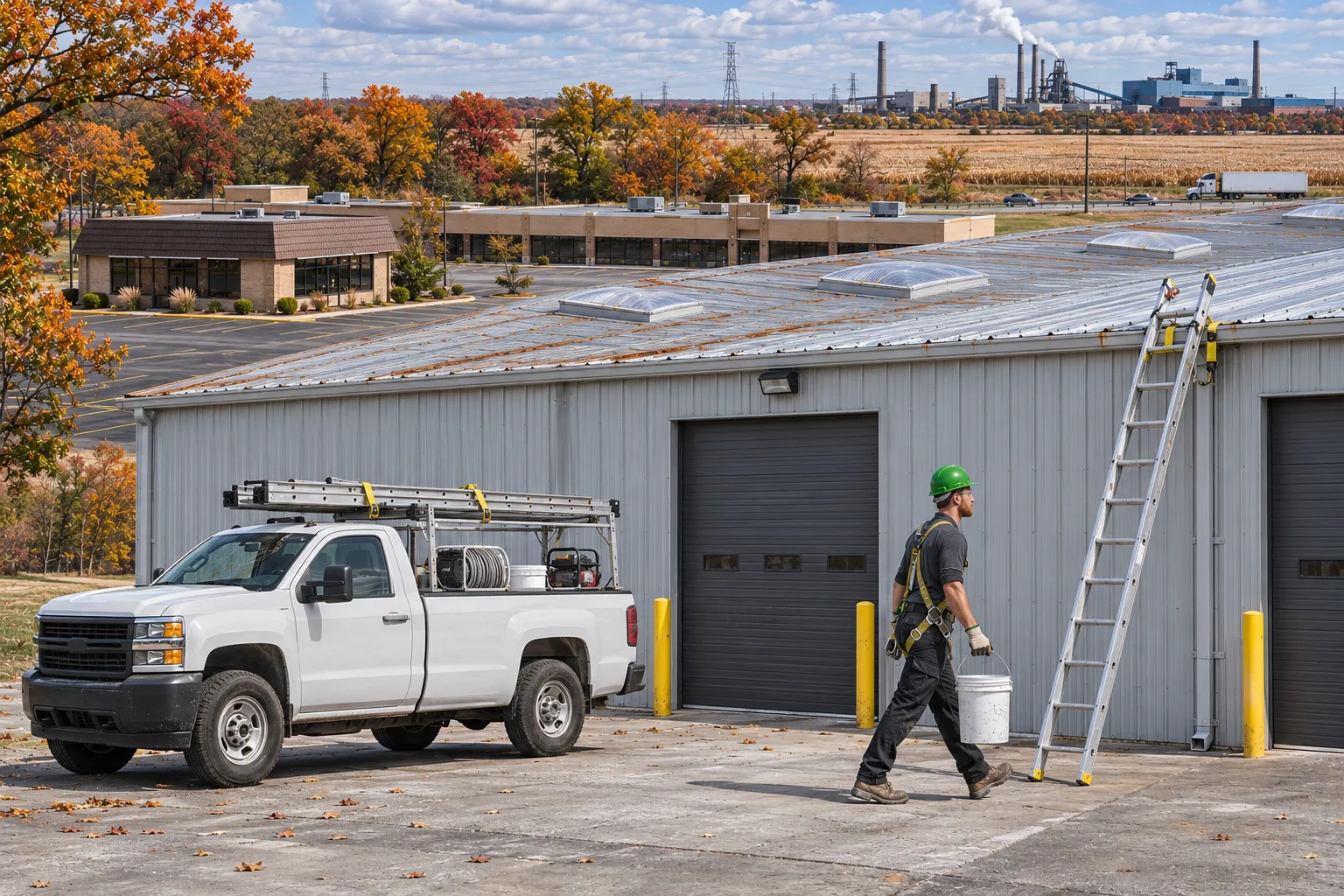
A full walk of the roof with a moisture probe, photos of every problem area, and a written list of repairs before pricing. You keep the photos.
We measure the roof, check slope and drainage, and match the system and thickness to what the roof needs. Past coatings get tested.
Rust, loose screws, open laps, curbs, and flashing get fixed so the coating bridges a tight, clean surface. Wet insulation comes out.
The chosen system goes on to its rated mils, with thickness checked as the crew works and a final walk at the end to look over every edge.
Whatever system goes on, these four pieces come with it on every Portage roof, from a small shop to a long warehouse run.
Every repair gets photographed before it is coated over, so you can see the open laps, rusted spots, and failed screws that were fixed under the new layer.
A wet-film gauge checks the coating as it goes on, with extra readings at drains, curbs, and edges where water and ice work hardest on a roof.
The estimate lists the roof area, the repairs, the system, and the rated thickness, so the job on the roof matches the job on paper.
At the end, the roof gets walked again: every edge, curb, drain, and lap checked before the crew packs up and the lift leaves the lot.
Yes. A pitched metal warehouse with a flat office section often gets acrylic or metal coating on the slope and silicone on the flat part, with the joint between them detailed by hand. The estimate lists each section with its own system and area.
Few coatings stick to cured silicone, so a roof coated with silicone before gets silicone again. We check for old coatings during the roof walk, and a small adhesion test settles any doubt about what is already on the roof.
Each section is judged on its own slope, drainage, and surface. Steel panels get the metal process, flat areas that pond get silicone, and shingled faces get an asphalt coating, all under one estimate and one schedule.
Late spring through early fall gives the warm, dry days most coatings need to cure. Silicone has a slightly wider window than acrylic. Inspections and repairs can happen earlier in the year, so the coating can start as soon as the weather allows.
Smaller shop roofs often take a few days. Large warehouses run longer and get done in sections. Weather, repairs, and the system chosen set the schedule, and the estimate gives a working timeline once the roof walk is done.
Usually they run as one job, with repairs a section or two ahead of the coating crew. Urgent leak repairs can come first on their own visit when water is getting in now.
A walk each spring to clear drains and gutters, check curbs and seams, and look for cuts from hail or dropped tools. Small damage gets cleaned and patched with the same coating before it spreads.
Once the top layer wears thin enough that primer, foam, or bare metal starts to show at screws, laps, or high-traffic paths. Recoating at that point is mostly cleaning and one fresh coat, far less work than the first job.
Yes. Walk pads along the service paths protect the coating from boots and dragged tools, and technicians can reach units the same way they always have. Ask service contractors to keep tools and panels off the coated field.
Send the building address or call. The roof walk comes first, then the system choice and the price.