Lifted Eave Trim
Trim at the eave flutters in wind until its screws pull out. It gets refastened and its laps sealed. Missing trim pieces get replaced to match the profile of the panels.
As a Michigan City metal roof coating contractor, we fasten and seal wind-worn edges and trim first, then coat the panels.
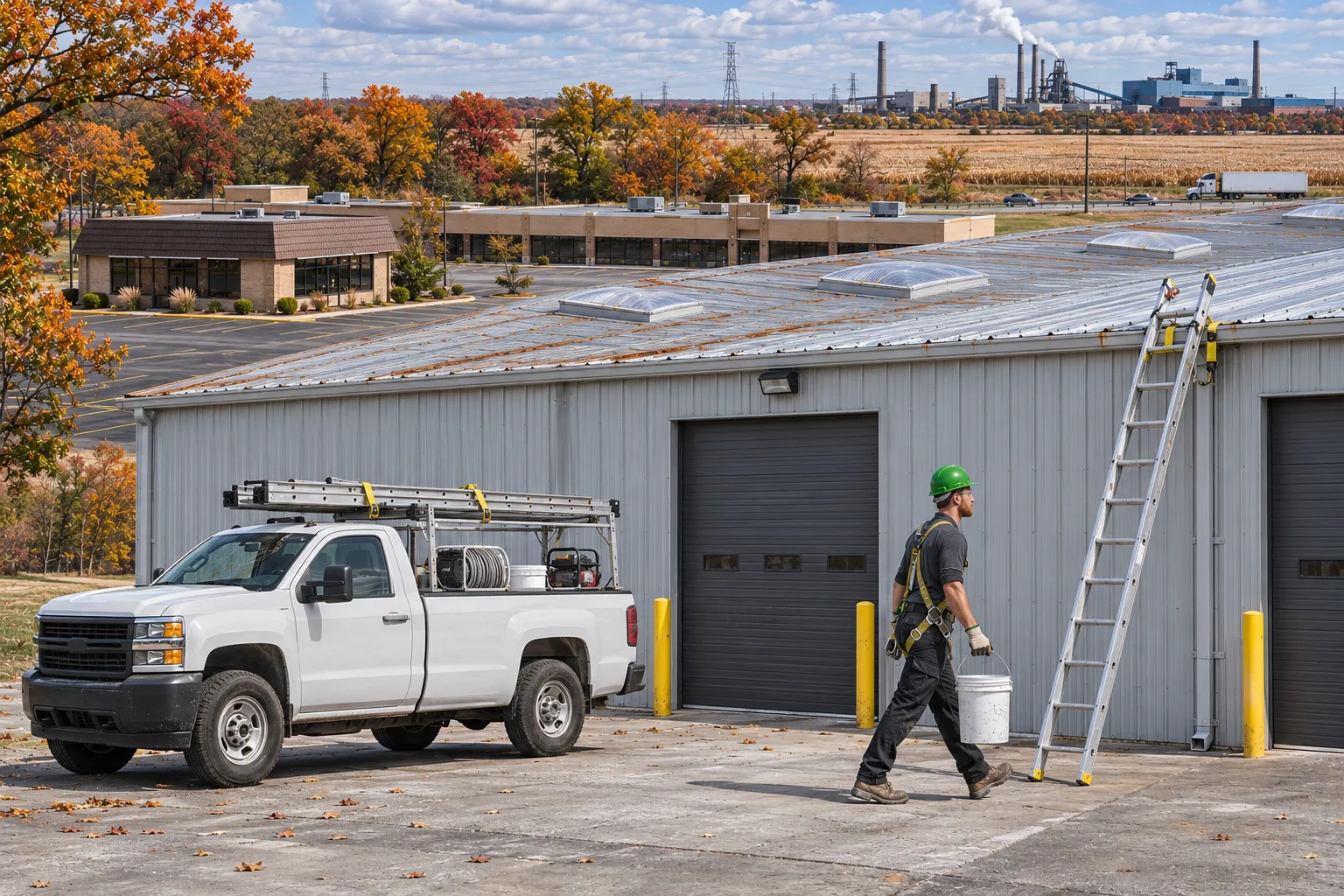
Michigan City metal roof coating starts at the roof edges. Steady wind off the lake works trim and panel ends loose over the years.
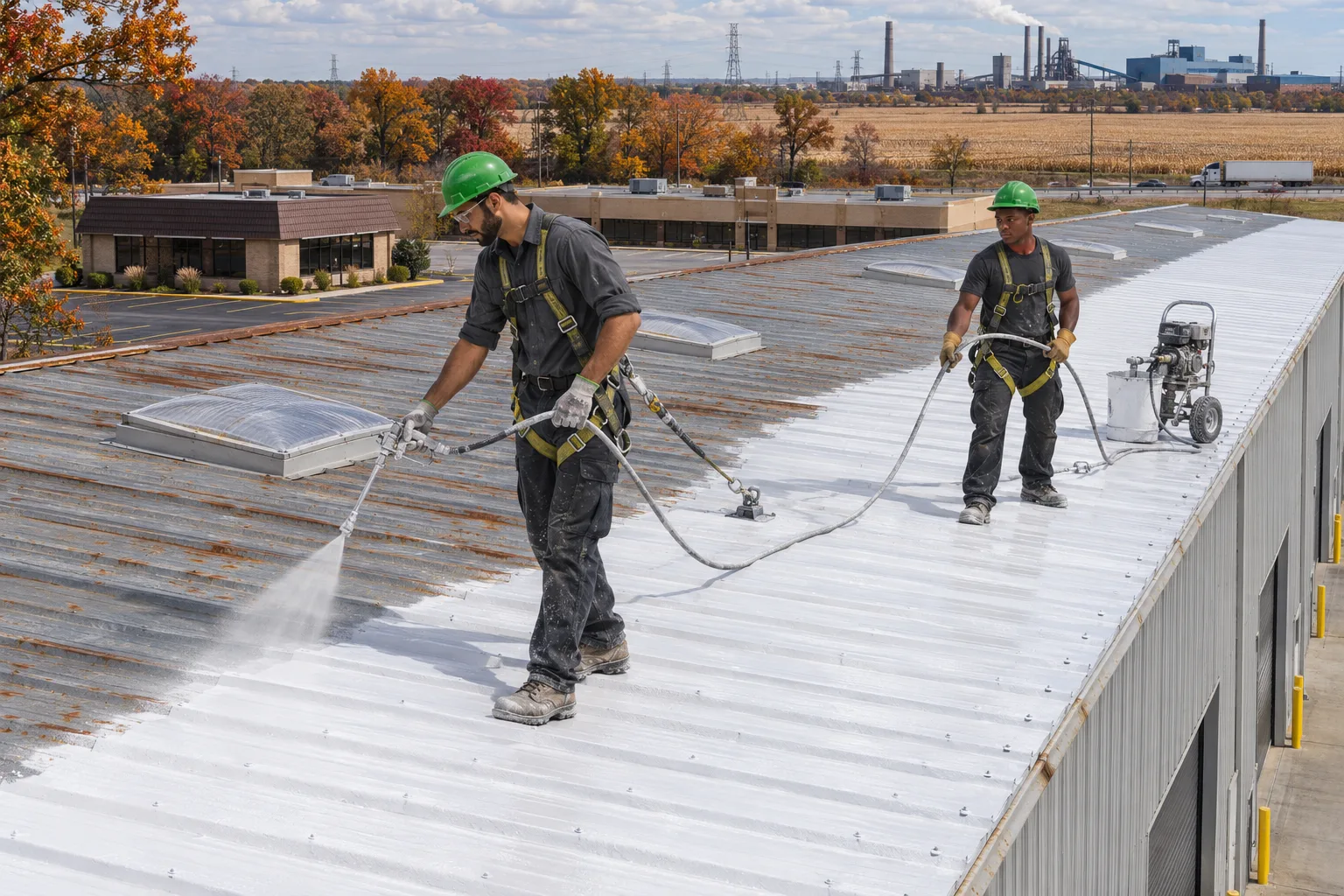
Eave trim, rake trim, and ridge caps take the brunt of the wind. Their screws loosen first, and a lifted edge lets rain drive under the panels.
We refasten every edge with new screws, add stitch screws where trim has spread, and seal the trim laps before the coating crosses the field.
Wind and lake moisture leave these marks on metal roofs. Each one gets repaired before coating.
Trim at the eave flutters in wind until its screws pull out. It gets refastened and its laps sealed. Missing trim pieces get replaced to match the profile of the panels.
Gable-edge trim opens at its laps. Stitch screws close the gap before coating. Spread laps let wind-driven rain travel along the trim into the wall below.
Ridge caps loosen at their closures, letting wind-driven rain in at the peak. New screws and closures fix it. Torn foam closures under ridge caps get swapped out at the same time.
Damp lake air rusts the cut ends of panels first. Ends are cleaned, primed, and sealed. Rust along the eave also stains siding below, a sign the panel ends need attention.
Lake-effect snow piles against parapets and high walls, then melts into flashing. Wall flashing gets resealed. Counterflashing at the wall gets checked for gaps that let meltwater behind it.
Heavy snow and ice drag gutters down. Hangers get replaced and seams resealed. Hangers get spaced closer on long runs that carry heavy winter loads.
On lake-exposed roofs, coating protects the edges where wind does its damage. Here is what it adds.
Trim laps and panel ends sit under coating, so wind-driven rain has fewer ways in at the edges.
Primer and coating over panel ends slow the rust that damp lake air starts there.
Sealed laps near walls and gutters keep snowmelt from slipping under the panels.
Refastened and sealed trim stops the flutter that works screws loose every windy week.
These five systems cover the commercial roofs we see in Michigan City.
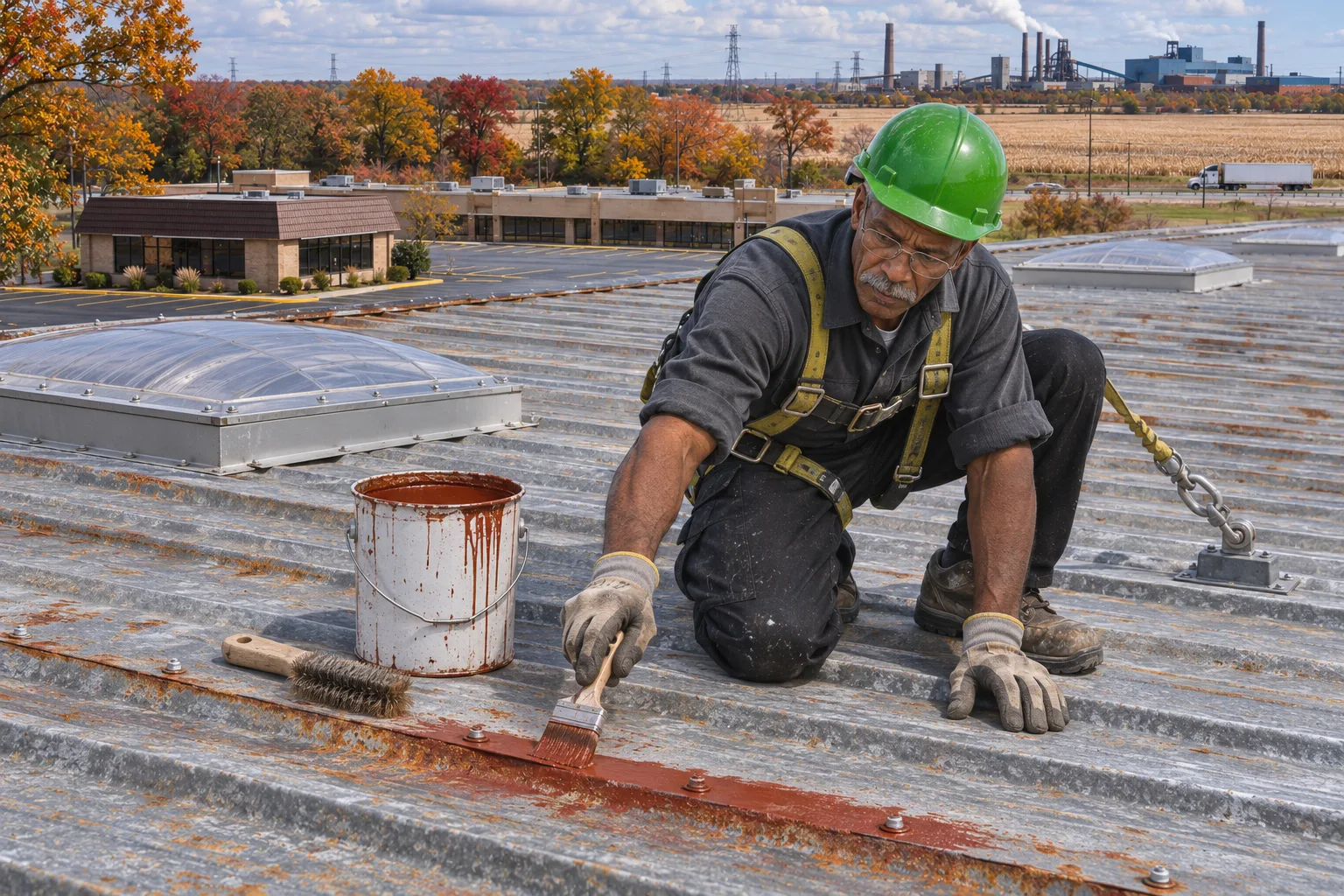
Steel roofs with wind-worn edges get the full prep and coating. Edge trim and ridge caps get secured first, then the full field gets coated.
Commercial Metal Roof Coating details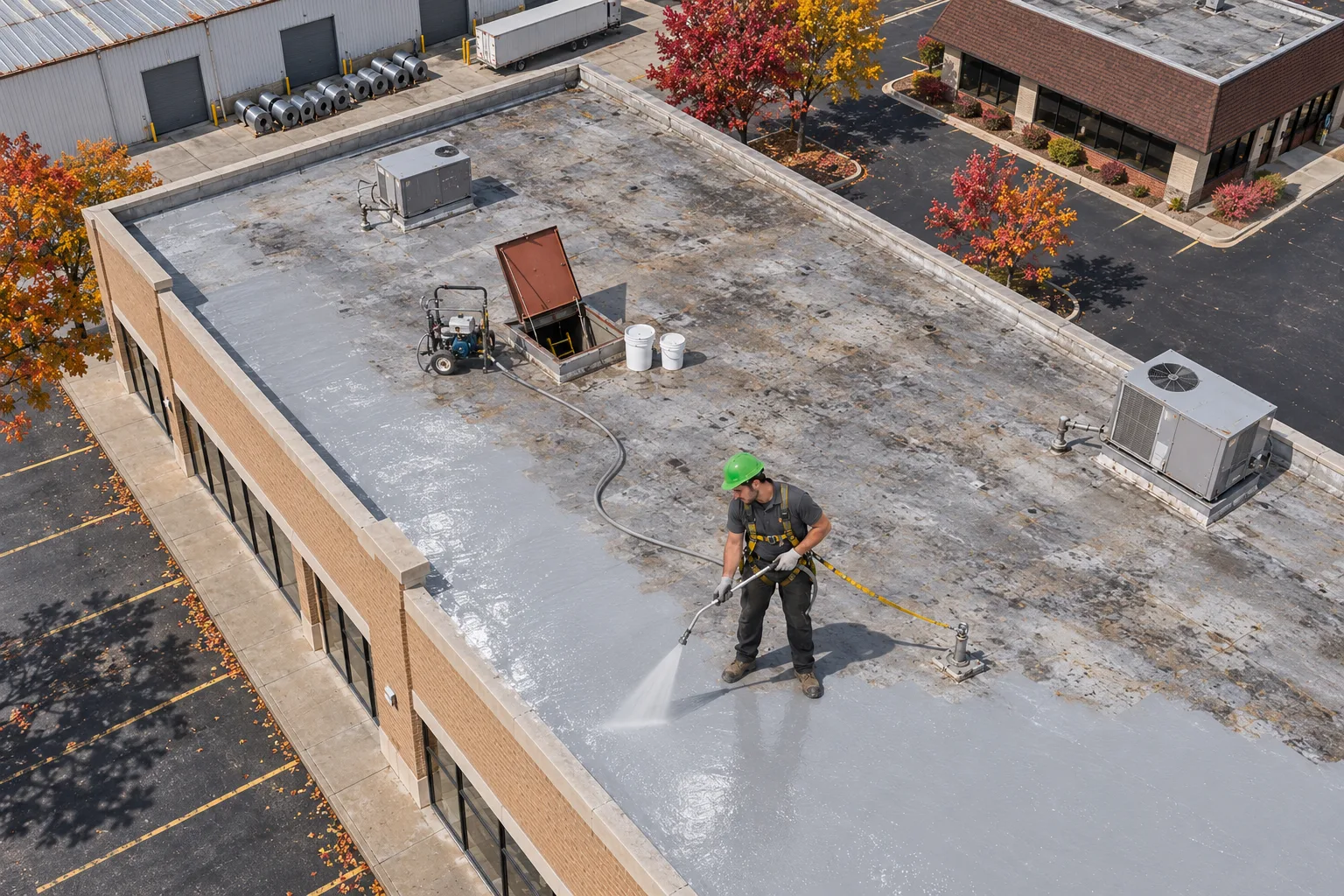
Flat roofs on retail buildings that hold meltwater take silicone. Ponding near parapets fills with melt in spring, so those areas get extra mils.
Silicone Roof Coating details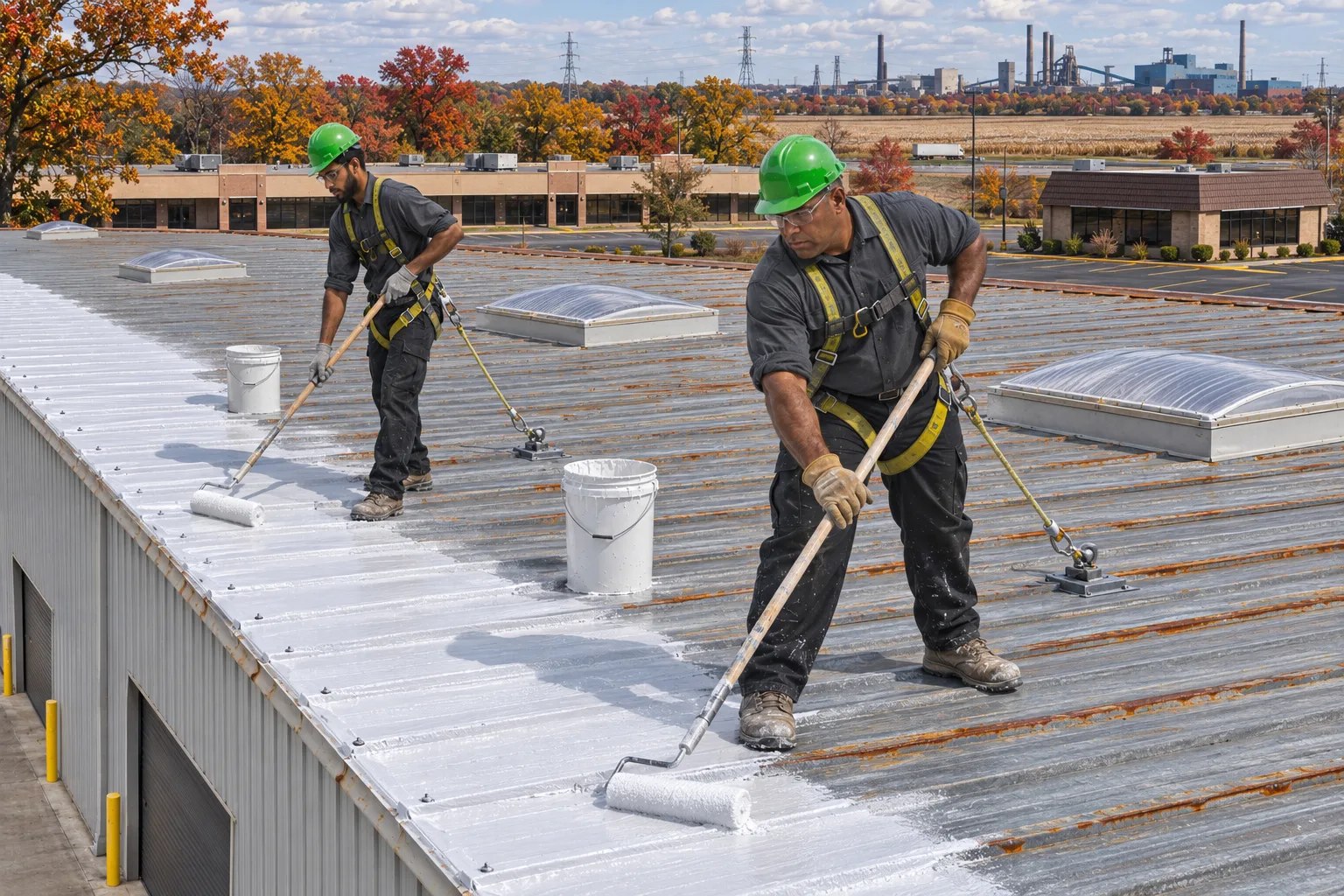
Pitched metal shops that drain well can take acrylic in summer. Acrylic needs calm, warm days near the lake, so its schedule stays flexible.
Acrylic Roof Coating details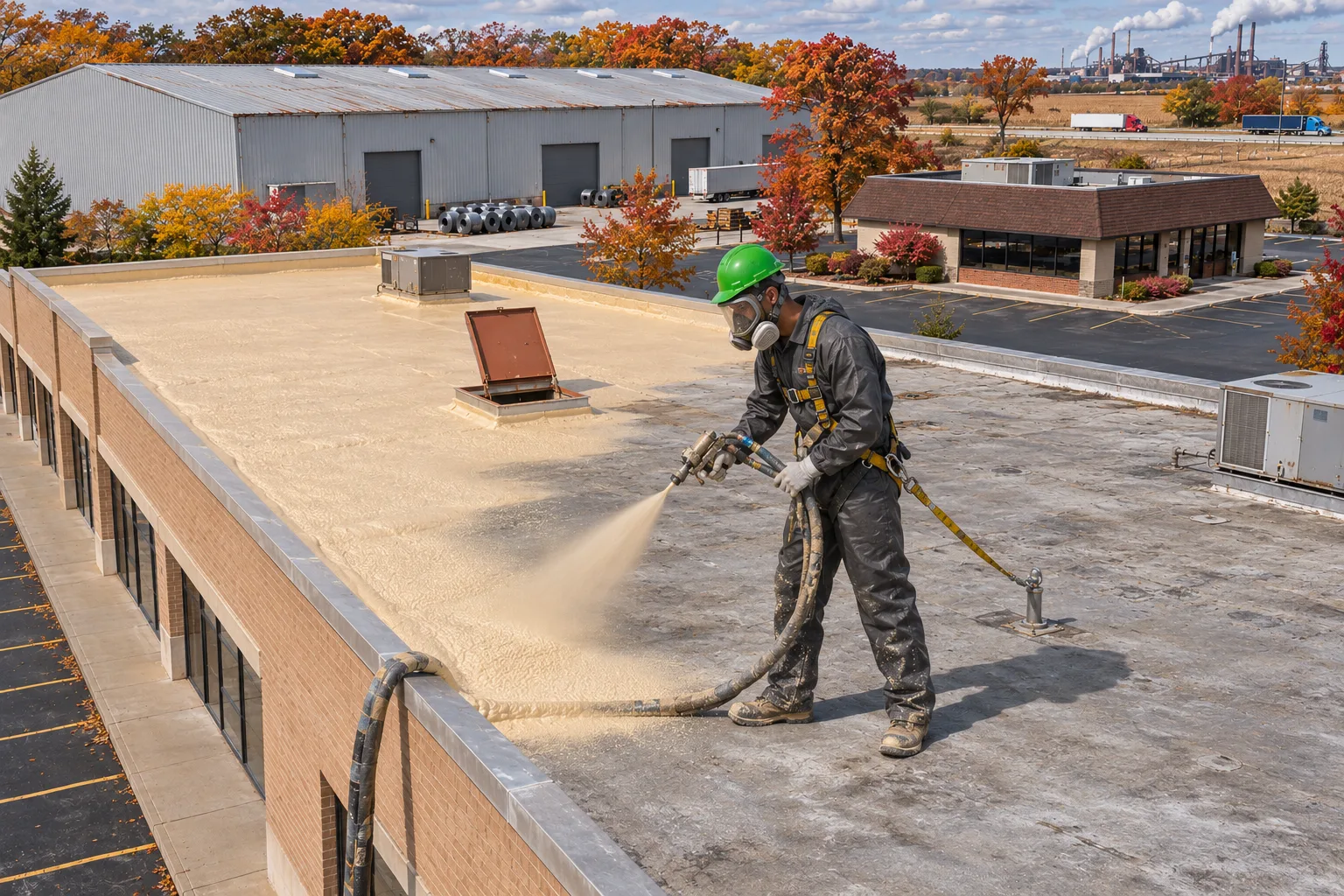
Cold buildings near the lake can take foam with a topcoat. Foam also blocks wind from finding laps, since it covers every joint.
Spray Foam Roofing details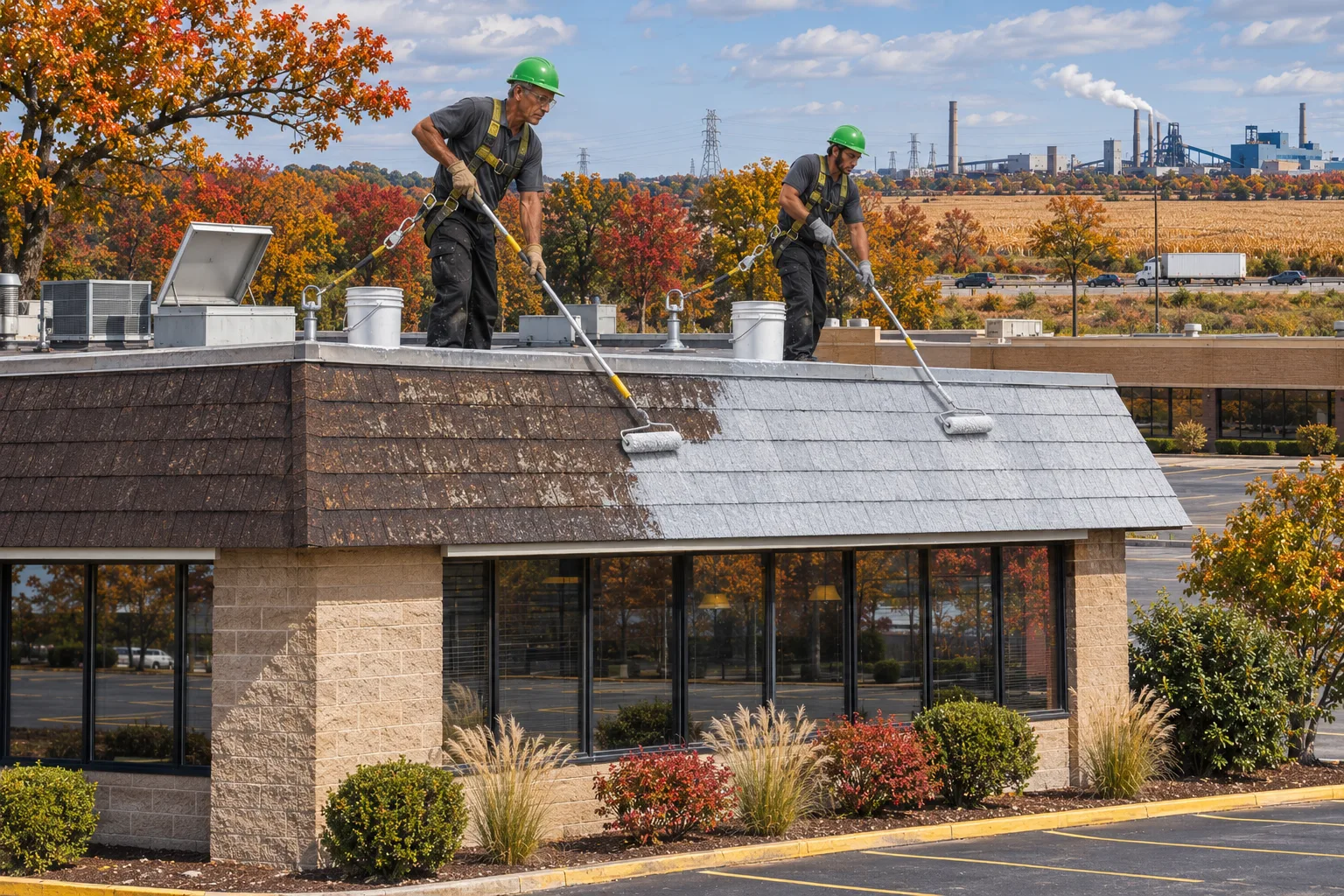
Shingled offices and churches get an asphalt-rated coating. Shingle edges and rakes get refastened before the coating goes on.
Shingle Roof Coating detailsLoose edges let rain in long before the field fails. We can check the edges and price repairs with the coating.
On lake-exposed roofs the edges get extra time. The steps stay in this order.
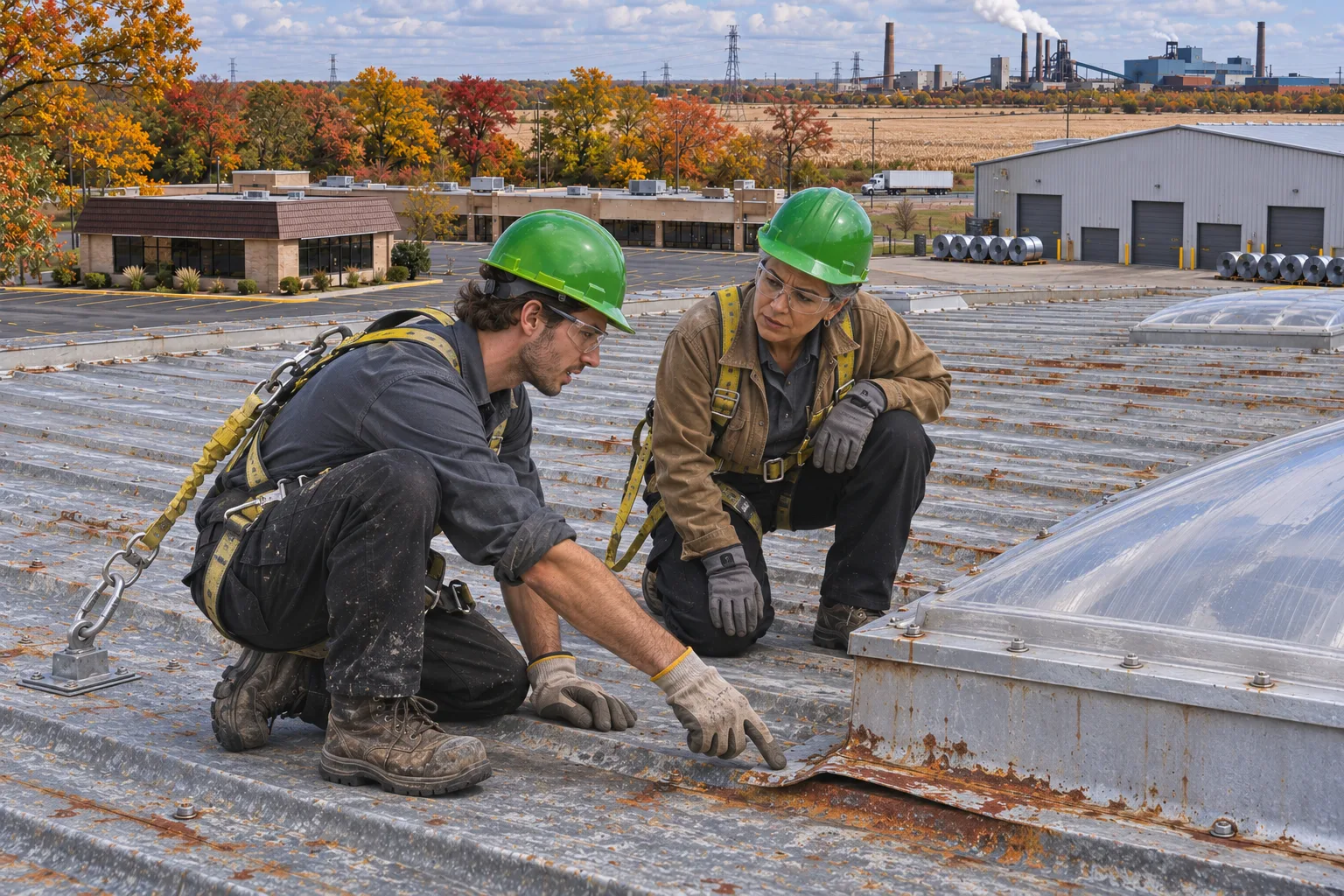
We walk the perimeter first, then the field, checking trim, ridge caps, laps, and wall flashing. Edges are photographed so you can see the loose spots.
Trim and ridge caps get new screws, stitch screws, and sealed laps so wind cannot lift them. Ridge closures get replaced where wind has torn them.
Panels are washed, and rust at panel ends and laps is cleaned and primed. Washing stops at the edges until trim is secure.
The coating goes on to rated thickness, with an extra pass along every edge. Edge thickness is checked with a gauge along the perimeter.
We coat commercial roofs in Michigan City and these towns as well.
Outside our towns? Call us or send us a message.
Plan on about $2.50 to $4.00 per square foot to coat and $5 to $8 to replace. Edge repairs, rust at panel ends, and the system chosen move the final number.
Usually a small share. Trim screws and sealant cost little next to the coating, and they keep the coating from failing early.
A bit, because the edges take more screws, stitch fasteners, and sealant, and the perimeter gets an extra pass of coating. Spray days also depend on calmer wind, which can stretch the schedule.
Yes. Michigan City is part of our regular area, and small shop roofs get the same roof walk as large ones.
Late spring through summer, when days are warm and dry. Edge repairs can happen earlier.
Rollers and brushes take over from the sprayer when gusts pick up, and loose materials get tied down. On days with steady high wind, the crew does repairs instead of coating.
We are, working from Portage. Lakefront roofs get extra attention at edges, trim, and wall flashing.
It changes the prep more than the coating. Edge rust and loose trim get more time before the coat.
Drifting snow changes the details more than the system. Sections near parapets and high walls, where drifts pile up, get extra thickness, and gutters get checked for strength before winter.
Call or send the building address. We check the edges first and price the full job.