Water Rings Around Drains
Dark rings near interior drains show where water sits after every storm. Silicone handles that standing water better than most coatings. We photograph each ring so the coated area can be compared after the next storm.
As a Portage silicone roof coating contractor, we coat low-slope metal and membrane roofs that hold water after rain and snowmelt.
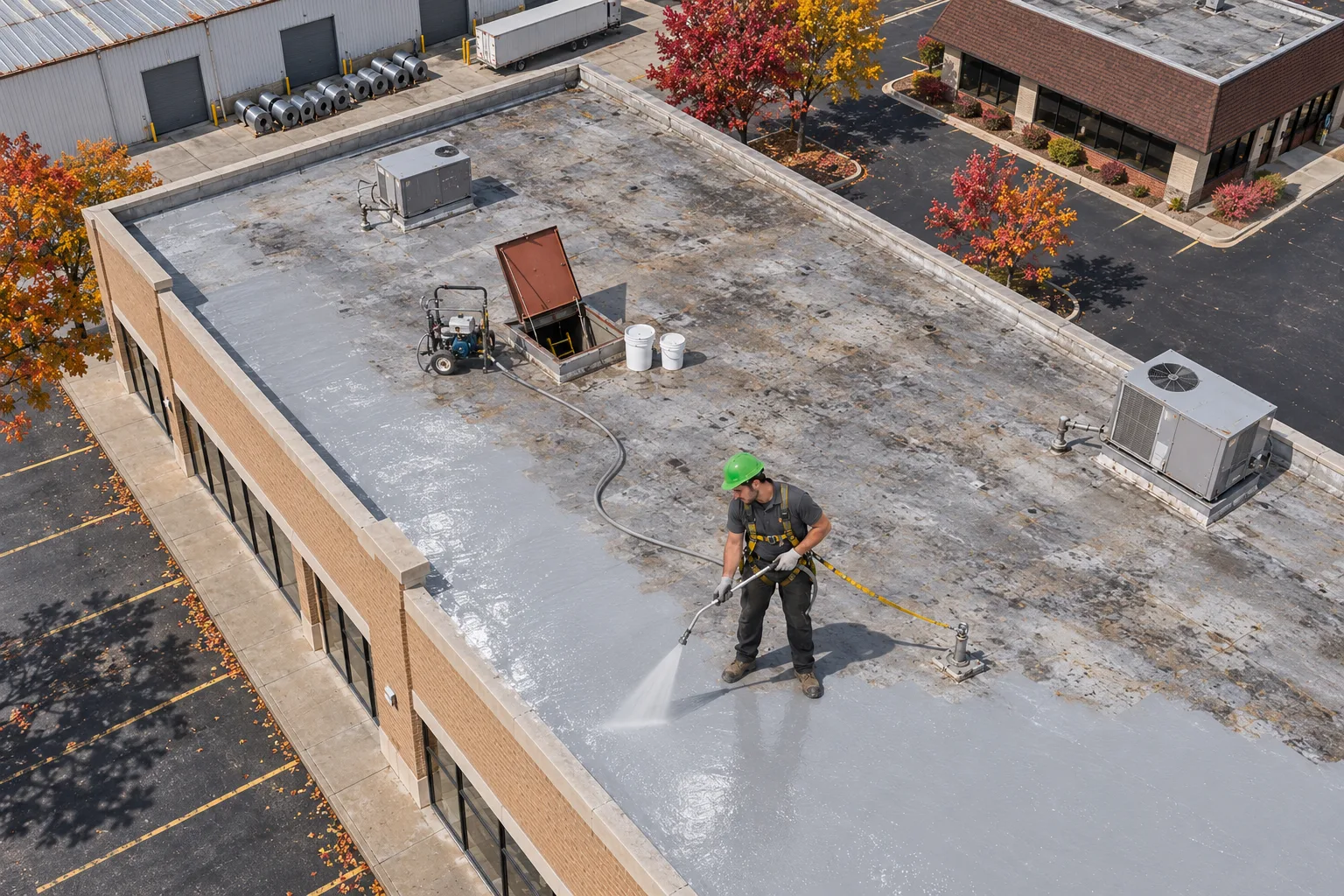
Portage silicone roof coating earns its place on roofs that drain slowly. Check these rows against your roof after the next rain.
| What You See On The Roof | Silicone Fits | Fix First | Pick Another System |
|---|---|---|---|
| Puddles still there two days after rain | Usually Fits | Rarely | Rarely |
| Old single-ply with dry insulation underneath | Usually Fits | Sometimes | Rarely |
| Blisters or soft spots in a membrane roof | Rarely | Usually Fits | Sometimes |
| Steep metal that drains in minutes | Sometimes | Rarely | Usually Fits |
| A roof already coated with acrylic | Sometimes | Usually Fits | Rarely |
Silicone over old acrylic needs a primer test first, and cured silicone only takes more silicone later.
Silicone goes where water stays. These are the roof conditions we sort out before it goes on.
Dark rings near interior drains show where water sits after every storm. Silicone handles that standing water better than most coatings. We photograph each ring so the coated area can be compared after the next storm.
Older membranes pull at their seams and edges as they age. Seams get cleaned and reinforced before the silicone pass. Loose seam edges get heat-welded or taped back down where the membrane allows it.
A probe reading finds soaked board under the membrane. Those areas are cut out and replaced so no water gets trapped below. New board is fastened and tapered where needed so the new patch sits flush.
Leaves and grit block the paths water needs to leave the roof. Clearing them shortens how long ponds sit. Strainers missing from drains get replaced so debris stops washing in again.
Rooftop unit curbs open at their corners first. Reinforced fabric and silicone detail coats close them up. Unit curbs that rock or sag get shimmed and refastened before any detail coat.
Meltwater refreezes at cold eaves and parapet corners. Those spots get extra mils because ice works at the coating hardest. Edges facing north often stay icy longest, so they get checked closely each spring.
Silicone rarely covers a whole Portage building alone. These systems handle the other roof sections.
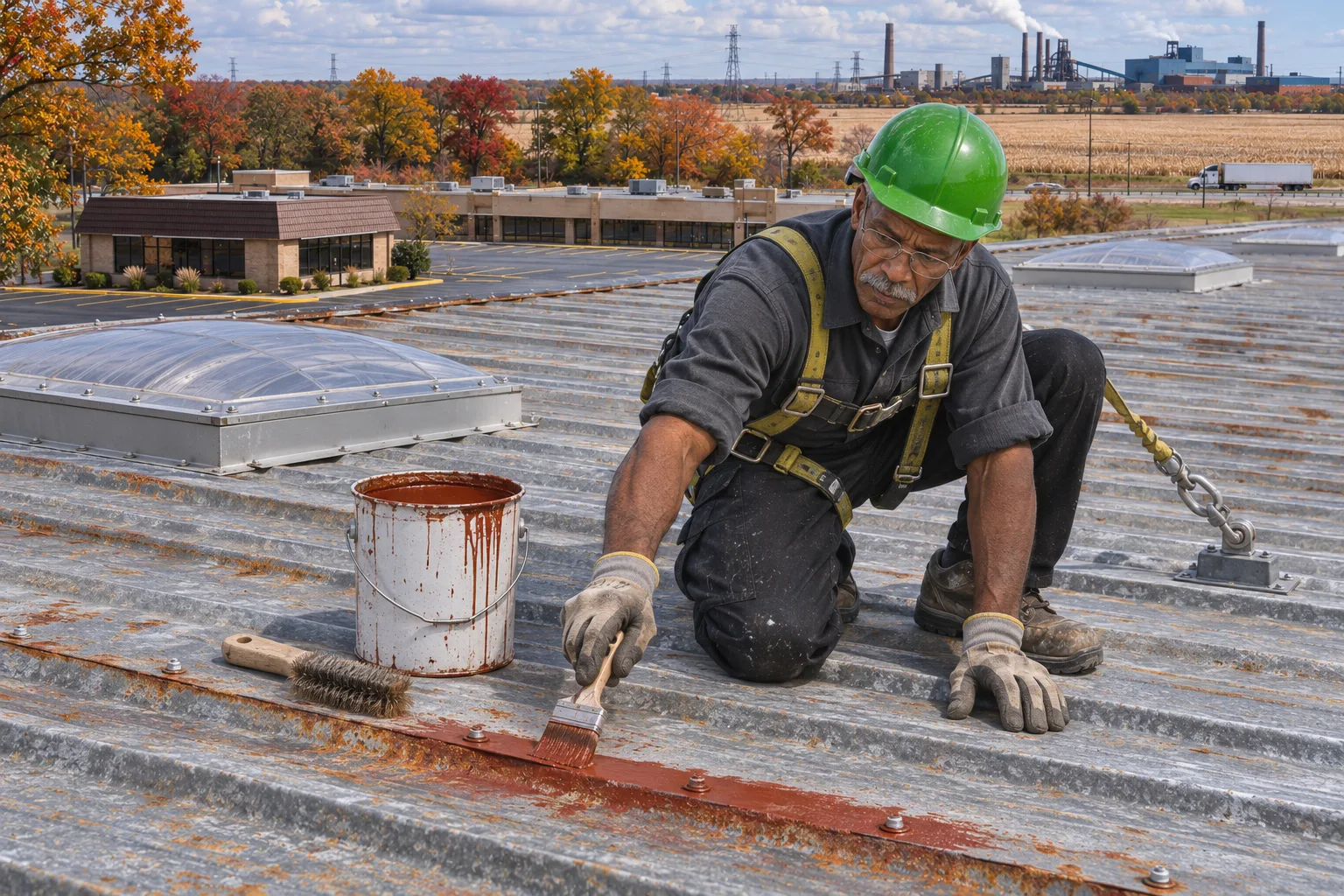
Pitched steel sections on the same building take the full metal coating process, and silicone stays on the low-slope part. The steel gets its rust treatment and screw work before either coating goes on.
Portage commercial metal roof coating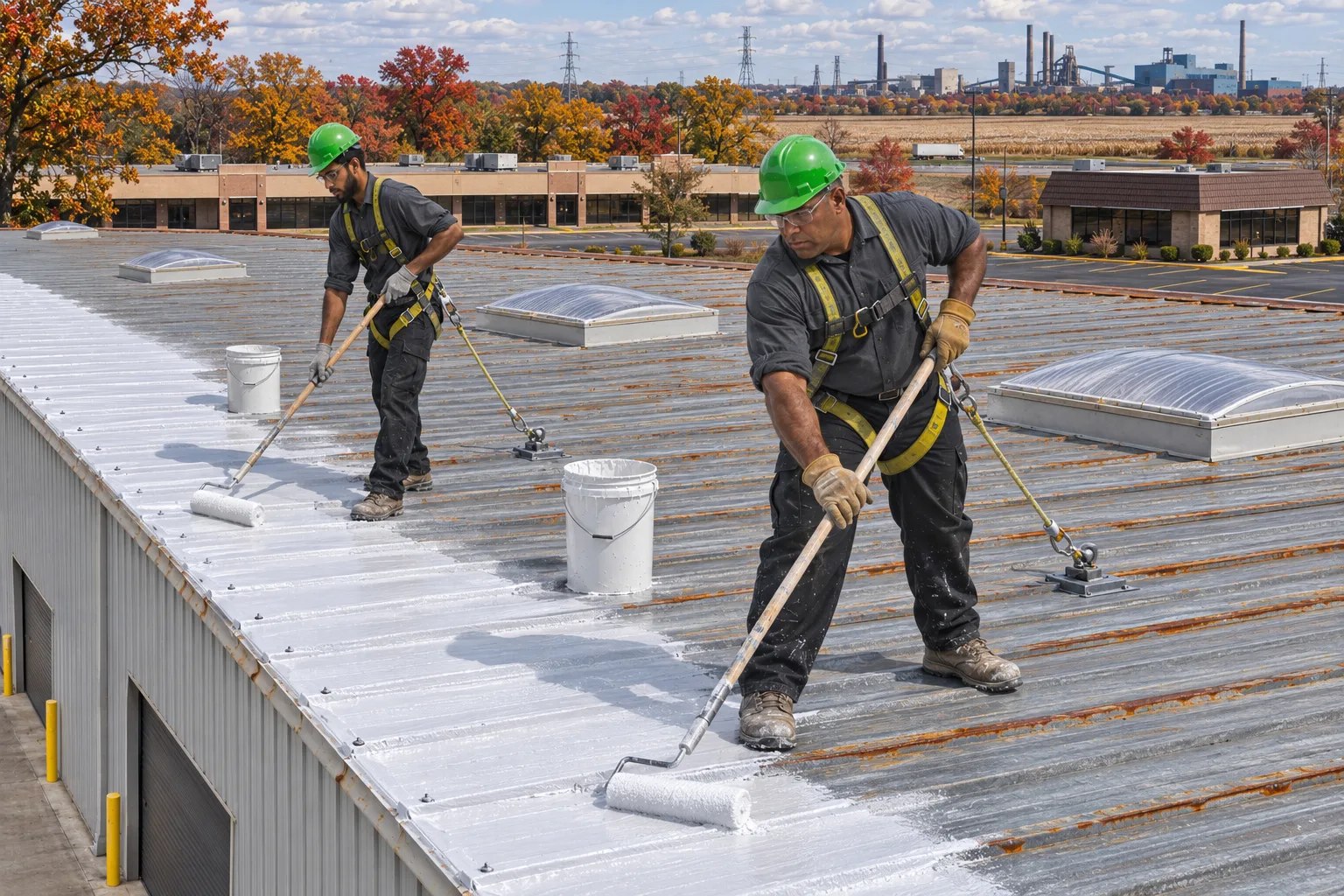
Acrylic cannot sit under standing water, so it belongs on sloped sections that drain fast, never on the flat areas silicone covers. Acrylic recoats easily, which makes it a good match for well-drained pitched panels.
Portage acrylic roof coating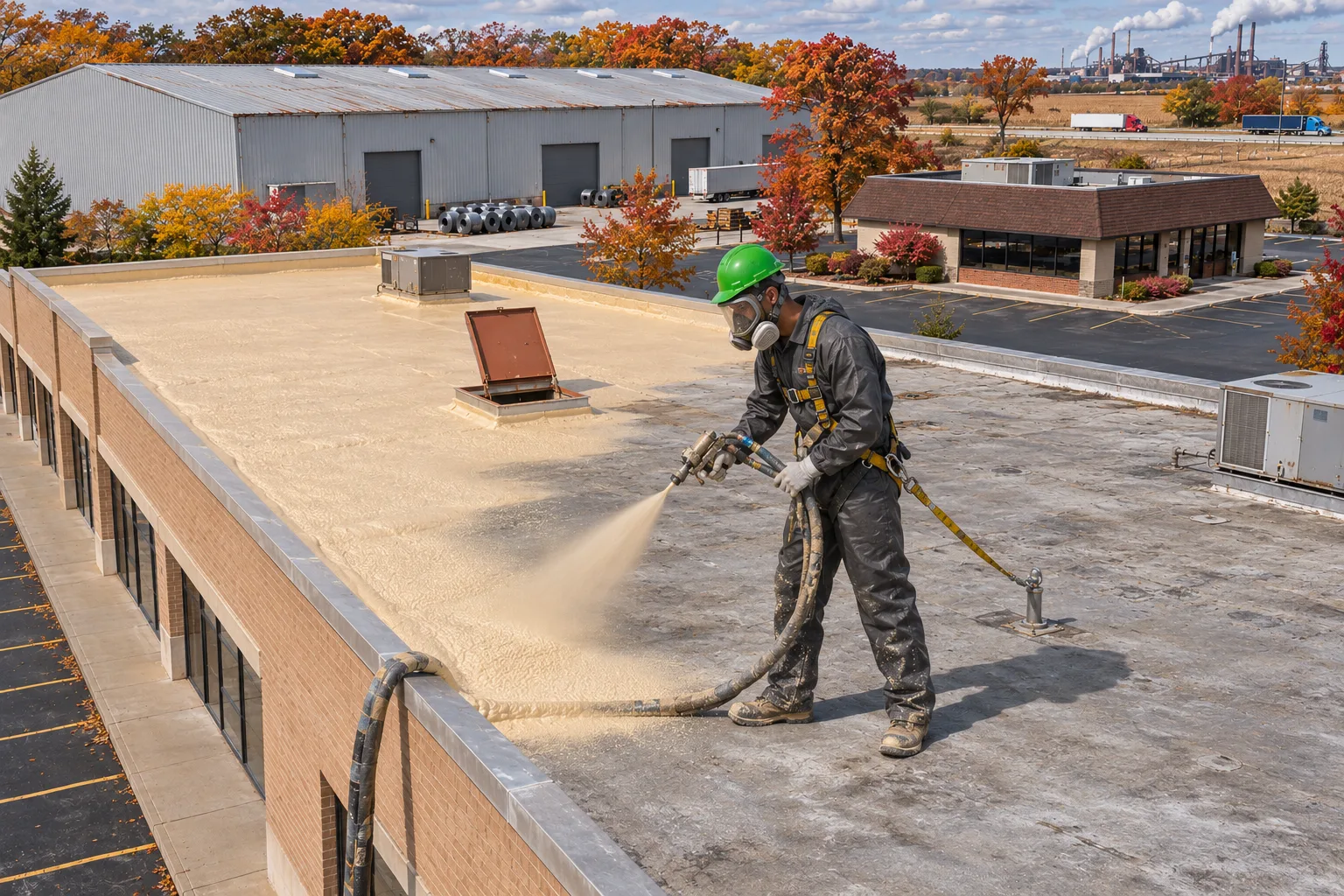
Foam can rebuild slope over a flat roof that ponds badly, and silicone often becomes its protective topcoat. Foam adds insulation as well, which matters on buildings heated through the winter.
Portage spray foam roofing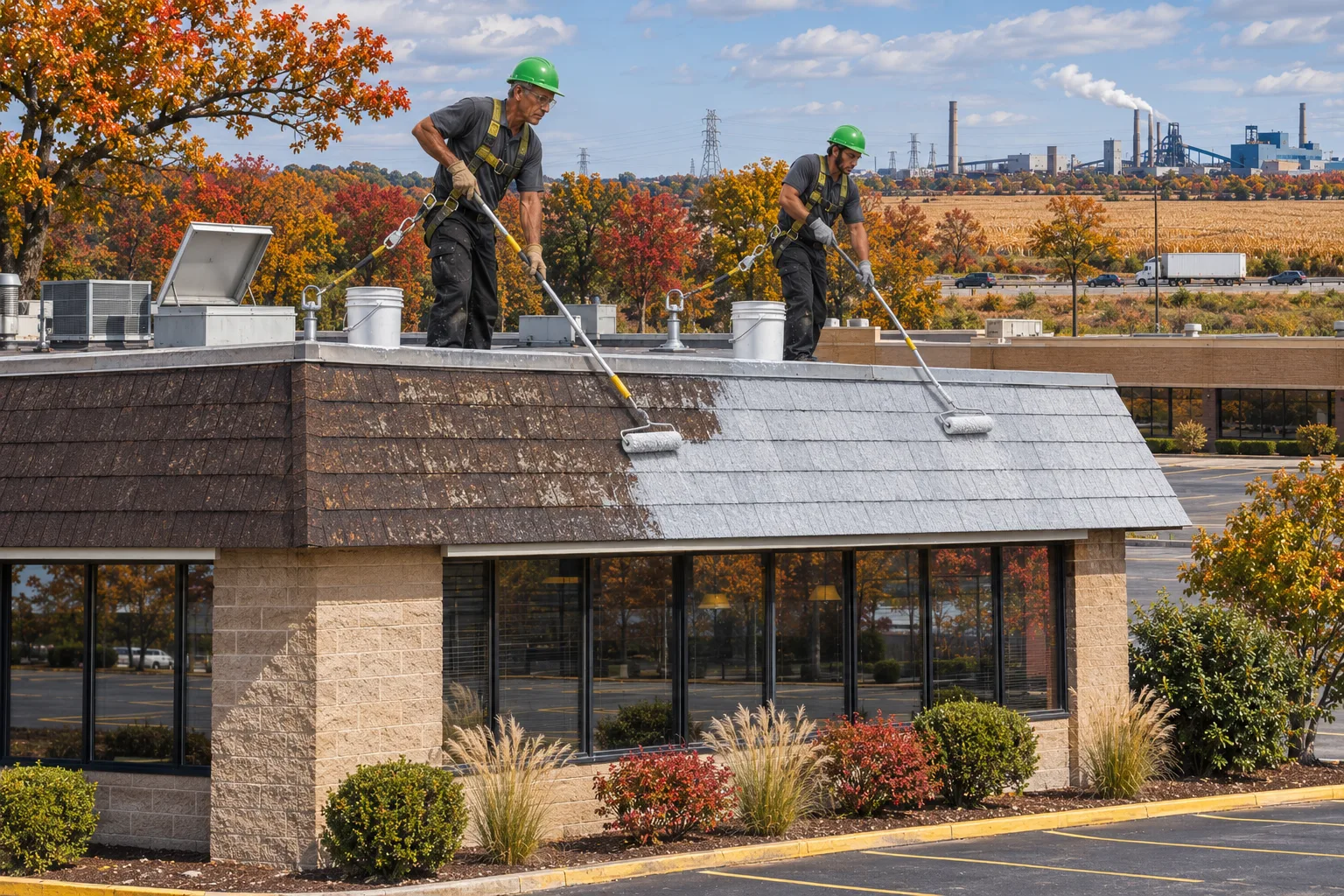
Mansard and sloped shingle faces around a flat roof get their own coating made for asphalt. Shingle repairs come first, then the coating goes on in warm, dry weather.
Portage shingle roof coatingSilicone works hardest on flat roofs that water likes to sit on. Here is what it adds.
Water that sits near drains for days does not break down cured silicone the way it softens water-based coatings.
Silicone stays flexible under heat and ultraviolet light, so it keeps moving with the roof through hot July afternoons.
High-solids silicone builds its rated mils in one or two passes, which keeps the work time on the roof short.
Seams and curbs near the drains get detail coats, so the low areas that collect water are also the best protected.
That standing water points toward silicone. An inspection checks the insulation under it before anything is coated.
The sequence below is the same on metal and membrane roofs. Only the primer choice changes.

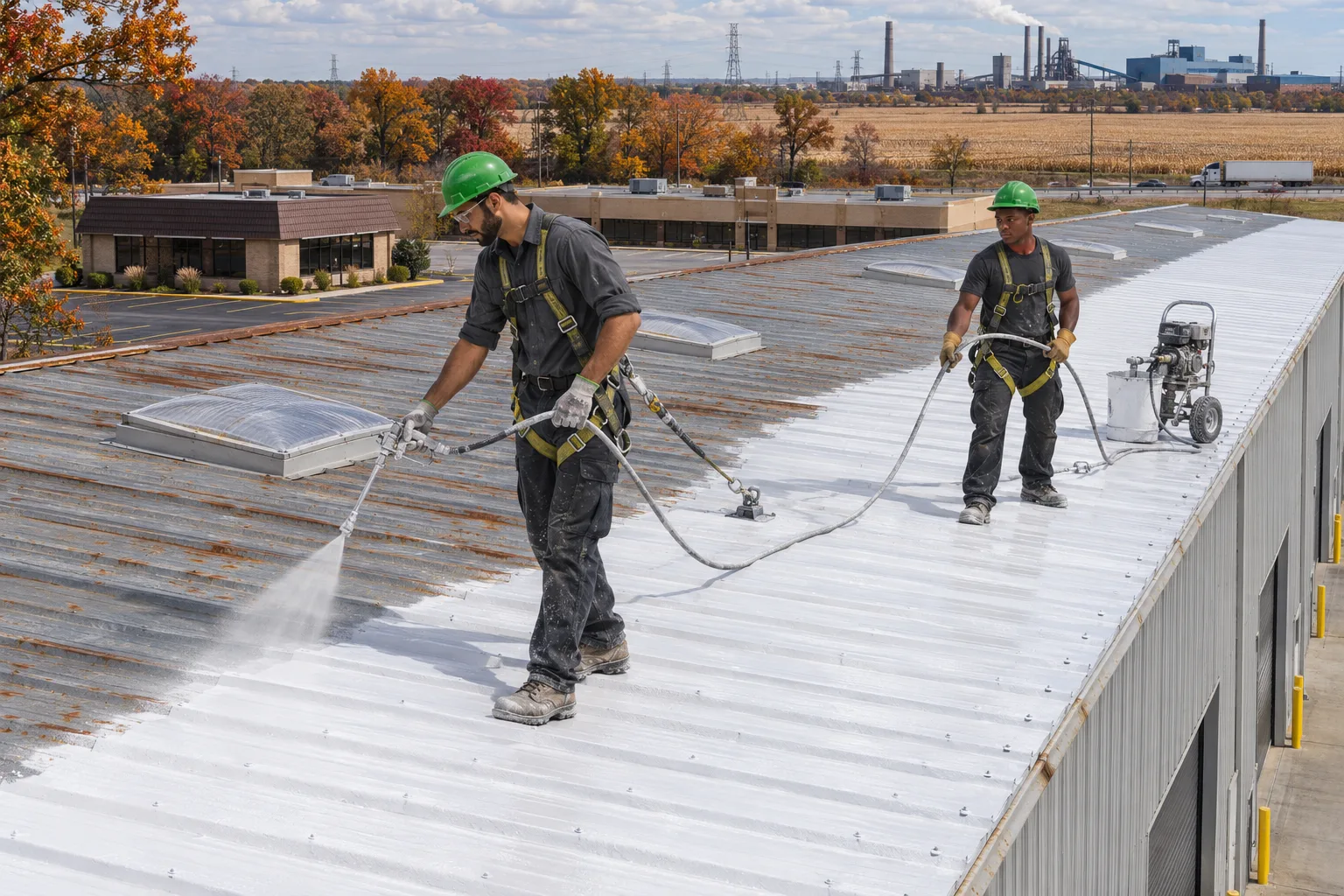
We map ponding areas, probe for wet insulation, and check every seam, curb, and drain before writing up the job. Ponding areas get marked so they receive full thickness.
A thorough wash comes first. A small test patch shows whether the surface needs primer for silicone to grip. Primer is only used where the test patch calls for it.
Fabric and a silicone detail coat go over seams, fasteners, and curb corners before the main pass. Drain bowls and scuppers get the same detail work.
Silicone goes on in one or two passes while a wet-film gauge confirms thickness across the roof. Readings are taken in low areas, along edges, and at curbs.
Silicone jobs fall inside the coating planning range of about $2.50 to $4.00 per square foot, with replacement around $5 to $8. Thickness, primer, seam work, and wet insulation removal move the number.
Per gallon it usually does, but silicone builds thickness in fewer passes. On a flat roof that ponds, the comparison rarely matters, since acrylic is the wrong system there anyway.
Wet insulation is the biggest swing. Each area of soaked board has to be cut out and replaced before silicone goes on, and a roof with many wet pockets costs more than a dry roof of the same size.
One or two, set by the product sheet and the thickness the roof needs. Seams and curbs get an extra detail coat first, and gauge readings guide the main pass.
Products carry ratings of roughly 10 to 20 years based on thickness. Dirt buildup, foot traffic to rooftop units, and unrepaired hail cuts shorten that; a clean silicone recoat extends it.
Silicone tolerates cooler days better than acrylic, but the surface still has to be dry and above the product’s minimum temperature. Frost, dew, and snow cover push the work to later in the day or a later week.
It collects dirt, gets slick when wet or snowy, and only bonds to more silicone later. Walk pads to rooftop units and an occasional wash handle most of that.
Yes, after rust treatment and fastener sealing. It makes the most sense on low-pitch metal or sections where water lingers.
Often, yes, when the membrane is still attached and the insulation underneath is dry. Seams get cleaned and reinforced first, and a primer test confirms the silicone grips the membrane before the full pass.
Call or send the building address. We check the ponding areas and the insulation, then price the silicone.