Coating Exposed-Fastener Metal Roofs
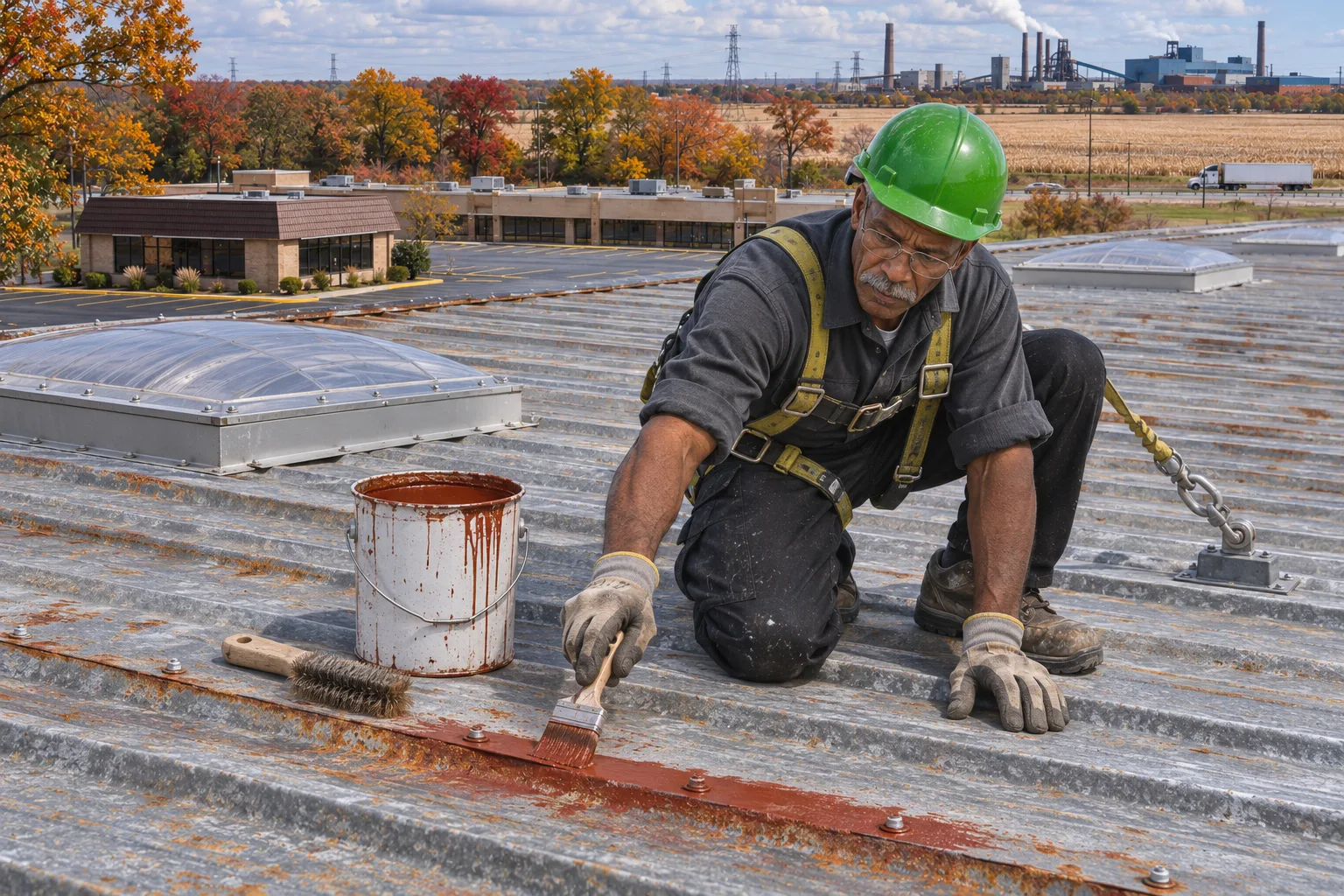
Long R-panel runs carry thousands of screws. Each stripped one gets a larger replacement with a new washer, and every head gets a dab of sealant.
As a Portage commercial metal roof coating contractor, we restore exposed-fastener and standing-seam steel roofs without pulling a single panel.
Portage commercial metal roof coating fits most steel roofs that still have firm panels. Compare what you see on yours with these rows.
| What You See On The Roof | Coat Now | Repair, Then Coat | Replace |
|---|---|---|---|
| Paint chalking onto your hand, panels firm | Usually Fits | Rarely | Rarely |
| Rust spots at laps that brush back to steel | Sometimes | Usually Fits | Rarely |
| Screws spinning in their holes | Rarely | Usually Fits | Rarely |
| Skylight panels yellowed and cracked | Rarely | Usually Fits | Rarely |
| Rust holes along whole panel runs | Rarely | Sometimes | Usually Fits |
Most Portage warehouse roofs land in the middle column: repairs first, coating after.
These are the steel roof problems a full coating job takes care of, each fixed before the base coat goes on.
Long R-panel runs carry thousands of screws. Each stripped one gets a larger replacement with a new washer, and every head gets a dab of sealant.
A lifted lap lets rain blow sideways under the panel. Stitch screws pull it tight, then reinforced fabric bridges the joint.
Grinding or wire brushing takes loose rust down to firm steel. A rust-inhibiting primer covers the bare spots before the day ends.
Panel ends at the eave sit in water and rust first. They get cleaned, primed, and sealed before any field coat.
Old fiberglass skylights crack and leak at the edges. We reseal, cover, or replace them depending on how brittle they are.
Dust and oily film from production settles on steel near exhausts. Degreasing and an adhesion test come before primer.
Commercial metal roof coating is our main service. These four systems join it when part of the building needs something else.
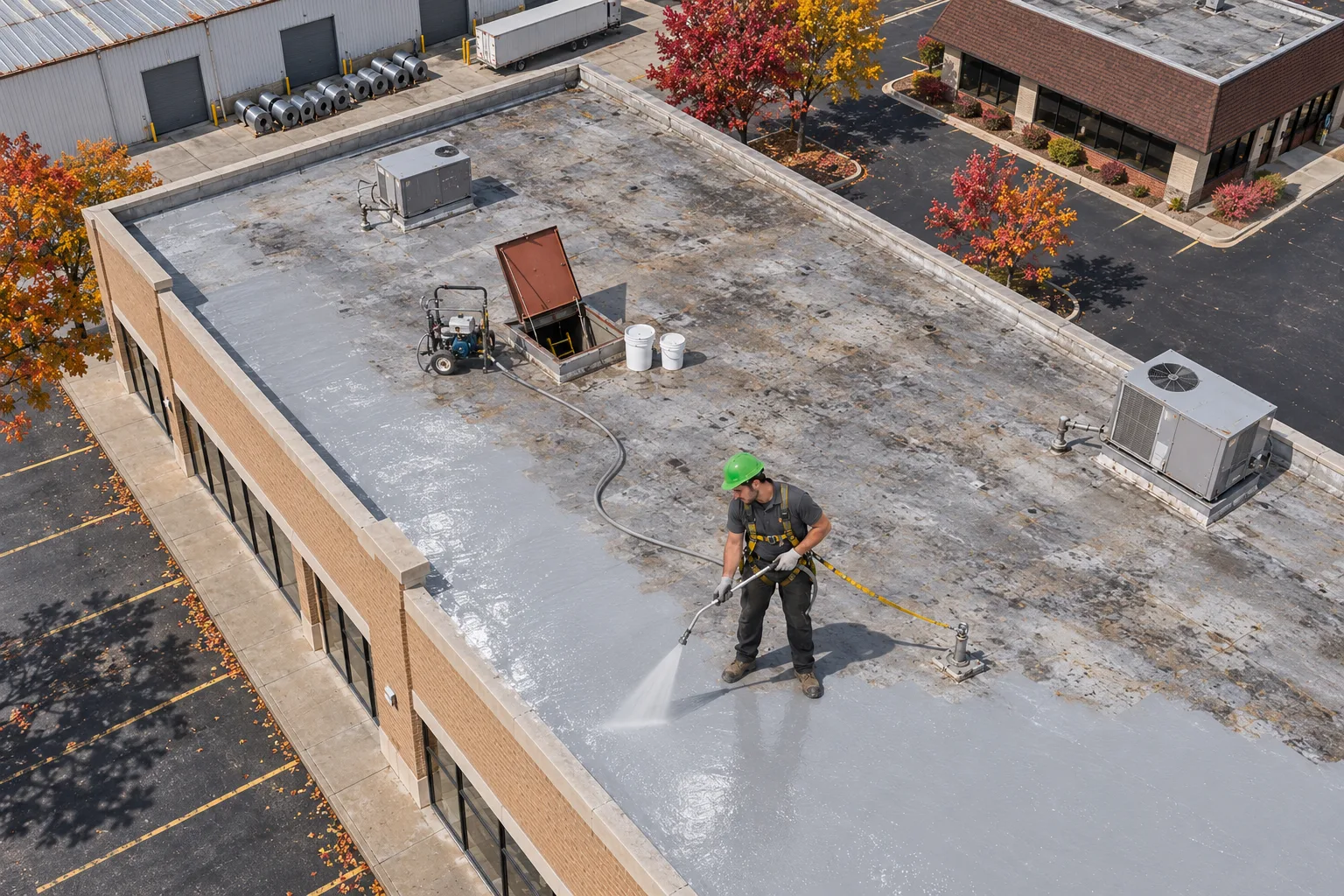
A flat office wing beside a steel warehouse often holds water. Silicone covers that section while the metal field gets its own system.
Portage silicone roof coating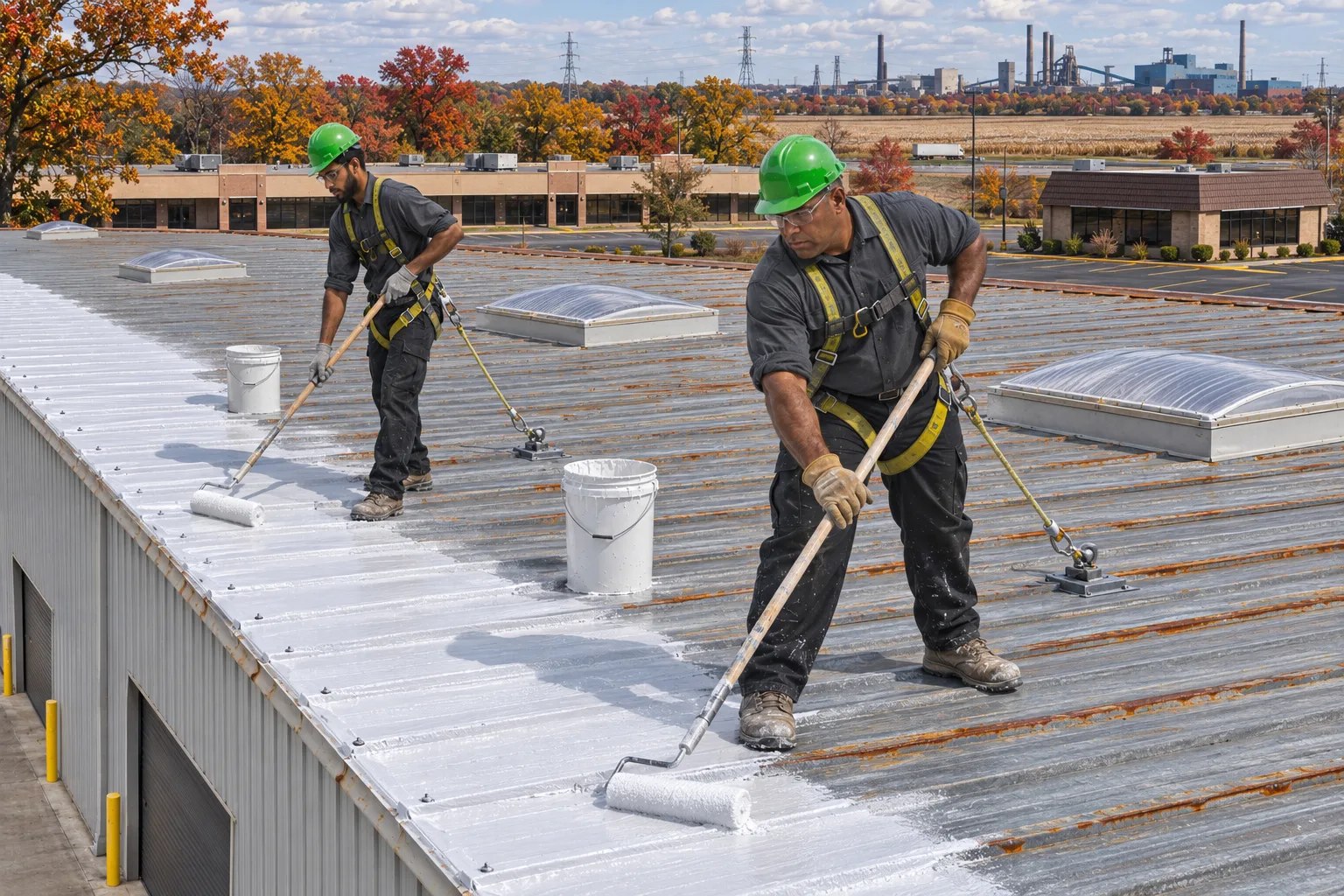
An acrylic topcoat can finish a primed steel roof with good pitch, giving a bright surface that recoats easily years later.
Portage acrylic roof coating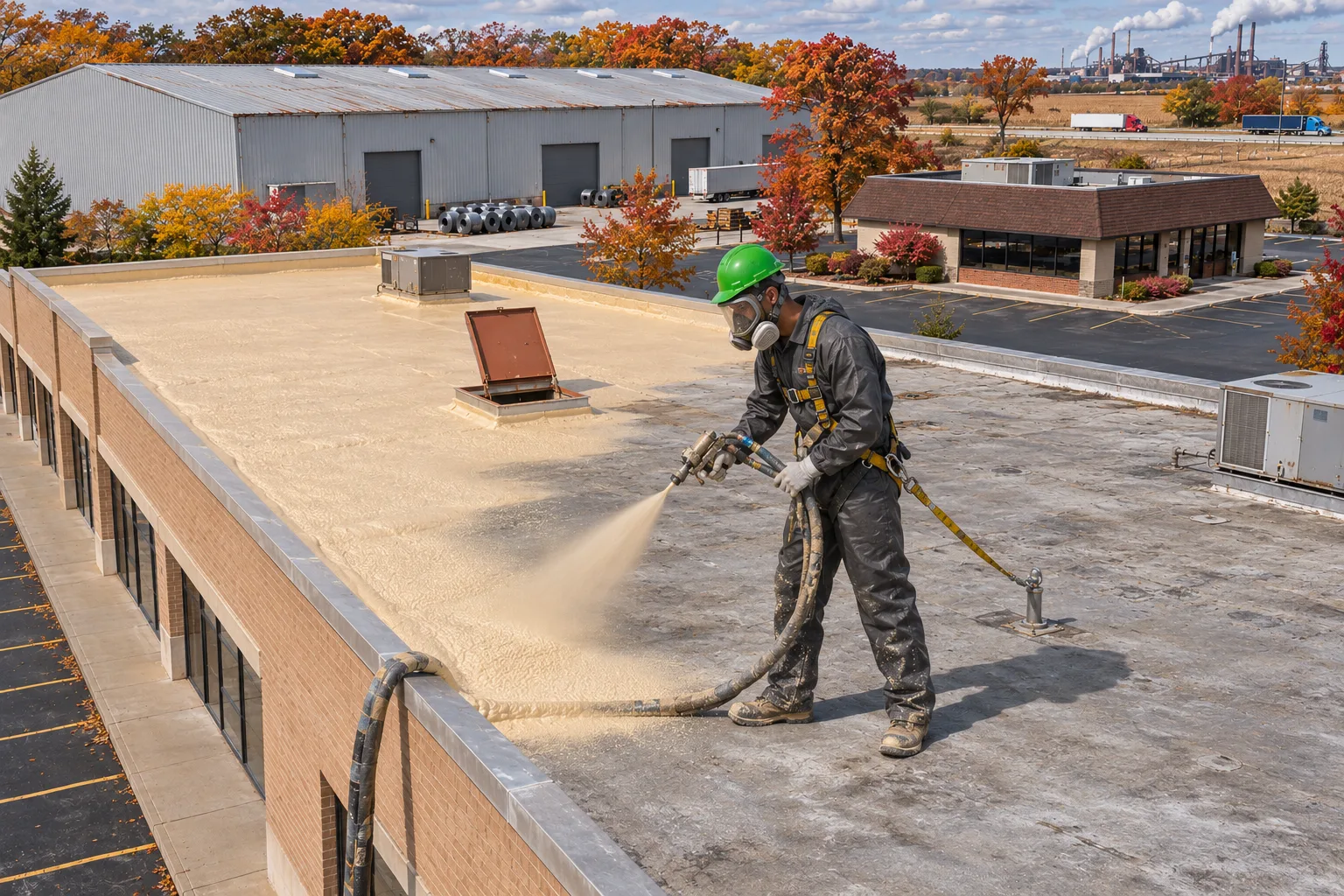
Where the building also needs insulation, foam goes over the steel ribs and screws, then takes a protective topcoat.
Portage spray foam roofing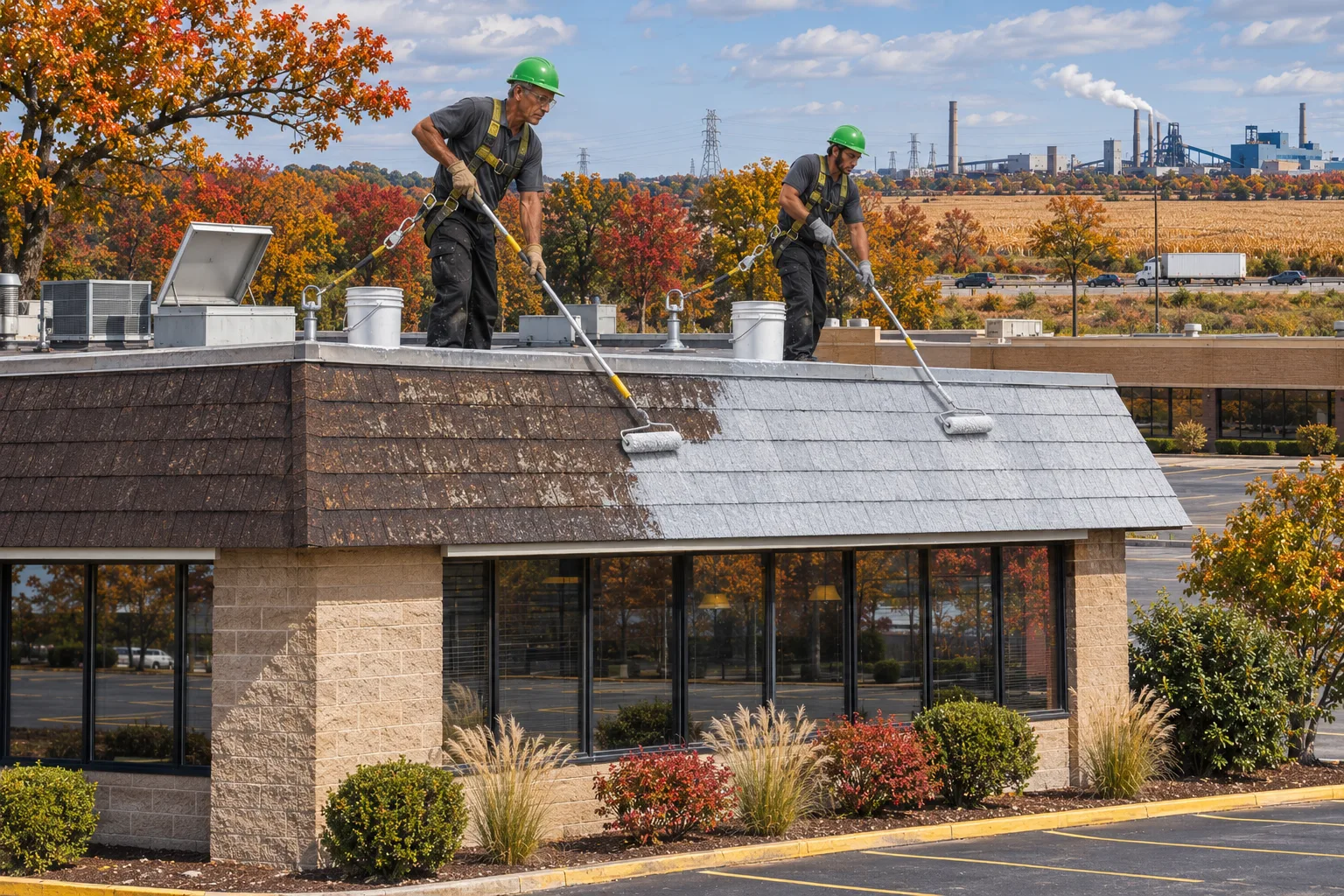
Shingled office fronts on metal buildings get their own asphalt-rated coating, applied after the shingles are repaired.
Portage shingle roof coatingA full metal roof coating keeps the existing steel working. Here is what it changes on a building.
Screw heads, laps, and flashing seams end up under one coating instead of separate seals that fail one by one.
Primer under the coating stops rust from spreading along laps and panel ends while the metal is still solid.
Years from now, the roof gets cleaned and recoated over the same layer, with no panels removed.
Production, storage, and offices below keep working while the crew moves across the roof one section at a time.
That is the point where a coating job saves the panels. We can inspect the roof and price repairs and coating together.
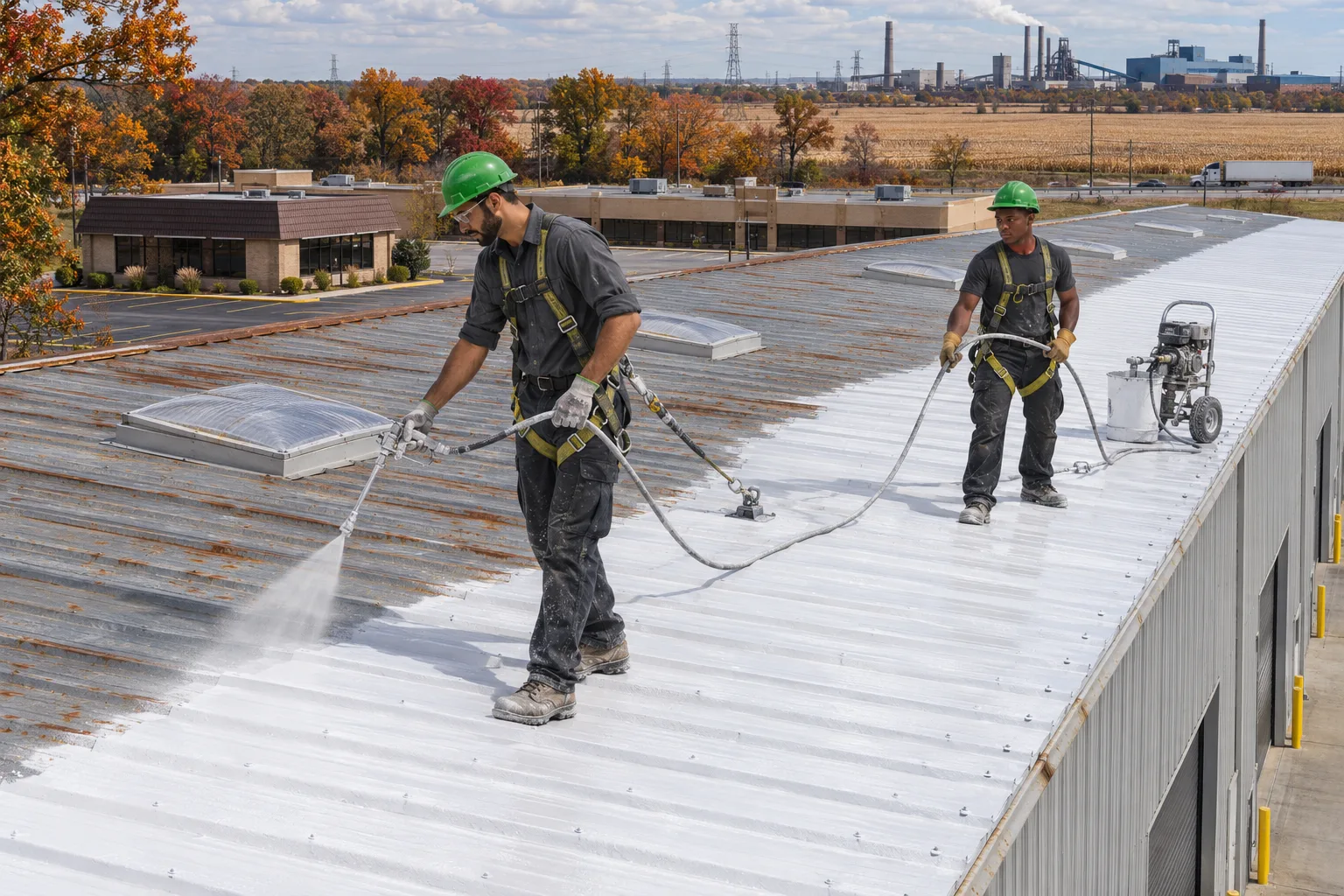
Commercial metal roof restoration follows four steps. The coat at the end only works when the first three are done right.
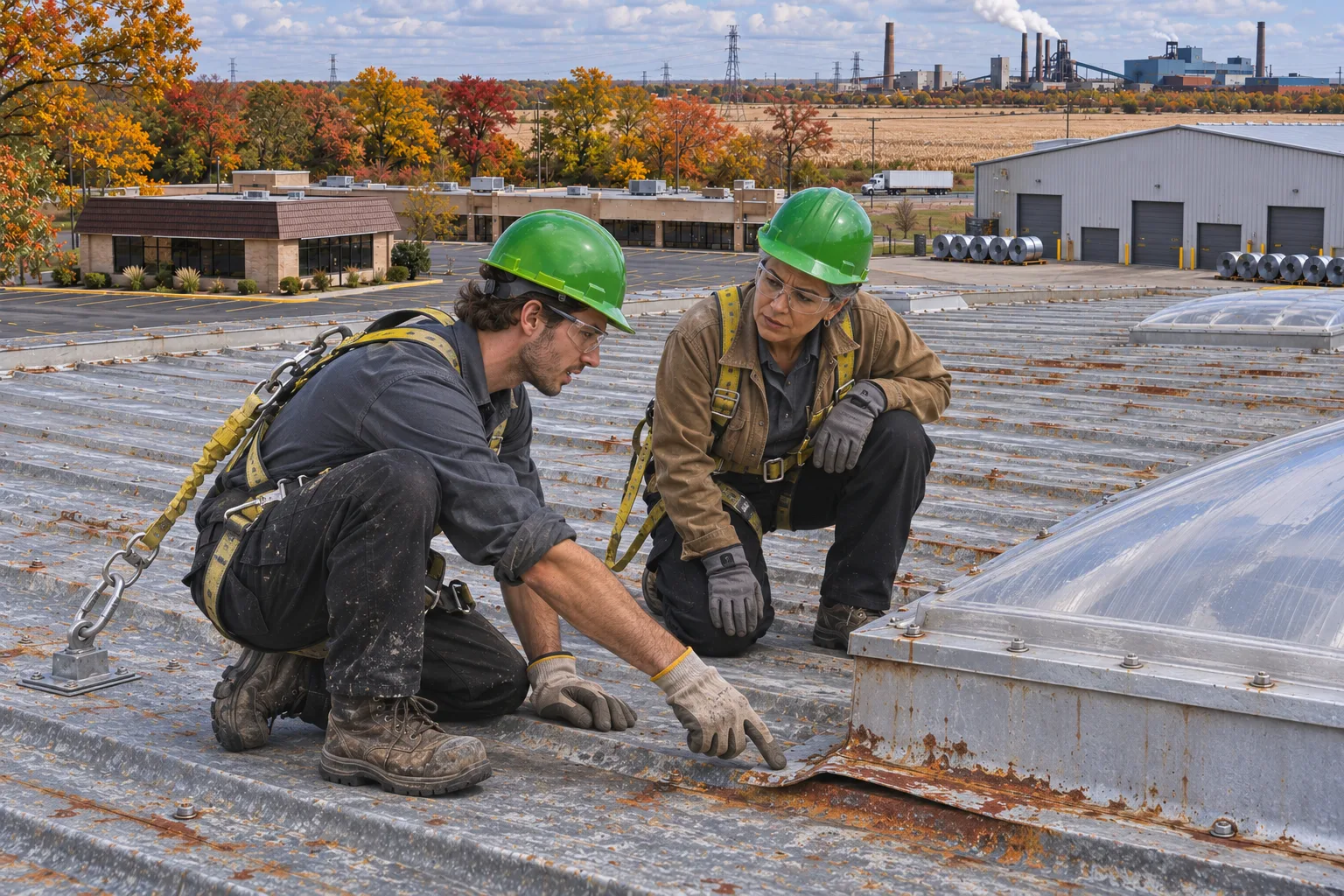
We walk every panel run, test screws by hand, probe for wet insulation, and photograph rust, laps, and curbs for the written findings. Every finding is tied to a photo so you can see it.
Pressure washing lifts chalk and grime. Loose rust is ground down, and primer goes on every patch of bare steel. Washing runs ahead of the priming crew by a section or two.
Larger screws replace stripped ones, laps get stitch screws and fabric, and curbs and flashing are sealed. Curbs, pipe boots, and wall flashing get the same treatment.
A base coat locks in the repairs, then the top coat builds to rated thickness, checked with a wet-film gauge. A final walk checks every edge, curb, and lap before we leave.
Plan on about $2.50 to $4.00 per square foot to coat, against about $5 to $8 to replace. Screw replacement counts, rust grinding, lap fabric, the thickness specified, and roof height all push a job up or down that range.
Ballpark numbers assume an average roof. The walk counts the actual stripped screws, rusted laps, and failed curbs, and those counts set the final figure.
Large, simple roofs often land toward the lower end of the range, because setup is spread over more area and long panel runs go quickly. Heavy rust, many skylights, or a tall eave that needs a bigger lift can push a big roof back up.
Restoration means bringing a worn steel roof back to watertight without replacing it: cleaning, rust treatment, new screws, sealed laps and flashing, then a fluid-applied coating that can be recoated later.
It can. All of the work happens on top of the roof, and the crew moves section by section, so docks and offices below keep operating.
Each skylight is checked during the roof walk. Firm panels get their edges resealed and stay in place. Brittle, yellowed panels get replaced or covered with matching steel before coating, and fall protection screens go on where the crew will work near them.
They do in prep. Exposed-fastener roofs need every screw checked and sealed. Standing-seam roofs hide their clips, so the work centers on seams, end laps, and penetrations.
On almost every steel roof we see, yes. Even light rust at laps weakens the bond, so it gets cleaned to firm metal and primed before any coat.
Yes. Standing-seam roofs hide their fasteners, so the prep focuses on seam laps, end laps, ridge closures, and penetrations. Panels get cleaned and primed where rusted, and the coating is applied over the whole field, including the raised seams.
Send the building address or call. We walk the roof, list the repairs, and price the coating.