Will Spray Foam Stop Leaks In A Metal Roof
Foam buries every screw head and fills the ribs and laps in one layer, which closes the paths water used to follow. Laps and fastener rows that leaked for years end up buried under the foam layer.
As a Portage spray foam roofing contractor, we spray foam over aging metal and flat roofs, then seal it with a protective topcoat.
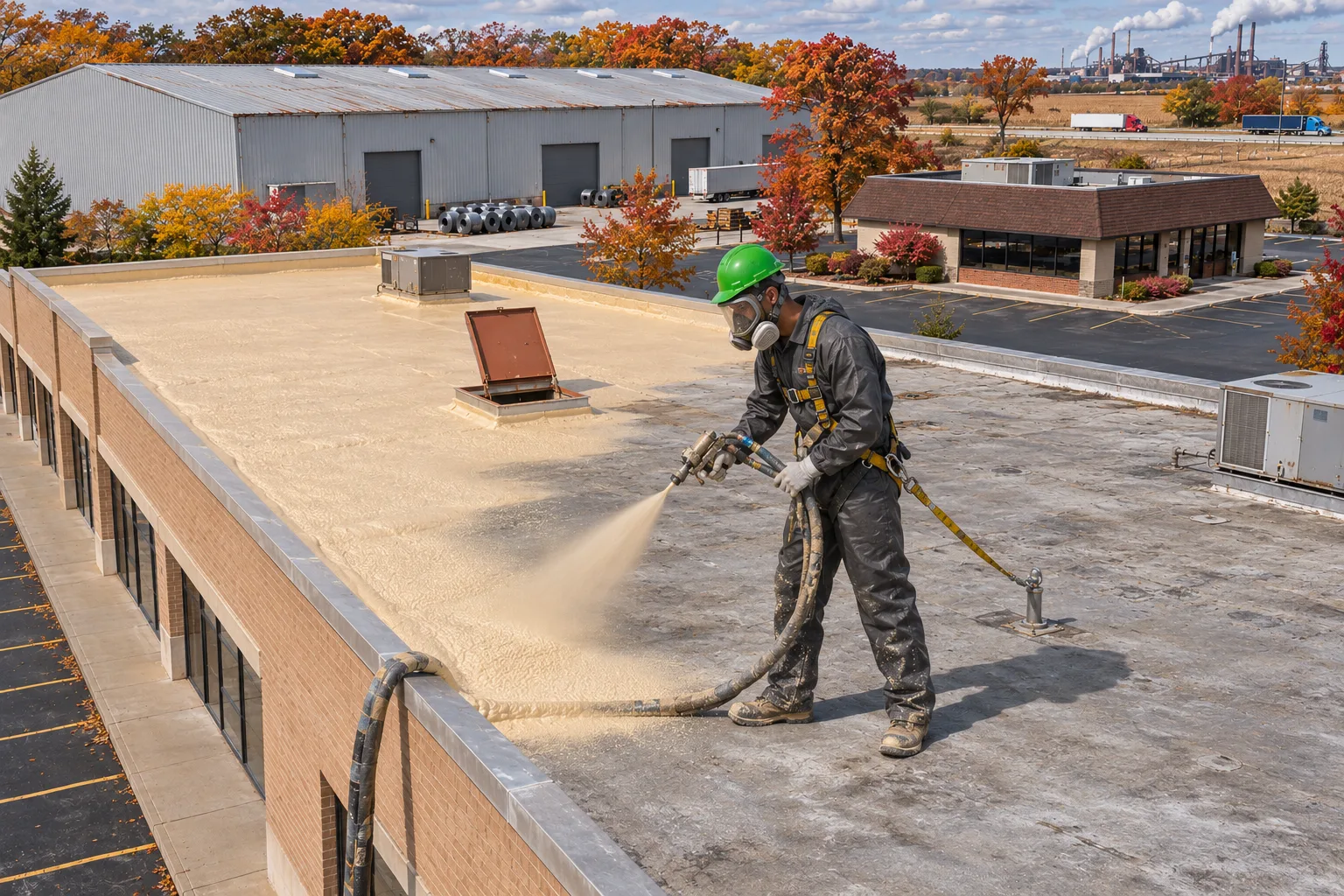
Portage spray foam roofing works best on dry roofs that also need insulation. These rows show the usual fit.
| What You See On The Roof | Foam Fits | Fix First | Replace |
|---|---|---|---|
| Metal roof leaking at many screws | Usually Fits | Sometimes | Rarely |
| Building cold in winter under the roof | Usually Fits | Rarely | Rarely |
| Flat roof with low spots | Usually Fits | Sometimes | Rarely |
| Large areas of wet insulation | Rarely | Usually Fits | Sometimes |
| Deck soft or rusted through | Rarely | Sometimes | Usually Fits |
Foam bonds only to a dry, clean surface, so wet material comes out before spraying.
Spray foam fixes several roof problems in one layer. These are the ones we see most around Portage.
Foam buries every screw head and fills the ribs and laps in one layer, which closes the paths water used to follow. Laps and fastener rows that leaked for years end up buried under the foam layer.
Thin or missing insulation lets heat out all winter. Foam adds insulating value right on top of the existing roof. Insulating from above also keeps the panels and purlins warmer, cutting interior condensation.
Low areas get thicker foam to build slope toward the drains, so water stops sitting against the roof. Water then reaches the drains instead of sitting for days and wearing the topcoat thin.
Wet board under a flat roof is cut out and replaced before foam goes on, or the water stays trapped. A probe and a few small core cuts show how far the wet area reaches.
Spray foam wraps around pipes, curbs, and vents without seams, which suits roofs crowded with equipment. Vents, pipes, and curb edges get foam built up neatly around them, then topcoated.
Older foam roofs show small craters after hail. Those are cleaned, filled, and topcoated again. Craters left open let sunlight reach the foam, which breaks it down over time.
Foam is the heaviest fix on this list. These systems cover roofs that need less, or finish the foam.
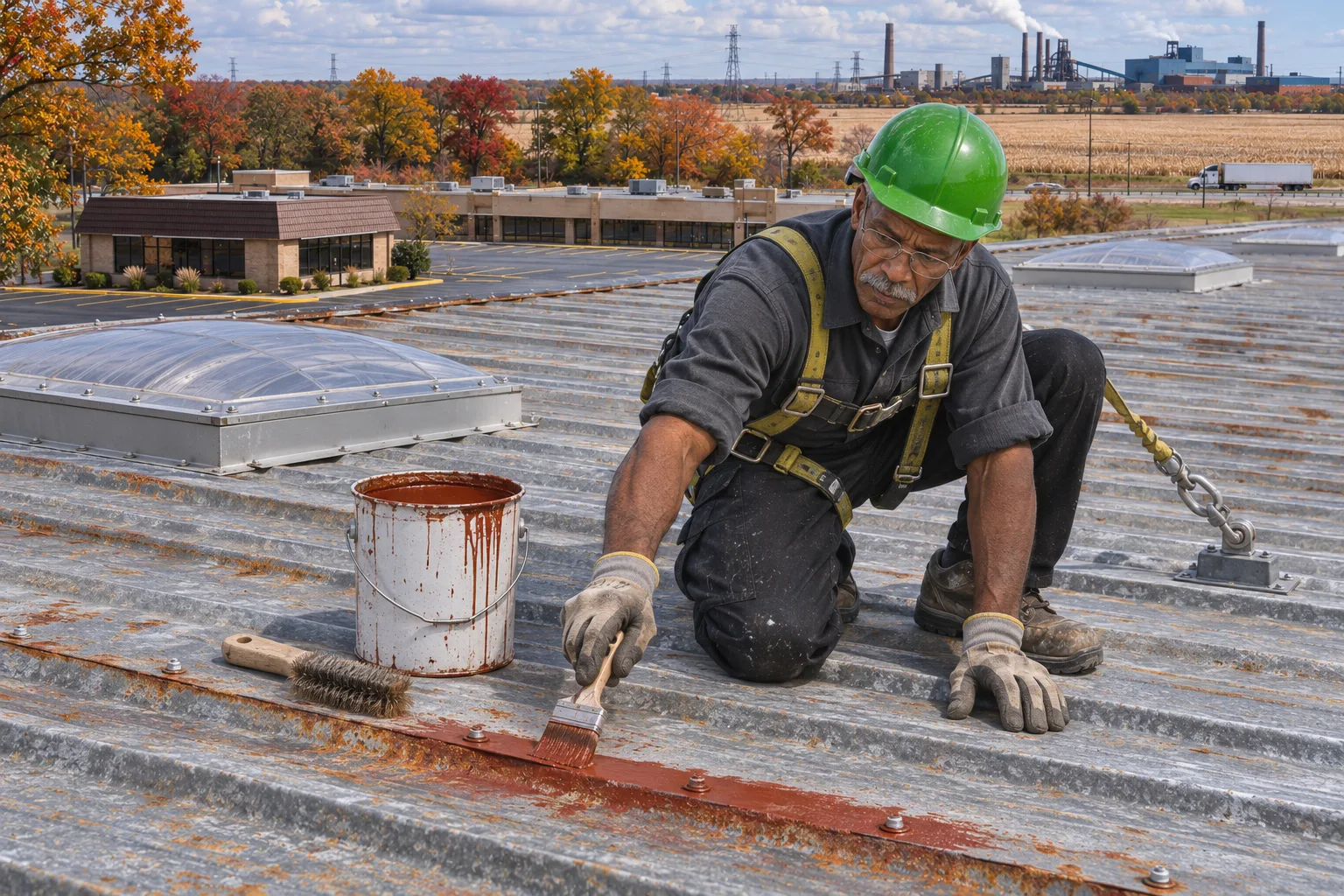
When insulation is fine, a straight metal coating fixes leaks for less, keeping the panels and ribs visible. Steel prep there follows the same rust and screw steps foam needs first.
Portage commercial metal roof coating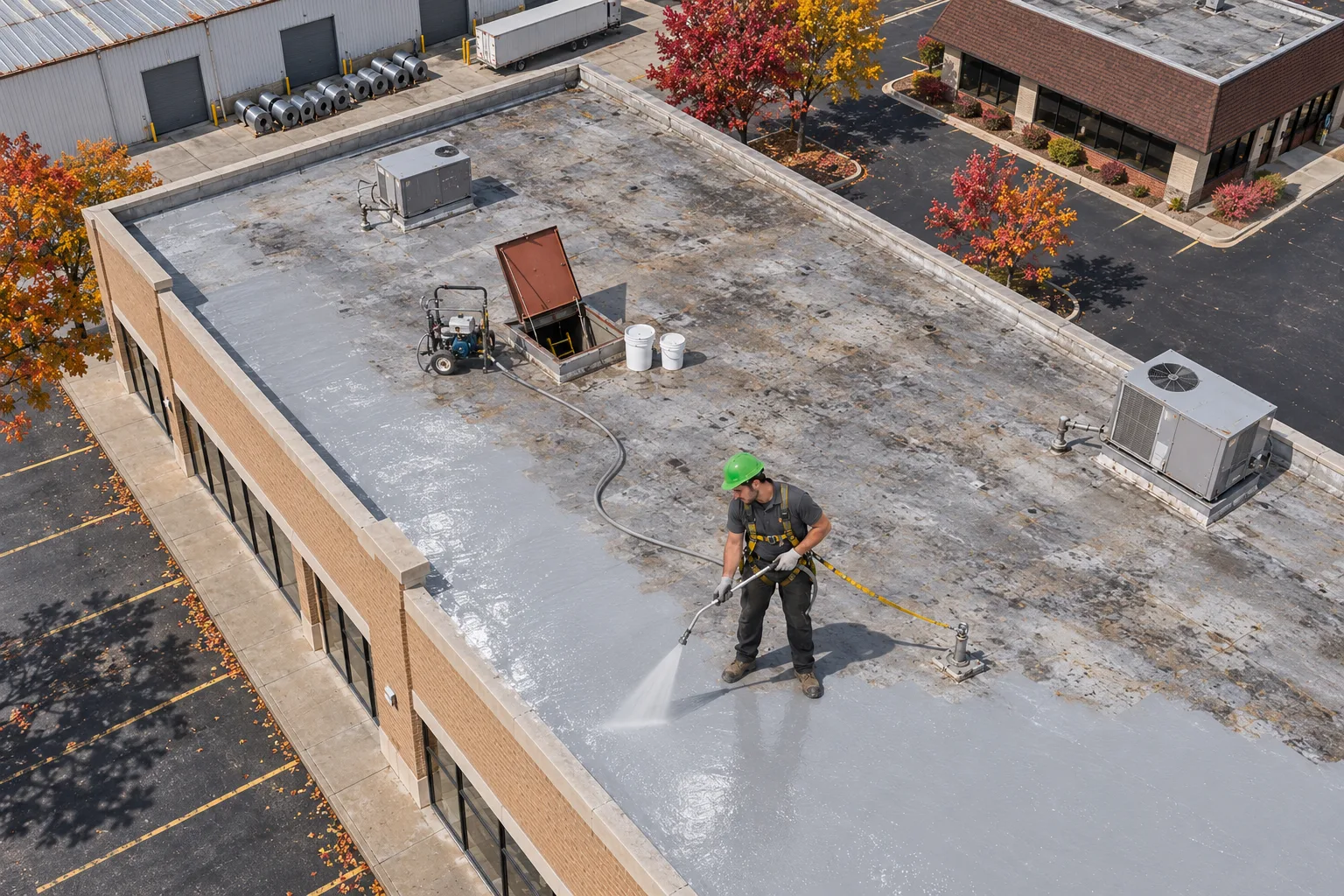
Silicone is a common topcoat over foam, and it also covers flat roofs that need waterproofing without added insulation. Silicone handles ponding well and sticks to cured foam with the right prep.
Portage silicone roof coating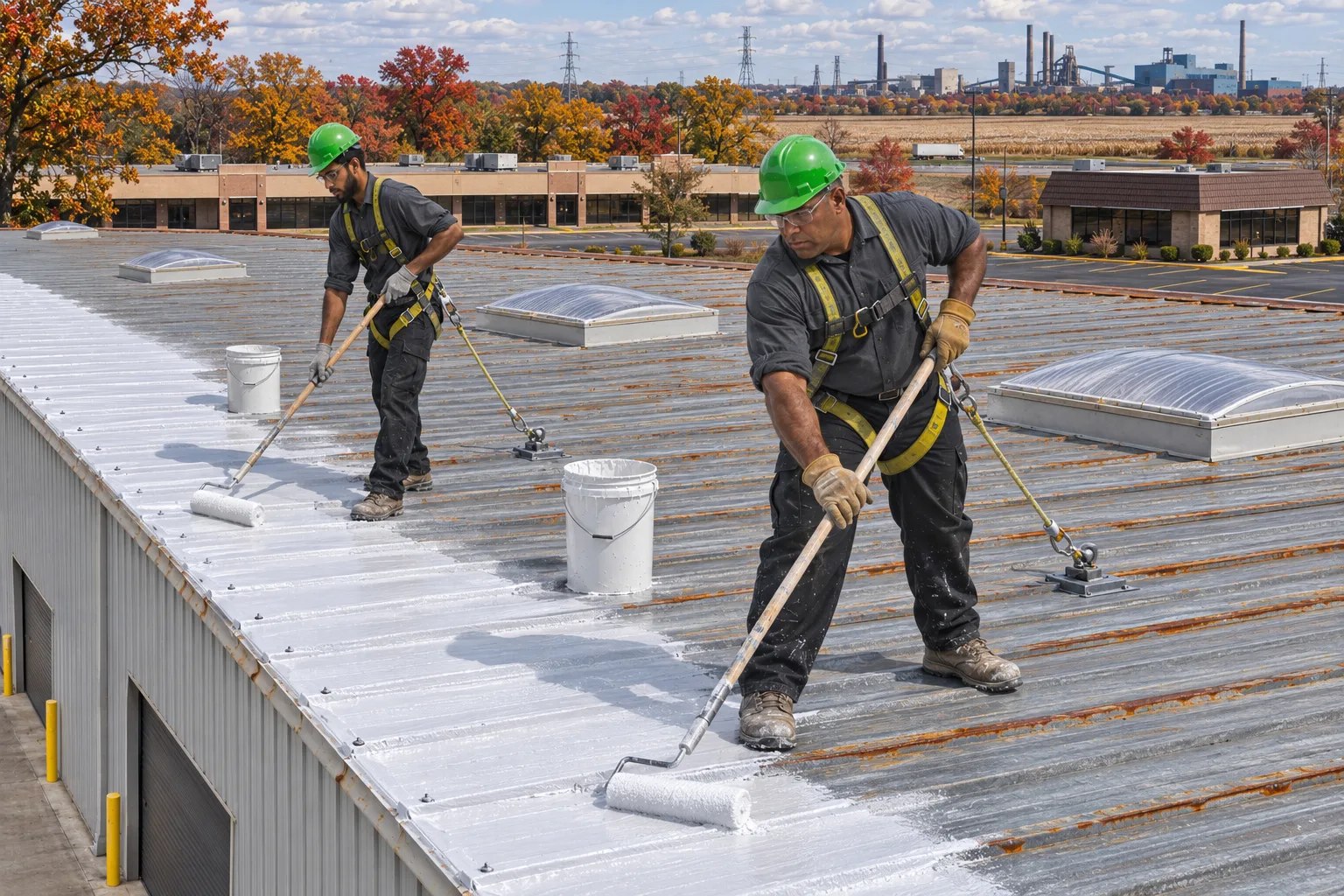
An acrylic topcoat can protect foam on a roof with good slope, and it recoats easily when the time comes. The slope of the finished foam decides between acrylic and silicone for the top.
Portage acrylic roof coating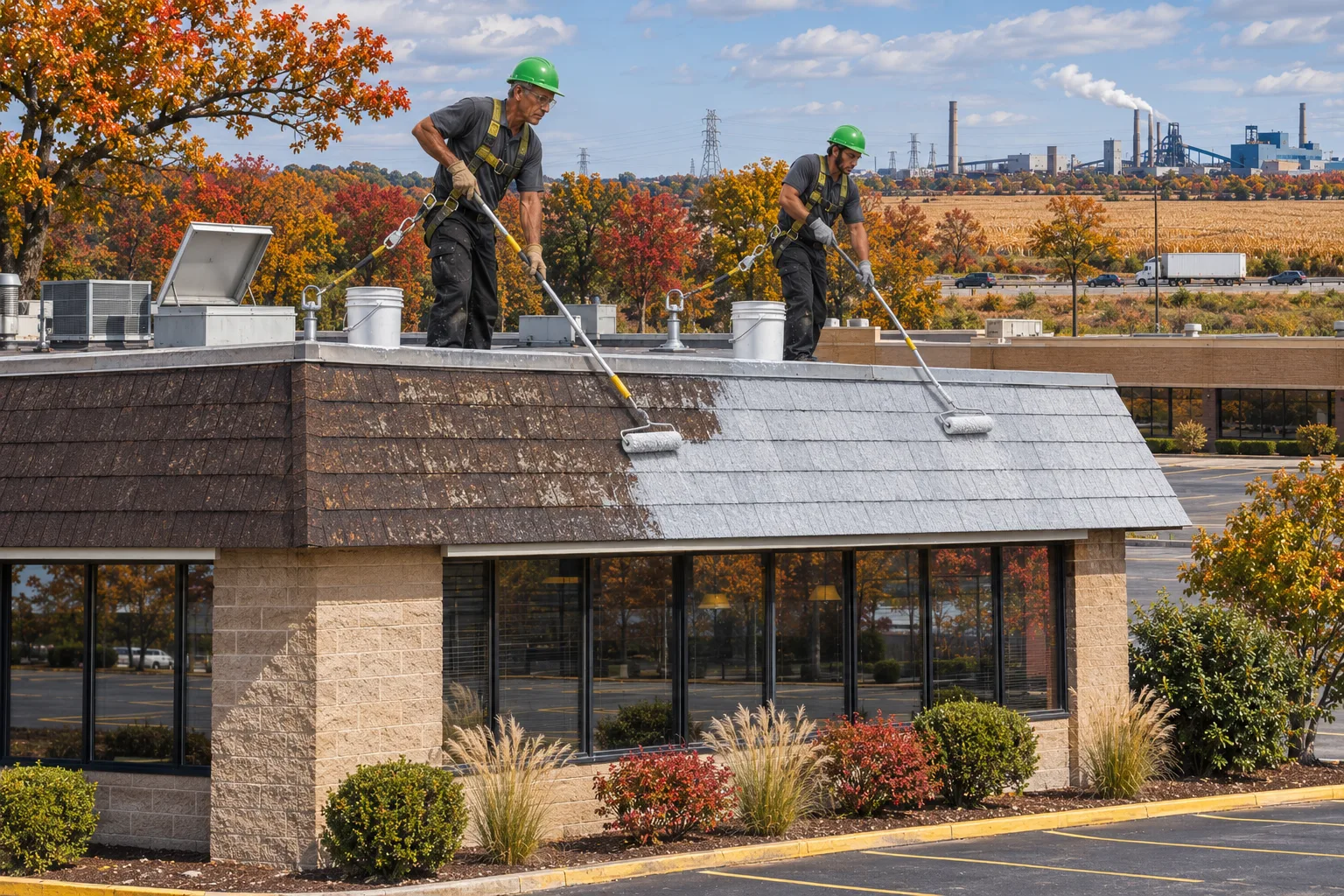
Sloped shingle sections on the same property take an asphalt-rated coating instead of foam. Shingled faces stay out of the spray zone and get covered during foam work.
Portage shingle roof coatingA foam roof is a coating system with insulation built in. These are the gains on a Portage building.
The foam layer itself insulates, cutting heat loss through the roof without opening the building.
Foam covers laps, screws, and curbs in a single sprayed layer, so there are far fewer joints for water to find.
Keeping the topcoat in good shape is what makes a foam roof last; a recoat renews it without new foam.
Extra foam in low areas moves water toward drains, ending the ponds that shortened the old roof.
Foam can fix both from the roof side. We check for wet insulation first, since foam has to go on dry.
Foam goes on quickly once the roof is ready. Most of the work is in getting it ready.
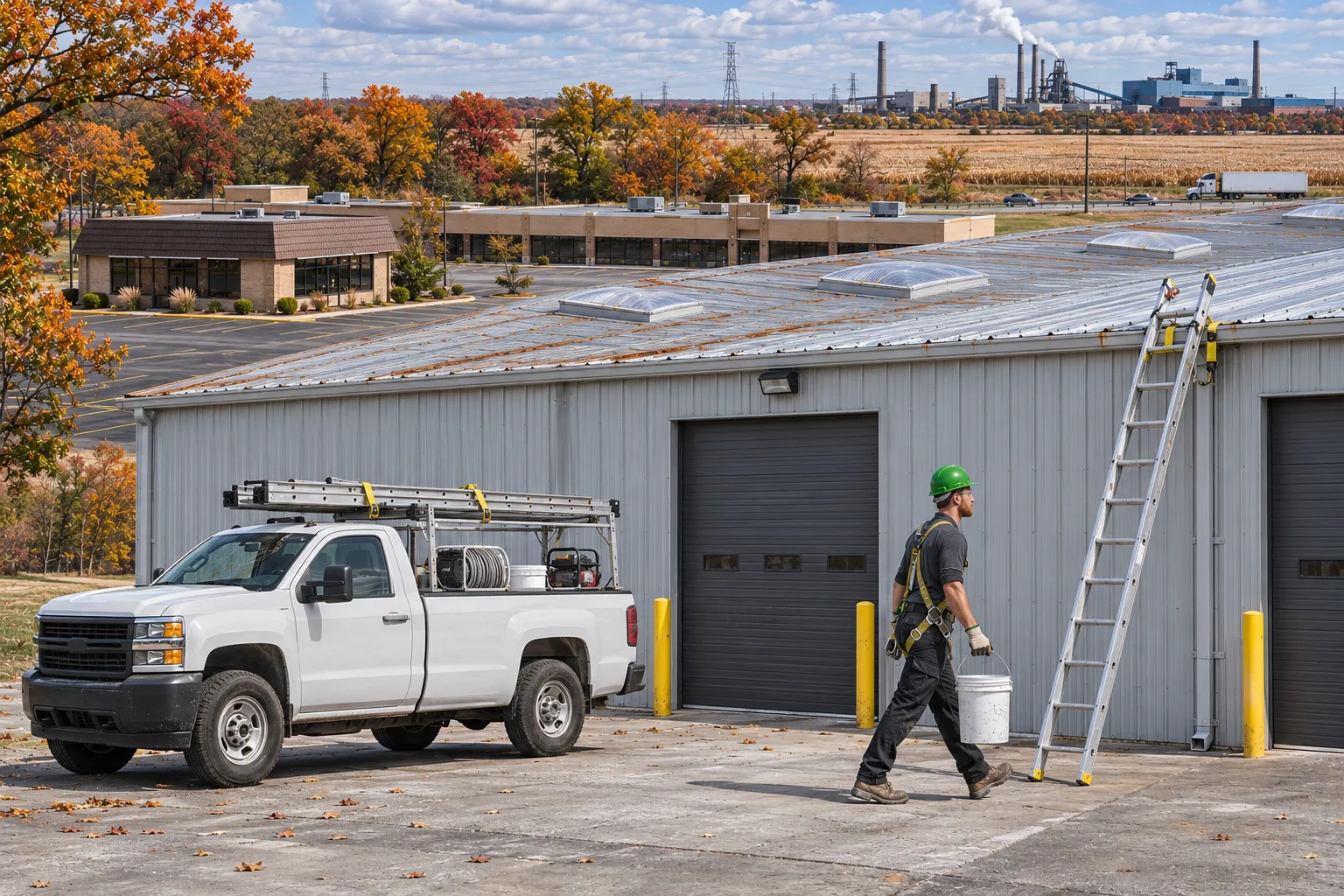
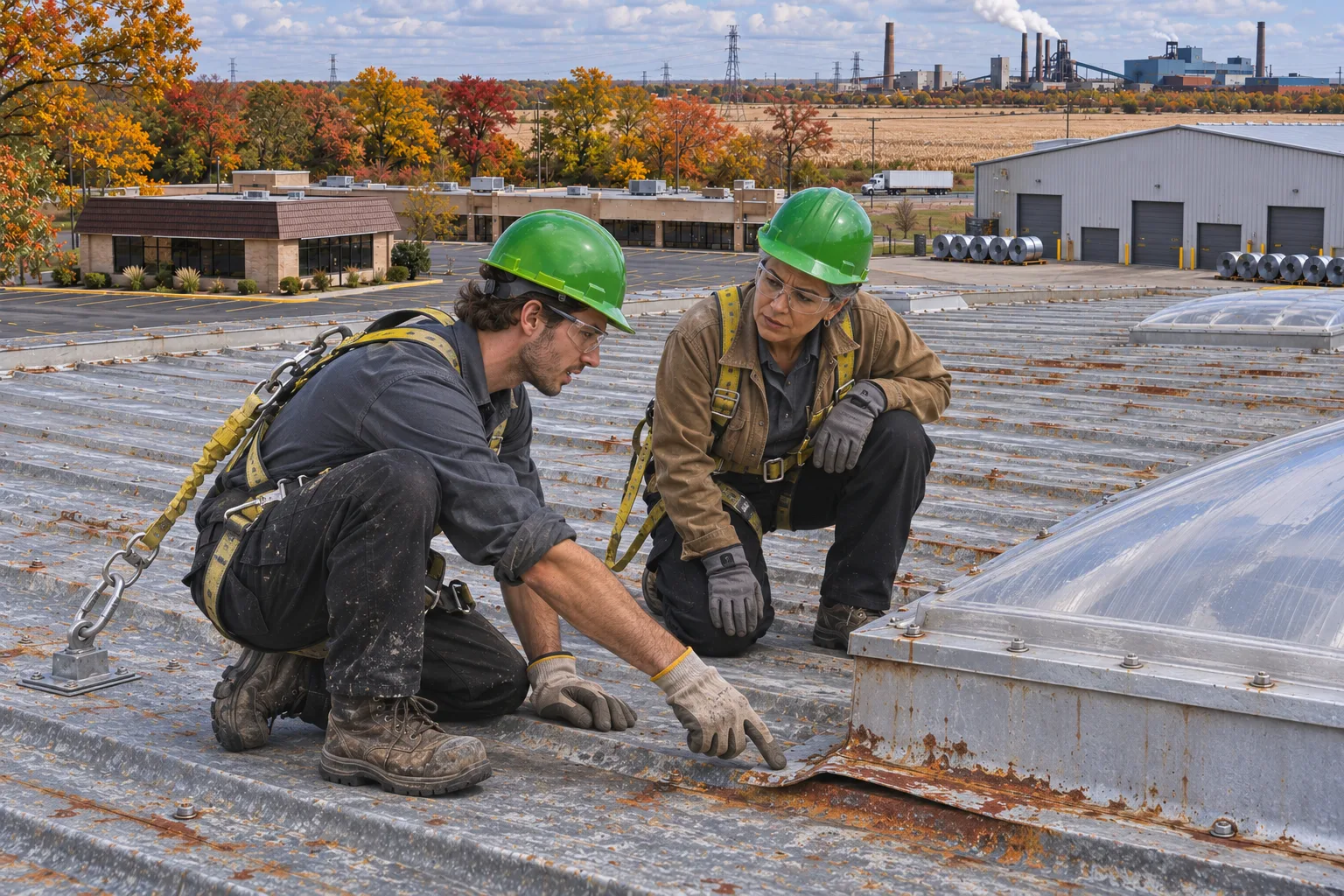
We probe for wet insulation, check the deck, and mark curbs, vents, and intakes that need protecting from overspray. Wet areas are marked on a sketch you keep.
Wet board comes out, rusted spots are treated, and the roof is washed and dried so foam can bond. The surface is checked for dryness right before spraying.
Foam goes on in passes to the planned thickness, built up in low areas to move water toward drains. Thickness is measured with probes as each pass goes on.
A protective coating goes over the foam the same week, since sunlight breaks down bare foam. The topcoat thickness is checked across the whole roof.
Foam is priced after an inspection and compared with planning ranges of about $2.50 to $4.00 per square foot for coating and $5 to $8 for replacement. Foam thickness, the topcoat, metal prep, and access set the number.
It can lower heating and cooling use, though savings depend on the building. We do not promise a figure.
Thickness, mostly. Building slope into a flat roof takes more foam in the low areas, and higher insulation targets add inches across the whole roof. Removing wet insulation and protecting rooftop equipment from overspray also add time.
Decades, when the topcoat is maintained. Foam thickness, topcoat thickness, hail, and how fast punctures get fixed decide the real life.
When the topcoat looks thin, cracked, or chalky, or bare foam shows. Many foam roofs need it every 10 to 15 years.
Wind speed is checked through the day, and spraying stops when gusts pick up. Air intakes are shut down or covered, rooftop units get wrapped, and parking near the building is cleared or covered on spray days.
Yes. Foam fills the ribs and covers the screws, which is one of its strongest uses. Rusted-through panels get fixed first.
Silicone on flatter roofs, acrylic on roofs with more slope. The inspection picks it.
Foam handles normal service traffic well, but paths to rooftop units should get walk pads. Constant traffic or dragged equipment wears the topcoat, and those areas need checking at every inspection.
Call or send the address. We check the insulation and deck, then price foam beside a straight coating.